The Farafra Quarter
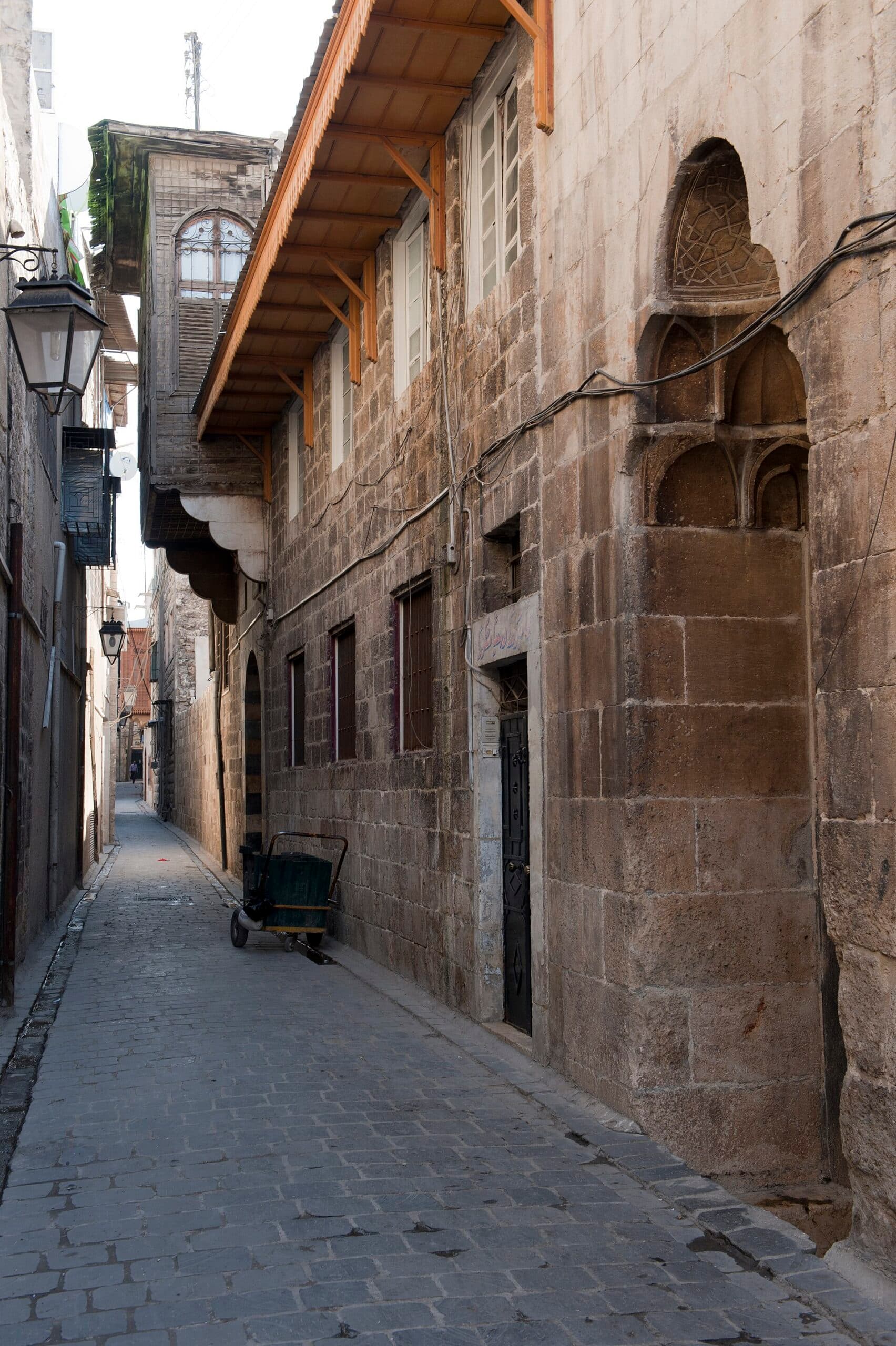
The old quarter northwest of the Aleppo citadel: stone-paved lanes two metres wide, a khanqah from 1237, madrasas and courtyards now used as workshops.
- Opening hours
- Lanes at any hour; the khanqah by day, depending on the door
- Entry
- Lanes free; ask at the door for the khanqah
- Duration
- 60 minutes
- Best time
- Morning; by afternoon the lanes are in full shade
- Period
- Ayyubid — Ottoman
- Address
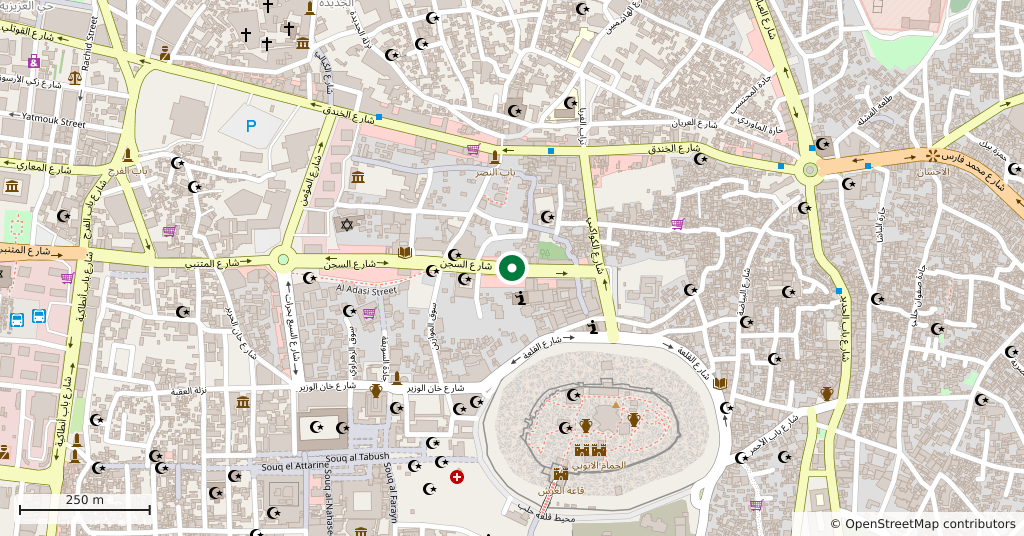
- Northwest of the citadel, Old City, Aleppo
Farafra is the quarter of old Aleppo that lies northwest of the citadel. The lanes are stone paved and about two metres wide, with cut stone walls on both sides and timber overhangs above. It is one street away from the crowded markets and quiet. Where the name comes from is not settled: one account points to the Farafra oasis in the Libyan desert, another to the Banu Farfur family who lived here.
How the quarter began
Some buildings in the quarter are more than eight hundred years old. The Asruniyya madrasa was built in the Mirdasid period, and Nur al-Din Zengi turned it into a madrasa in 1156. Under the Ottomans, Farafra was a quarter of schools and bath houses: five of the 13 rushdiyya schools of Aleppo stood here, and five of the 42 bath houses of the city worked in these lanes. One of them, the Sultan’s bath, takes its name from al-Malik al-Zahir Ghazi, the son of Saladin. Today most of the courtyards hold workshops and stores; the Suwayqat Ali trading centre next door changed what the quarter does for a living.
Getting there
Leave the citadel by its western gate and walk northwest, five minutes. From the Madina souk, any lane running north brings you into the quarter. The office that runs the restoration of the old city is here too, and it is the place to ask which lanes are currently open.
What to see
The main building of the quarter is the khanqah of al-Farafra, from 1237; from the lane all you see is the muqarnas hood over its portal, and the rest stays behind the wall. Otherwise the quarter is made of small things: inscriptions above doors, fountain niches, the walls of old bath houses, workshop doors opening onto courtyards. The closer you get to Suwayqat Ali the busier the lanes become, and the further you walk the other way the quieter they get. The stonework changes too: courses of cut stone are interrupted here and there by later block and concrete, and the last hundred years of the quarter can be read off those patches.
How long it takes
An hour. The quarter is small; the question is which door is open. When you find a locked one, look at the facade and keep walking, because the lane is the thing you came to see.
What most people miss
The first twenty metres after you leave the market. The noise of Suwayqat Ali cuts off at one bend and all you hear is your own footsteps. Nowhere else in the old city is that change so abrupt.
Tips
- Walk northwest from the citadel; the quarter is five minutes away
- Look up at the muqarnas over the khanqah portal; it is all the lane shows you
- Restoration is under way; if a lane is closed take the parallel one
- Put it in the same walk as the Madina souk
Transparency
- How this was chosen
- Written by hand; opening hours, entry fee and coordinates are kept as data. A field that is not known for certain is marked as variable rather than guessed.
- Facts checked
- September 2026
- Last updated
- September 15, 2026