Al-Firdaws Madrasa, Aleppo
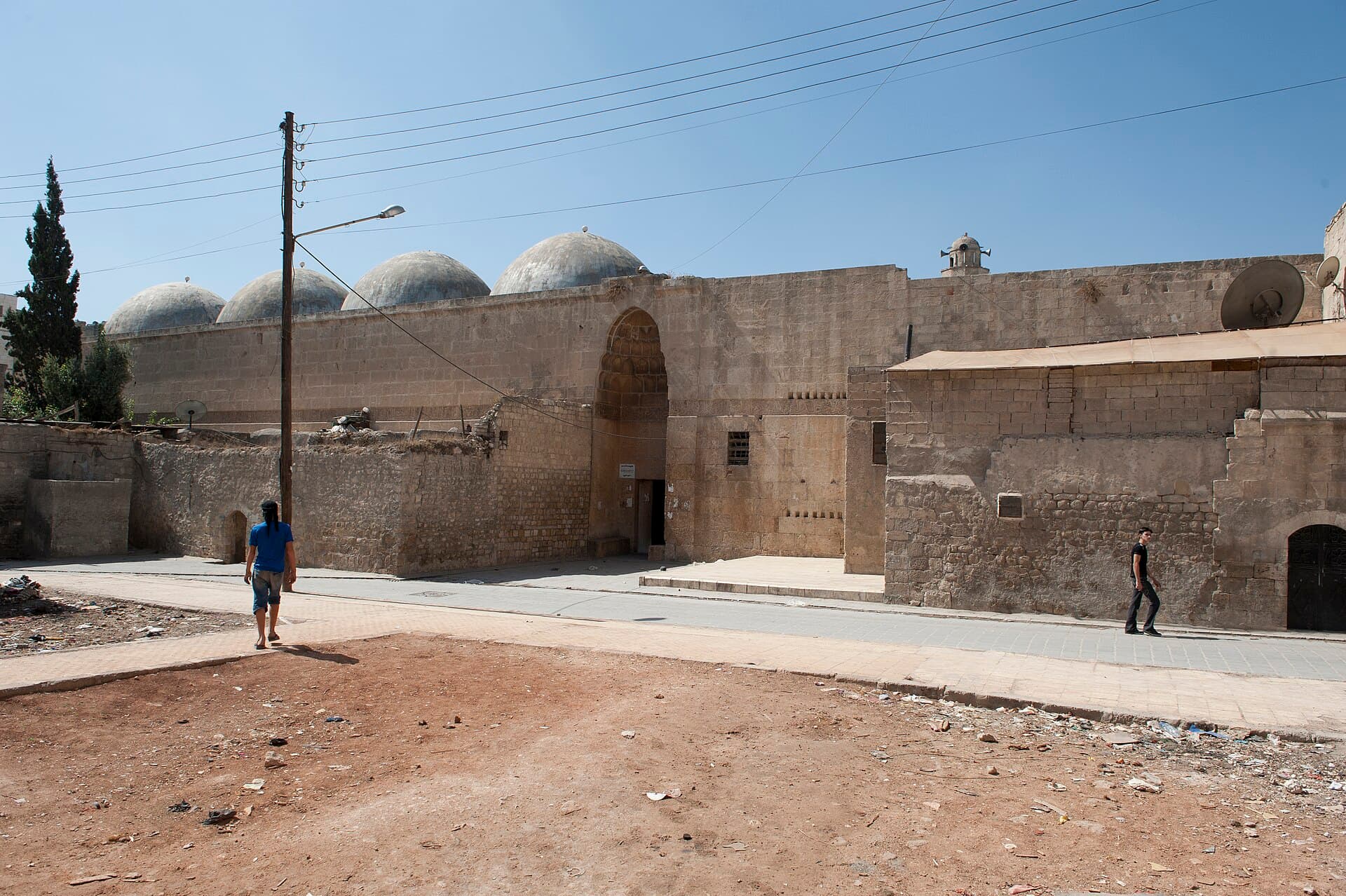
The Ayyubid madrasa southwest of Bab al-Maqam, built in 1235 by Dayfa Khatun. Eleven domes, a marble mosaic mihrab and a long inscription around the court.
- Opening hours
- Varies — confirm before you set out
- Entry
- Free
- Duration
- 45 minutes
- Best time
- Morning; with the courtyard empty you can follow the inscription end to end
- Period
- Ayyubid (the dynasty founded by Saladin)
- Address
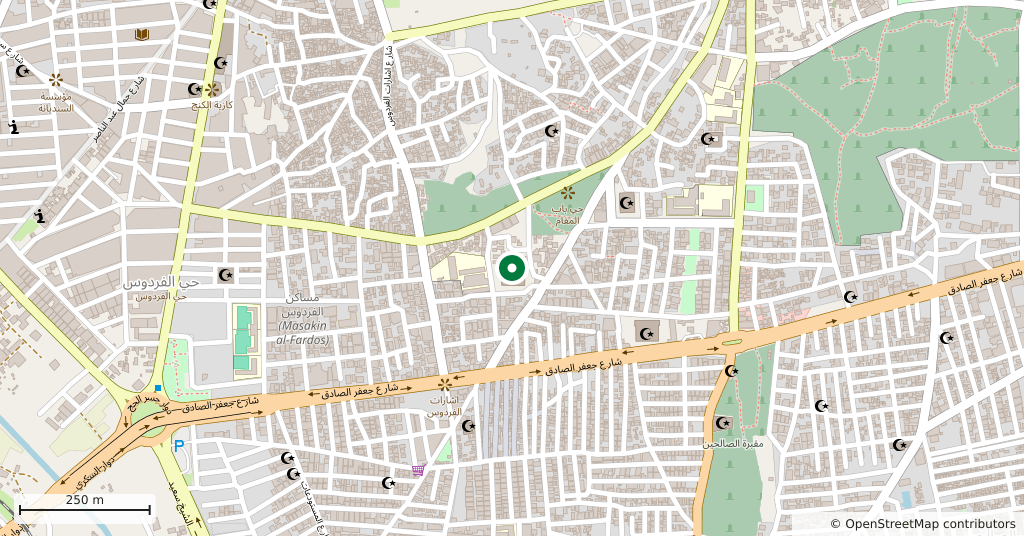
- Southwest of Bab al-Maqam, outside the walls, Aleppo
The largest and best known of Aleppo’s Ayyubid buildings. It stands alone outside the walls in the middle of an open plot — unlike the cramped madrasas inside the city, this one let its architect set out the plan he wanted, and the building shows it.
Who built it
Dayfa Khatun, widow of az-Zahir Ghazi, Saladin’s son, and later regent of Aleppo. She founded the madrasa in 1235 out of her own funds and endowed it with the revenue of the village of Kafr Zayta and two-thirds of the income of a nearby mill. The staff is named in the endowment too: Quran reciters, jurists and Sufis.
Getting there
Leave the old city by Bab al-Maqam on its southern side and walk southwest. About half an hour on foot from the Citadel — this is a separate outing, not a stop to tack on to the end of a walk inside the walls.
What to see
The building is rectangular and roofed by eleven domes. A wide courtyard sits at the centre with an octagonal pool in the middle of it. A large iwan opens on the north side; on the south is a prayer hall under three domes, the central one set in front of the mihrab. That mihrab is faced in polychrome marble mosaic with interlacing patterns — one of the finest pieces of Ayyubid work anywhere, and the link that leads on to later Mamluk decoration.
Don’t miss
The inscriptions. The band running round the east front carries Quranic verses about entering Paradise; the second inscription, around the courtyard, is not scripture at all but a metrical, rhymed text describing what Sufi worship felt like. At this scale that is rare, and most visitors look at the stone without reading the writing.
How it stands now
The building was damaged in the fighting of 2012-2016, when the madrasa lay inside the contested belt south of Aleppo. How far repairs have gone changes from season to season — ask before you set out, because the door may be shut.
Tips
- Plan it as its own trip rather than the tail of a walk inside the walls
- Follow the inscription band on the east front from outside, before you go in
- Look closely at the marble mosaic of the mihrab; the pattern is inlaid, not painted
- Allow for a locked door; the state of the repairs keeps changing
Transparency
- How this was chosen
- Written by hand; opening hours, entry fee and coordinates are kept as data. A field that is not known for certain is marked as variable rather than guessed.
- Facts checked
- September 2026
- Last updated
- September 15, 2026