The Jdayde Quarter
Aleppo’s Christian quarter outside the walls: winding lanes, carved stone mansions, four churches and two squares. Hit hard in the war, now under repair.
- Opening hours
- Lanes at any hour; churches and mansions by day, depending on the door
- Entry
- Lanes free; ask at the door about entry to the mansions
- Duration
- 120 minutes
- Best time
- Morning; by afternoon the light no longer reaches the narrow lanes
- Period
- Mamluk — Ottoman
- Address
- Outside the northern walls, north of Bab al-Nasr, Aleppo
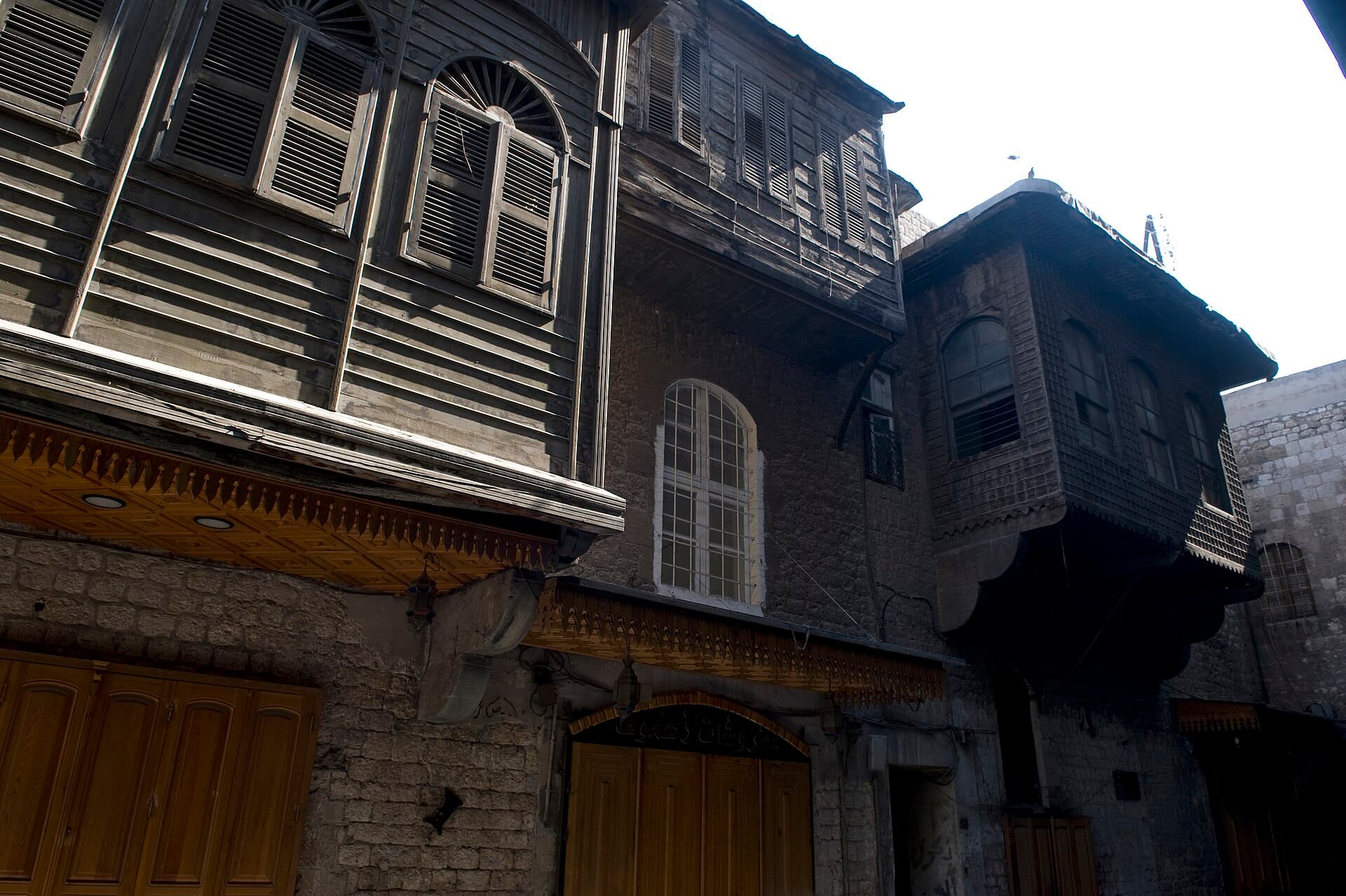
Jdayde is the quarter just outside the northern walls of Aleppo. The name means new, and the quarter is indeed younger than the walled city. On one side are narrow, turning lanes and mansions with carved stone facades; on the other, four churches standing within a hundred metres of each other. Walking here you move from courtyard to courtyard rather than from monument to monument.
How the quarter began
At the end of the Mamluk period this was a small suburb outside the wall, next to the cemeteries and storage yards. It grew along the roads that linked Bab al-Nasr with the villages to the north and was absorbed into the city. A new water duct opened in 1490 allowed the quarter to spread and its bath houses to be built; the Armenian Church of the Forty Martyrs was enlarged in the same year. Armenians were the main inhabitants and ran the trade with Persia and India. Under the Ottomans the quarter was divided into rectangular plots. Two large endowments, founded in 1583 and 1653, put a fountain, a coffee house, a bath, a small mosque, a school, a cloth market, weaving workshops and a grain store at its centre. Muslim and Christian families lived side by side.
Getting there
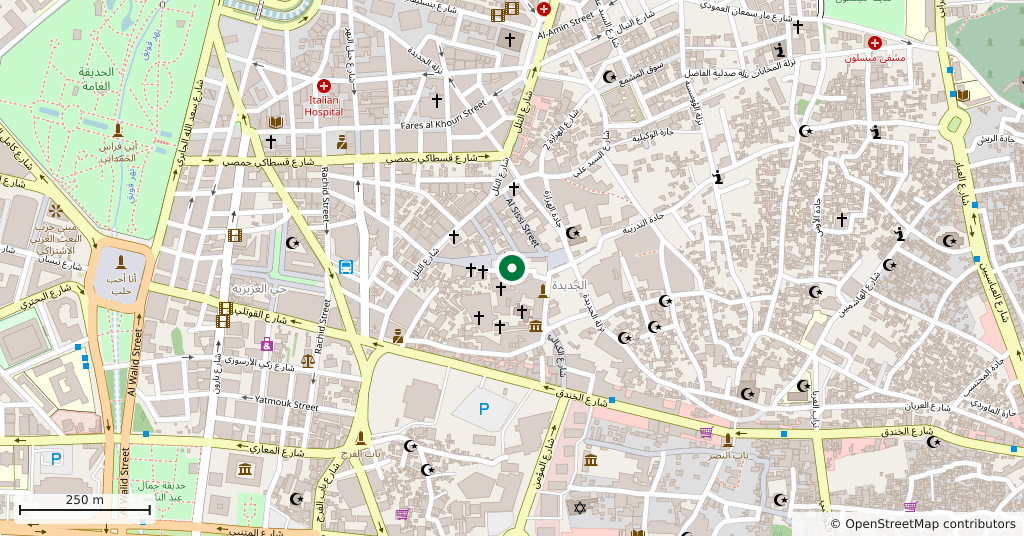
Twenty minutes on foot northwest of the Aleppo citadel. Leave by Bab al-Nasr, keep going north, and you arrive at the southern mouth of the quarter. Inside, navigate by the two squares: Farhat Square to the west, Sahat al-Hatab to the east.
What to see
Around Farhat Square stand the Armenian, Greek Orthodox, Maronite and Syriac churches. The lanes between them hold 17th-century mansions such as Beit Ghazaleh and Beit Achiqbash: blank stone walls outside, a carved courtyard within. Sahat al-Hatab is the square at the eastern end. As you walk, watch the reliefs and corbels above the doors; the wealth of this quarter is gathered around the doorway rather than spread over the facade.
War and repair
Jdayde sat on the front line after 2012. In April 2015 tunnels detonated under Sahat al-Hatab wrecked the square and the buildings around it; Beit Ghazaleh, Beit Achiqbash and others were badly damaged and some were stripped. After a detailed survey in 2017 the craters were backfilled, the rubble was cleared in 2018 and repair work began. Part of the quarter is open and walkable today; part of it is still a building site.
How long it takes
Two hours. How many buildings you can go inside varies, so try the doors one by one and move on to the next when one is shut.
What most people miss
The lanes between the two squares. There is no straight line from Farhat to Hatab, and the narrow lanes in between hold the best preserved doorways and the quietest corners in the quarter.
Tips
- Navigate by the two squares: Farhat to the west, Sahat al-Hatab to the east
- Look above the doors; that is where the carving is concentrated
- Repairs are under way and some lanes may be closed; take the next one
- It is a twenty-minute walk from the citadel, no taxi needed
Transparency
- How this was chosen
- Written by hand; opening hours, entry fee and coordinates are kept as data. A field that is not known for certain is marked as variable rather than guessed.
- Facts checked
- September 2026
- Last updated
- September 15, 2026