Al-Nuqtah Mosque (Mashhad al-Husayn), Aleppo
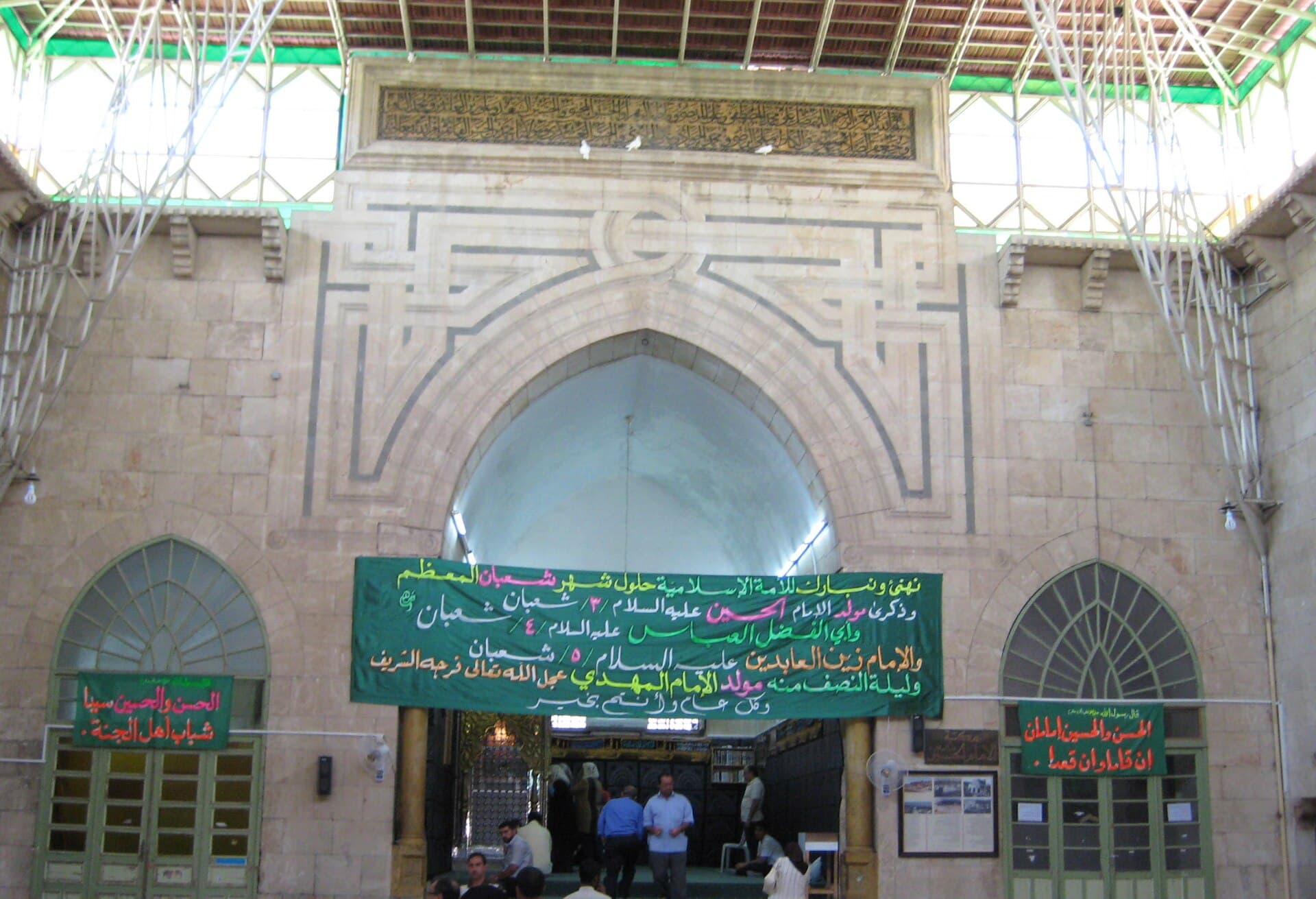
A Shia shrine on Aleppo’s Jabal Jawshan, the Mashhad al-Husayn of the sources. Its Ayyubid portal was shattered in the 1920 munitions blast and later rebuilt.
- Opening hours
- Variable — confirm on arrival
- Entry
- Varies — check at the entrance
- Duration
- 40 minutes
- Best time
- Morning; the shrine faces east and the court takes early light
- Period
- Zengid and Ayyubid; rebuilt in the seventies
- Address
- Kallaseh, eastern slope of Jabal Jawshan, Aleppo
A Shia shrine on the eastern slope of Jabal Jawshan, west of Aleppo. It goes by two names: in the city and among pilgrims it is the Al-Nuqtah Mosque, while medieval sources and Western scholarship call it the Mashhad al-Husayn. Stephennie Mulder’s book on the Alid shrines of medieval Syria shows that the two are one building: the place where the drop of blood is honoured today is the Mashhad al-Husayn, known for its Ayyubid portal. The other shrine on the slope, the Mashhad al-Muhassin about 300 metres to the south, is a separate and older building.
Where the name comes from
Nuqta means drop. In the Shia account, the caravan of captives taken from Karbala to Damascus camped at the foot of Jawshan when it reached Aleppo. The head of Husayn was set on a rock, and a drop of blood fell onto the stone. The plaque inside the mosque ties the story to a monastery on the slope called Mart Marutha and to the monk who kept the head beside him for a night. The geographer Yaqut also writes that this monastery on Jawshan had vanished and a shrine was built in its place.
Two founding stories
The plaque credits the beginning to the Hamdanid emir Sayf al-Dawla and says he turned the monastery into a mosque. That is the shrine’s own tradition. The documented foundation by Sayf al-Dawla belongs to the other building on the slope, the Mashhad al-Muhassin, founded in 962. In the sources, the story of the Mashhad al-Husayn begins in 1177: a shepherd named Abdallah dreamt of a man who asked for a shrine to be built here. He woke to find his goat’s hooves sunk in the ground, and water gushed from the spot when he pulled the animal free.
A building the city paid for
According to the historian Ibn Shaddad, work began under al-Salih Ismail, the son of Nur al-Din. When the south wall rose more slowly than the others, the ruler added money from his own purse; craftsmen gave one day of work a week for free, and the market traders set aside part of their daily takings. A merchant of Aleppo, Abu al-Ghanaim, paid for the iwan at the back of the court himself. When Saladin took Aleppo in 1183 he visited the shrine and gave ten thousand dirhams. His son al-Zahir Ghazi endowed it with the income of a mill, set aside for bread and sweets for visitors on Friday nights.
The portal and its inscriptions
The most studied part of the building is the portal onto the court, with stone interlace, a muqarnas hood and bands of inscription. Ernst Herzfeld recorded the inscriptions before 1920. Inscription 113 says the shrine was built in the reign of al-Zahir Ghazi. Just above it is a Sunni text blessing the family of the Prophet and the four caliphs; along the two side faces of the doorway runs a Shia prayer naming the twelve imams, Herzfeld’s number 117. The Shia prayer ends by asking forgiveness for all who worked on this shrine. The prayers of the two communities share one doorway, which is why Mulder reads the building as a record in stone of Aleppo’s experiment in living together.
The blast of 1920
In the Ottoman period the building served as a munitions store. In July 1920 the ammunition inside exploded, killing between 500 and 600 people of Aleppo who had taken refuge in the shrine during the uprising against the French. The portal was shattered. According to the plaque, the stone with the drop of blood was moved to the Mashhad al-Muhassin for a time. The plan to rebuild took shape in 1960 with a community association. Mulder writes that the building was reconstructed in the seventies by Ali Summaqiya of the Directorate General of Antiquities and Museums, carefully but not exactly. On the east wall of the iwan there are now windows where niches used to be.
Getting there
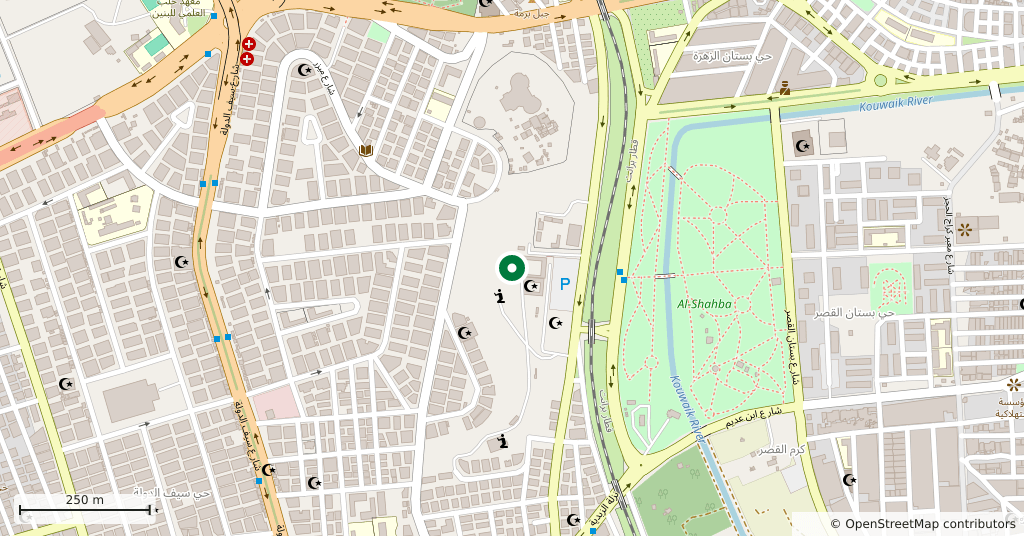
The road out of Bab Antakya crosses the Quwayq river and bends south; about a kilometre and a half from the city wall the shrine appears on the eastern face of a low hill. OpenStreetMap places it in Kallaseh, in the Saad al-Ansari quarter. The Mashhad al-Muhassin is about 300 metres to the south, and the two shrines fit into one walk.
What to see
The portal leads from an outer court into a square inner courtyard. On its south side stands a prayer hall with five domes, on the west a broad barrel-vaulted iwan. In the early nineties the stone with the drop of blood was set into the south wall of the great west iwan, in a small metal enclosure beside the mihrab, and it is now the focus of the visit. The steel roof shading the centre of the courtyard is a modern addition.
How it stands today
After 2012 the shrine sat on the line between the two sides of the fighting in Aleppo and was shelled for years. The Shia news site Shia Waves reported a ceremony for its reopening after renovation in April 2017. We could not confirm its later condition from an independent source, so visiting hours are best checked on the ground.
Tips
- Shoes come off at the door; this is a working shrine and it is quiet inside at prayer times
- The inscription bands on the two side faces of the portal are seen before you enter the court
- The blood-stained stone is on the south wall of the west iwan, in the metal enclosure beside the mihrab
- The Mashhad al-Muhassin is about 300 metres south; the two shrines make one walk
Transparency
- How this was chosen
- Written by hand; opening hours, entry fee and coordinates are kept as data. A field that is not known for certain is marked as variable rather than guessed.
- Facts checked
- September 2026
- Last updated
- September 15, 2026