The Ayyubid Tower of Arwad (al-Burj)
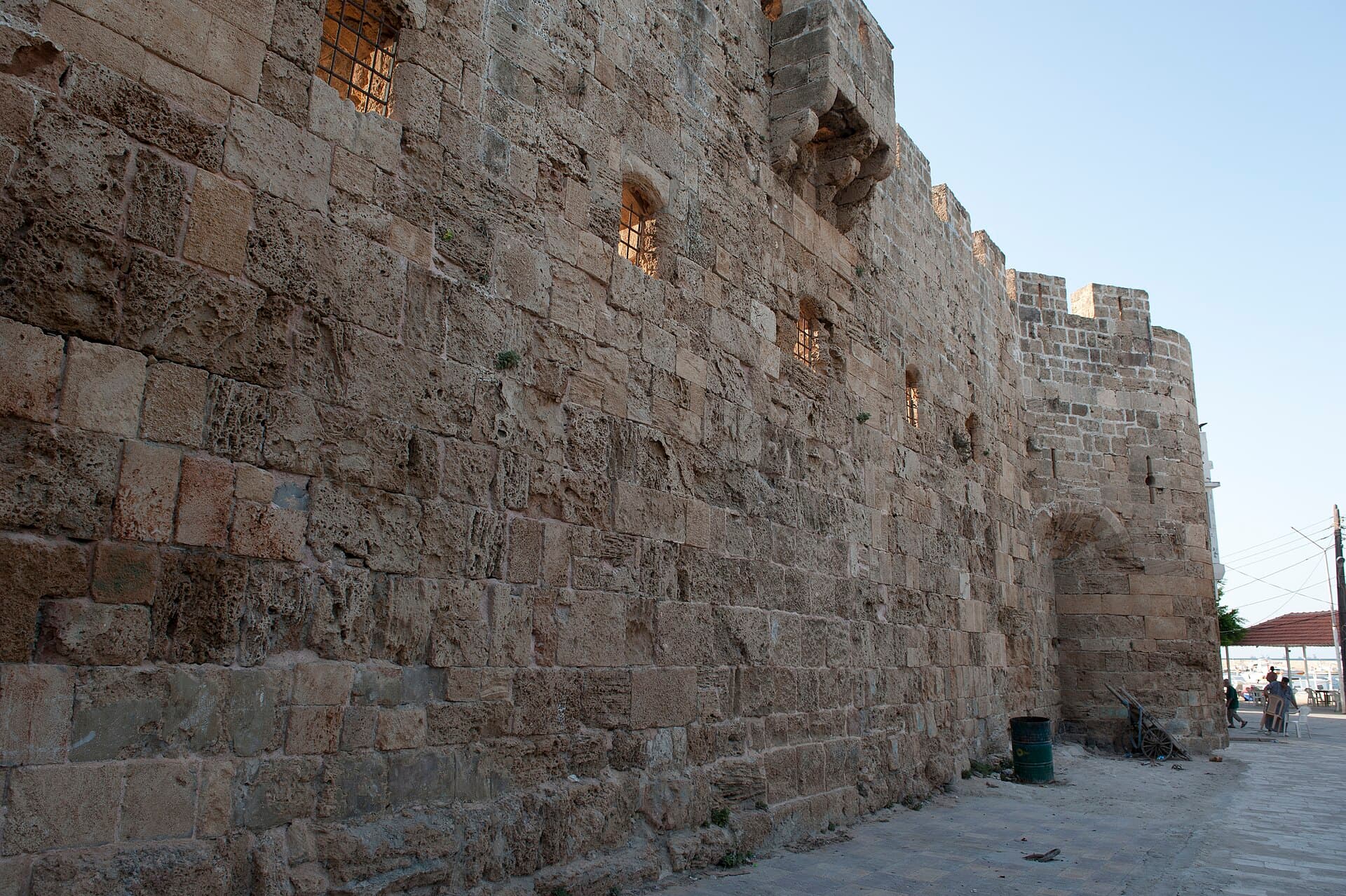
The small fort on the harbour front of Arwad: two storeys, 19 rooms, two round towers and a lion tied to a palm carved at the gate. Today it displays Roman amphorae.
- Opening hours
- Varies — check at the entrance
- Entry
- Varies — check at the entrance
- Duration
- 20 minutes
- Best time
- Morning, when the east-facing harbour front is in sunlight
- Period
- Mamluk (known locally as Ayyubid)
- Address
- East shore of Arwad island, on the harbour, Tartus governorate
A square coastal fort on the east side of Arwad island, looking straight onto the harbour. Islanders call it al-Burj, the Ayyubid fort or the coastal castle. It has two storeys and two round corner towers. It was restored and turned into a place to display Roman amphorae found in wrecks off Tartus.
Getting there
Boats from Tartus tie up in the harbour on the east side of the island, and the tower stands on the waterfront. It is the first building you reach before walking on to the castle in the middle of the island.
Ayyubid or Mamluk?
The popular name is Ayyubid, but the Arab Encyclopedia attributes the building to the Arabs and dates it to the 8th century AH, the 14th century AD. That date falls in the Mamluk period, after the Ayyubids. The tower was registered by ministerial decision on 14 January 1959.
What there is to see
The main entrance is on the west front. The ground floor has 14 rooms once used for living and storage, and the upper floor has 5. The round towers stand at the north-east and south-west corners. The outer wall is built of large dressed stones, and from the harbour it reads as a single battlemented block.
What most people miss
The relief on both sides of the entrance: a standing lion, its neck tied by a rope to the trunk of a palm tree in front of it. Arabic Wikipedia reads it as the Lusignan war emblem from the Frankish period, and the same motif appears on the gate of the castle in the middle of the island. Seeing both on the same day shows how the emblem repeats across Arwad.
Tips
- Get close to the lion relief at the entrance; the rope and palm are clear in the stone
- The castle in the middle of the island is a few minutes' walk away
- Ask at the jetty whether the amphora display is open
Transparency
- How this was chosen
- Written by hand; opening hours, entry fee and coordinates are kept as data. A field that is not known for certain is marked as variable rather than guessed.
- Facts checked
- September 2026
- Last updated
- September 15, 2026