Bab al-Hadid
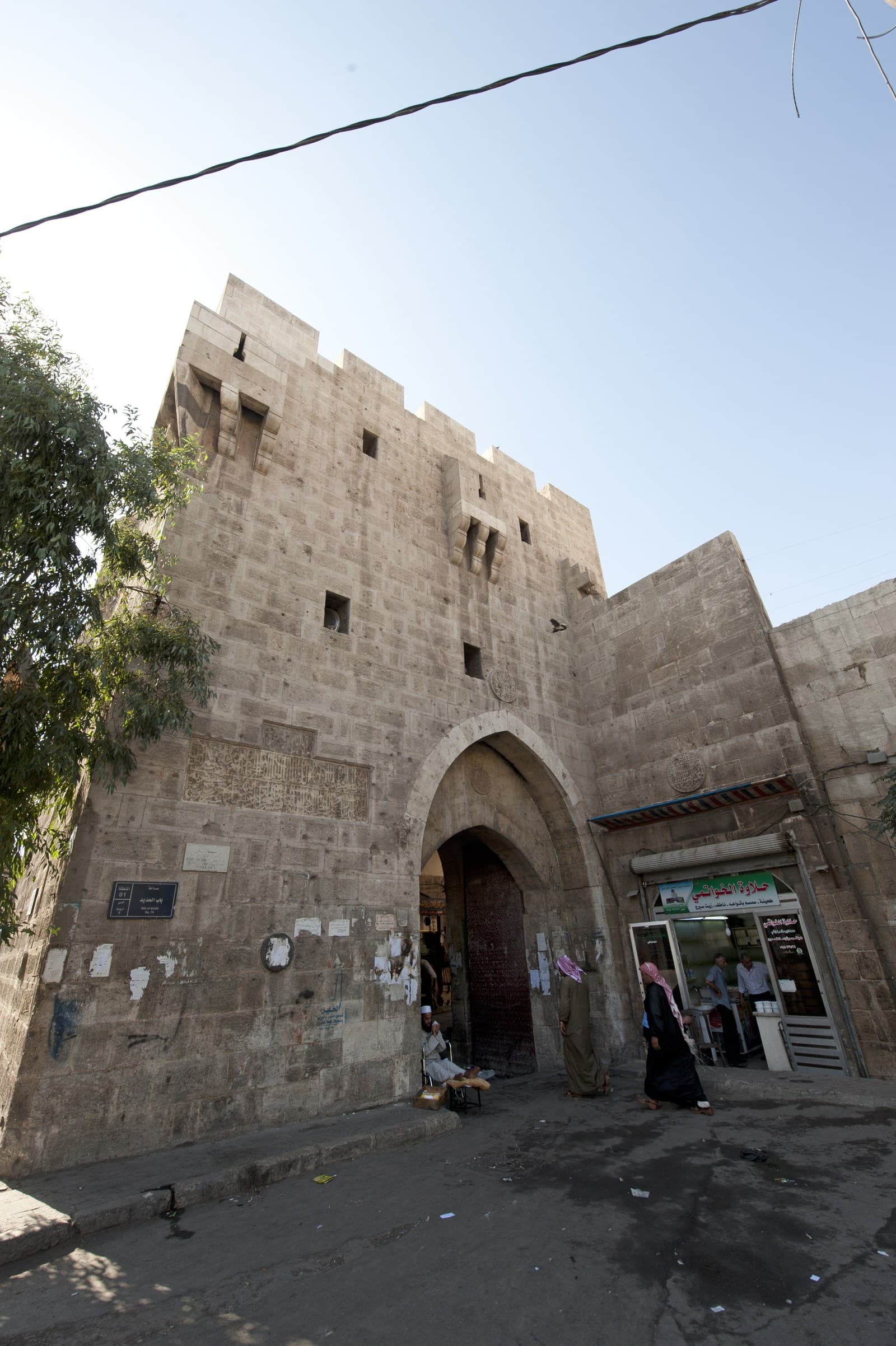
The best preserved of Aleppo’s gates. The last Mamluk sultan Qansuh al-Ghawri rebuilt it in 1509, and the blacksmiths around it are still at the same trade.
- Opening hours
- Open ground, all day
- Entry
- Free
- Duration
- 25 minutes
- Best time
- Early morning, square empty and the bastion lit from the front
- Period
- Ayyubid foundations, Mamluk rebuilding
- Address
- Bab al-Hadid Square, north-eastern edge of the Old City, Aleppo
The north-eastern mouth of the walled city and the soundest of the nine gates. The name comes from the shops beside it: iron was worked here, and the sound of the anvil can still be heard around the gate. Its older name was Bab al-Qanat, because the aqueduct that brought water into the city entered here. Az-Zahir Ghazi planned the gate and his son Muhammad built it; the last Mamluk sultan, Qansuh al-Ghawri, rebuilt it in 1509.
Getting there
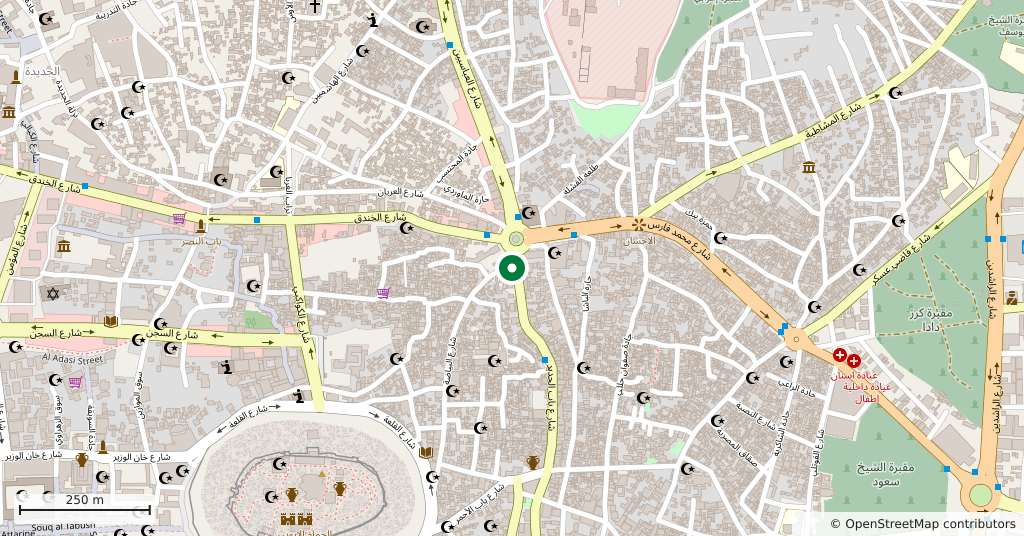
About 600 metres north-east of the Aleppo Citadel; Bab al-Hadid Street brings you straight out into the square in front of the gate.
What to see
A two-storey bastion with crenellations above, narrow firing slits in the face and stone brackets over the door. This is not a single gate: there are two gates with a passage between them, and the bastion rises over the passage. The rectangular inscription panel and the round medallions on the face are from the Mamluk rebuilding. Inside the gate stands the Atabakiyya Madrasa, founded by Shihab al-Din Tughril Bek, a freedman of az-Zahir Ghazi; it burned in the Mongol invasion, was repaired and later turned into a dwelling.
Don’t miss
Once you have photographed the face, walk into the passage. The gate is not a monument but a working mouth of the souq: ironmongers and tool shops line both sides of it, and the noise does not carry outside.
Today
Repair of the damaged gate began in September 2020 and was completed in 2021. The quarters around it are among the best preserved parts of the old city. Smithing here is a trade passed down through families, and workshops still working the old way remain. The trade never left.
Tips
- After the facade, walk into the passage; the ironmongers are in there
- The inscription panel is on the left of the face, the medallions above the arch
- If you are walking to the citadel, start at this gate; the old fabric runs the whole way
Transparency
- How this was chosen
- Written by hand; opening hours, entry fee and coordinates are kept as data. A field that is not known for certain is marked as variable rather than guessed.
- Facts checked
- September 2026
- Last updated
- September 15, 2026