Bab al-Jinan, the Gate of Gardens
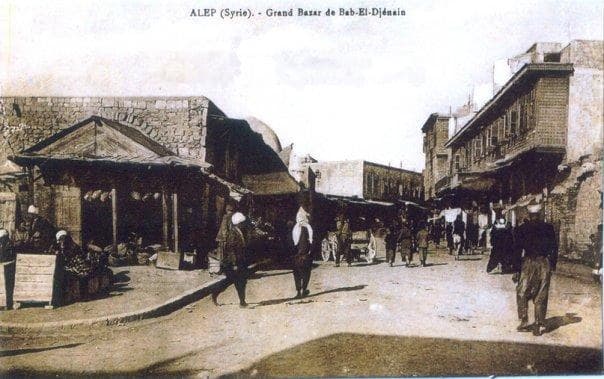
One of the western gates of Aleppo, named for the gardens along the Queiq. The gate was pulled down around 1900, and a souq now carries its name on the spot.
- Opening hours
- The souq trades by day; the gate itself is gone
- Entry
- Free
- Duration
- 20 minutes
- Best time
- Morning, while the stalls are being set up
- Period
- Hamdanid — demolished around 1900
- Address
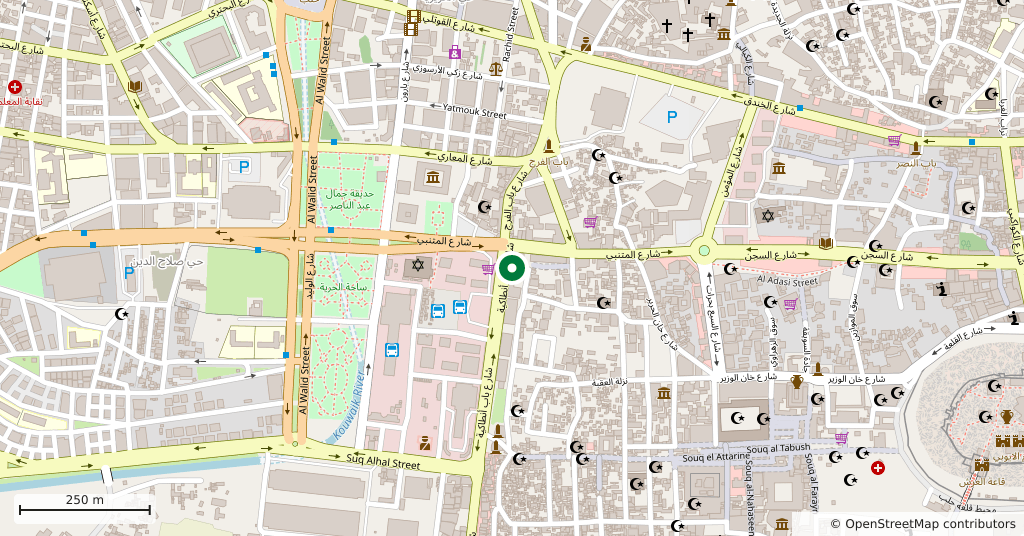
- Bab al-Jinan, north of Bab Antakiya, Aleppo
Bab al-Jinan was one of the gates on the western side of the old walls of Aleppo. The name means the Gate of Gardens: whoever walked out of it came straight into the gardens along the Queiq river. One thing sets it apart from the other Aleppo gates on this site. It is not standing. You come here for the place the gate left behind, not for the gate.
What happened to the gate
It was demolished around 1900 to widen the road. The loss came not from war but from early 20th-century town planning, and most of what is missing from the walls of Aleppo went the same way. Around the gate there had been a cluster of money changers and goods warehouses, and a pine that went back to the 16th century.
Who built it
The gate is thought to be the work of Sayf al-Dawla, the Hamdanid emir who held Aleppo between 944 and 967. It gave access to the great palace of Halba and the gardens he laid out beyond the city. The geographer al-Muqaddasi, writing in 985, calls it the Watermelon Gate. Eight centuries later Alexander Russell still records it standing, in The Natural History of Aleppo, published in 1756.
The serpent tower and its talisman
The gate had a tower known as the serpent tower. The story went that it held a talisman which protected against snakebite. Neither survives. The story stayed in the books.
What you see today
Bab Jnen is now the name of a souq. There is no gate. What the gate left behind is the name of the quarter, the direction of the lanes and the position of the market. The gardens are gone too: the Queiq runs through a concrete channel now, and the city stands where they were.
What most people miss
Bab Antakiya is 400 metres south of here. Walk the two in one go and the contrast does the explaining: one is a stone gate still standing, the other a gate that survives only as a name. It is the shortest walk that tells you what became of the walls of Aleppo.
Tips
- Do not look for the gate; all that stands is the souq that carries its name
- Bab Antakiya is 400 metres south; take the two in a single walk
- Come to the souq in the morning, while the lane is still empty
- For the gardens the name refers to, walk west to the channel of the Queiq
Transparency
- How this was chosen
- Written by hand; opening hours, entry fee and coordinates are kept as data. A field that is not known for certain is marked as variable rather than guessed.
- Facts checked
- September 2026
- Last updated
- September 15, 2026