Baqirha, a Dead City on Jebel Barisha
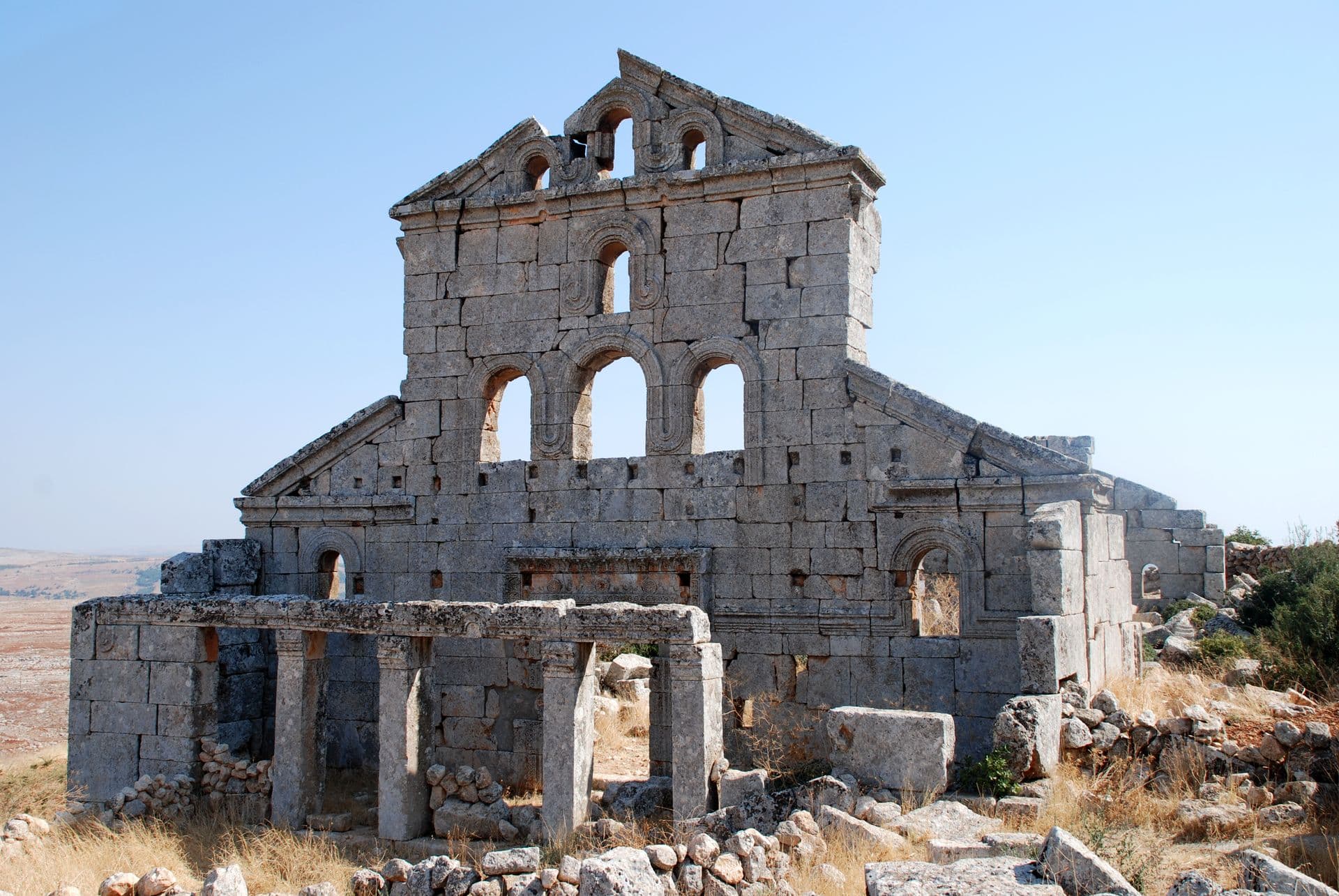
A temple of Zeus dated 161 and two Byzantine churches on Jebel Barisha. The east church still carries its full west gable and a door lintel dated 546.
- Opening hours
- Open site, daylight hours
- Entry
- Variable — check on arrival
- Duration
- 75 minutes
- Best time
- Spring, while the ground between the stones is green and before the heat
- Period
- Roman — Byzantine
- Address
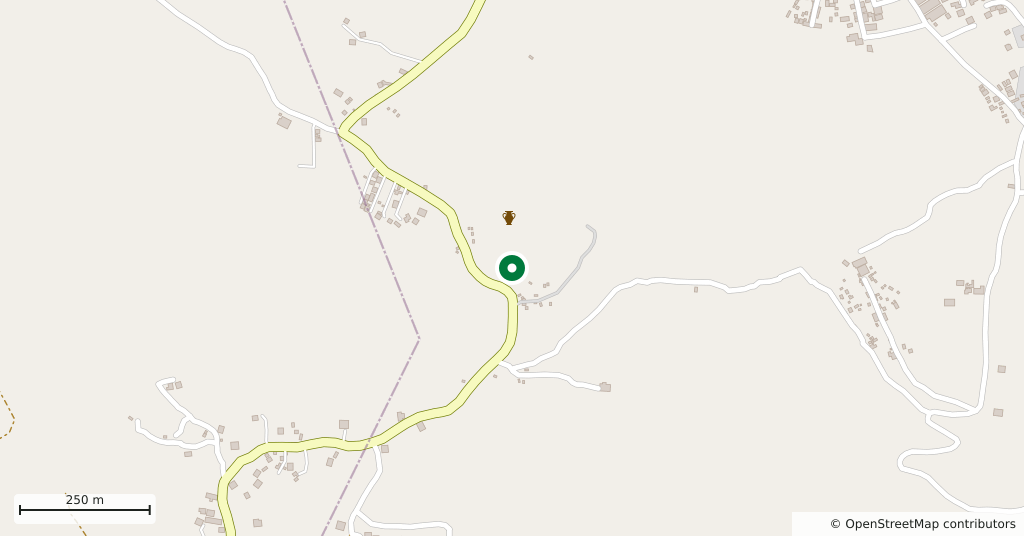
- Burj Baqirha hill, Jebel Barisha, Dana district, Idlib
A dead city on a hill called Burj Baqirha, on the northern slope of Jebel Barisha. Two religions sit on the same slope here: a Roman temple of Zeus dated 161, and a little further down two Byzantine churches. The site was inscribed on the UNESCO World Heritage list in 2011 as part of the Ancient Villages of Northern Syria.
Getting there
South of the Bab al-Hawa crossing, in the Dana district. You turn off the Aleppo to Antakya road and climb north from the village of Ras ibn Hosn. Babisqa is two kilometres east and Dar Qita lies just north. There are no signs, so the driver has to know the place.
What to see
The temple of Zeus stands at the southern end of the slope, the building nearest the road. It had a porch of four pillars on its west face; the back wall survives to the gable, and fallen column drums and Corinthian capitals lie in front of it. The cult here called the local god Baal by the name of Zeus, and Zeus was still worshipped on this hill until the end of the 5th century.
The east church is 100 metres below the temple and can be picked out from far off: its west gable is complete, with a row of arched windows across it. The lintel of the west door is dated 546. Inside, the plan is a three-aisled basilica with a rectangular apse. A porch on four pillars was added along the south side around 600.
The west church is older and in much worse shape; what you see follows a rebuilding of 501. Foundations and stretches of wall are all that stand. The square baptistery to its south-east has come through better than the church itself.
What the village lived on
Olive oil. Like every settlement on the limestone massif, Baqirha grew rich exporting it, and the standing pillared porches of its larger houses show where that money went. Most of what remains upright dates from between the 4th and the 7th century. The written record shows Christians here from 384, the year a deacon named Mikalos owned a house on the hill.
How it stands today
Since the war began, part of the ruins has been lived in. Families displaced within Idlib have settled among the walls of the temple and the churches. Do not arrive expecting an empty archaeological site; call out before you walk into a courtyard.
Tips
- The temple is at the top of the slope, the east church 100 metres down; walk the two together
- The lintel of the east church's west door is at eye level; the date is there
- People may be living here; call out before you enter a courtyard
- Babisqa and Dar Qita are a few kilometres away; put all three in the same half day
Transparency
- How this was chosen
- Written by hand; opening hours, entry fee and coordinates are kept as data. A field that is not known for certain is marked as variable rather than guessed.
- Facts checked
- September 2026
- Last updated
- September 15, 2026