Ksejbe, a Hilltop Dead City on Jebel Barisha
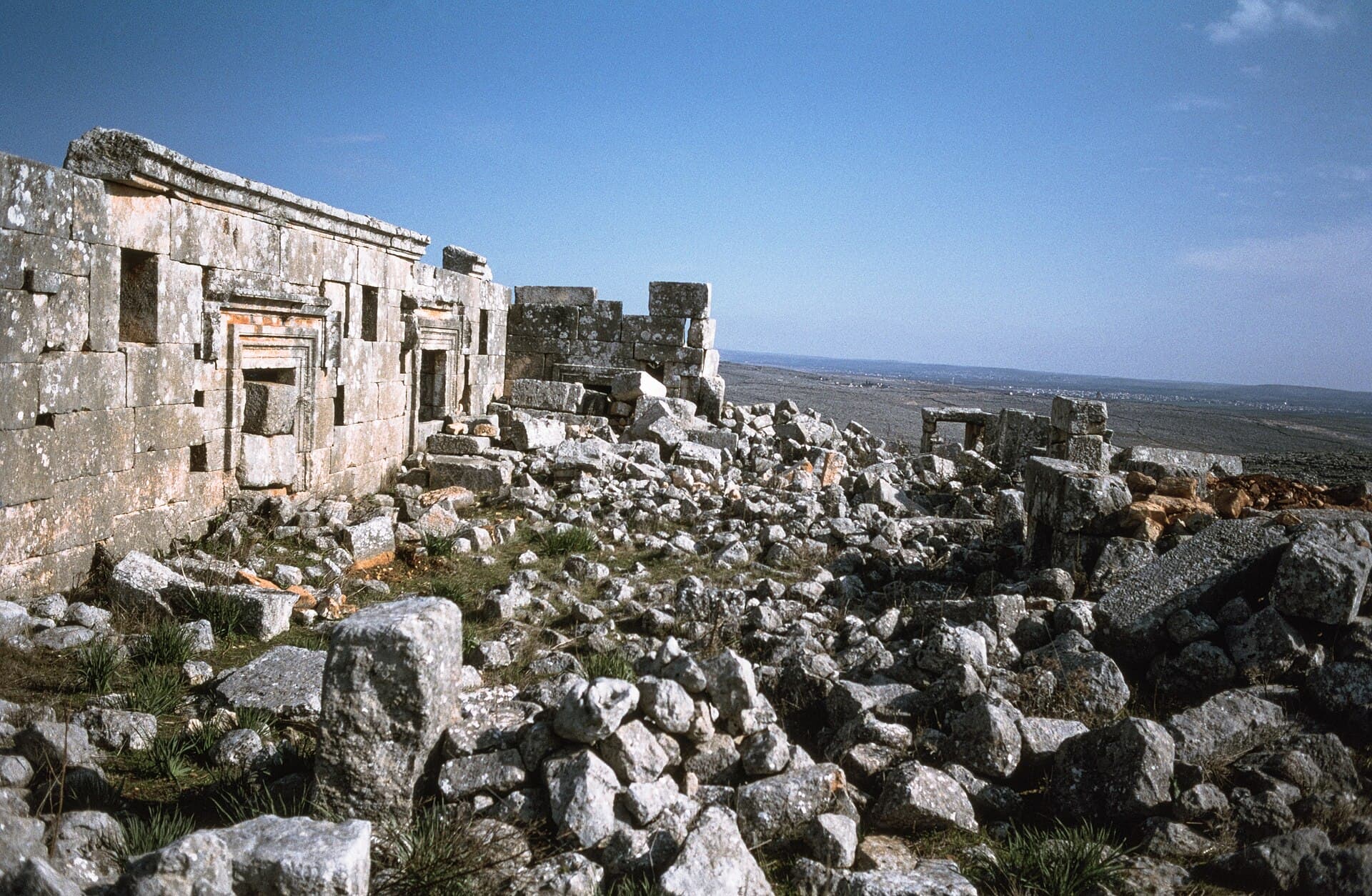
At the north-east tip of Jebel Barisha, above the Sarmada plain, a church dated 414: its south front stands with two carved doorways, and no two capitals match.
- Opening hours
- Open site, daylight hours
- Entry
- Variable — confirm on arrival
- Duration
- 45 minutes
- Best time
- Spring and autumn; on a clear day the plain shows from the hilltop
- Period
- Byzantine
- Address
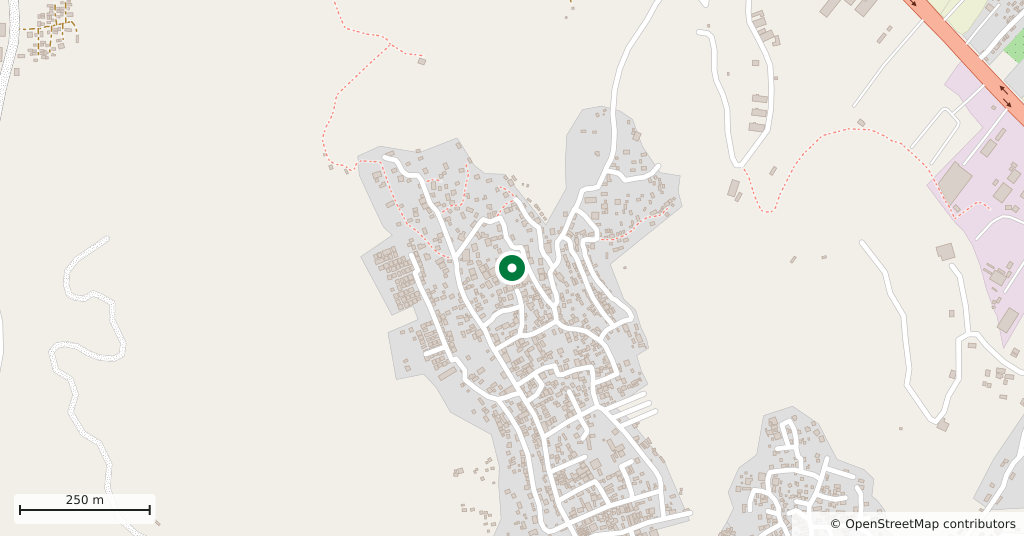
- North-east tip of Jebel Barisha, west of the Sarmada plain, Idlib
A small Dead City on a hilltop at the north-east tip of Jebel Barisha. On the east and west edges of the village stand a large and a small church, with olive presses and buildings whose use is unknown. The door inscription of the large church gives the date 414 and the name of its architect. That inscription is what marks Ksejbe out: it is one of the dated churches on Jebel Barisha that carry the same architect’s name.
Getting there
A hill on the west side of the Sarmada plain; you can pick out the ruins from the plain below. From the top, Jebel Halaqa is visible to the north and the Sheikh Barakat hill to the east. In antiquity the road from Antioch to Chalcis ran close by. Ba’uda is about a kilometre north-west, and Babisqa about one and a half kilometres away. There is no public transport; you hire a car and driver in Sarmada or Idlib. Nothing is signposted.
How long it takes
Forty-five minutes. Allow an hour if you want to look at the capitals of the large church one by one.
What you see
The Large Church sits at the top of the village’s eastern slope. Its south front stands with two carved doorways; the north, east and west ends are in ruins. The inscription on the lintel of the south-east doorway gives the date 414 and the name of the architect, Markianos Kyrillas. Mouldings with geometric and plant motifs frame the door.
Inside, a standard basilica plan can be read: an arcade of five columns on each side. The columns and arches have fallen into the nave. Every capital is carved differently. There are Corinthian, disc, vertical-fluted and basketwork types, and each capital forms a pair with its twin in the opposite row.
Between the south-east column and the neighbouring pier stand two reliquaries, stone chests that held a saint’s remains; one is single, the other double. A baptistery and a funerary chamber with tombs were added later to the east of the south aisle. South of the church lies an atrium. East of the atrium is a two-storey baptistery, and to its south runs a stoa on plain piers.
The Small Church is on the west edge of the village and dates from the 6th century. Its plan is close to square, with entrances on the south and west. Square rooms surround its rectangular east end. Each side has four narrow arches with Corinthian capitals. Howard Crosby Butler’s drawing of this church shows a colymbion, a baptismal pool.
The churches of Markianos
The date 414 puts Ksejbe in the middle of a series of dated churches on Jebel Barisha. A lintel dated 401 in the large church at Babisqa names Markianos as architect. The Church of Saints Paul and Moses at Dar Qita was finished in 418, and its inscription gives the name Markianos Kyris. The three churches were built within a few kilometres of each other, less than twenty years apart.
How it stands today
The descriptions here rest on published sources and on photographs in the Dumbarton Oaks archive. We found no verified record of the site’s condition after the war years. During the war, displaced families took shelter in the Dead Cities of Jebel Barisha; if anyone is on the site, call out.
Don’t miss
The capitals that fell into the nave. Most visitors look at the standing south front and turn back. Walk among the stones, and you can see Corinthian, disc and basketwork capitals side by side.
Tips
- The inscription dated 414 is on the lintel of the south-east of the two south doorways
- Every capital that fell into the nave is carved differently; walk among them
- Ba'uda is about a kilometre north-west; link the two on one walk
- The stones are tumbled and loose; shoes with a firm sole help
Transparency
- How this was chosen
- Written by hand; opening hours, entry fee and coordinates are kept as data. A field that is not known for certain is marked as variable rather than guessed.
- Facts checked
- September 2026
- Last updated
- September 15, 2026