The Baths of Diocletian at Palmyra
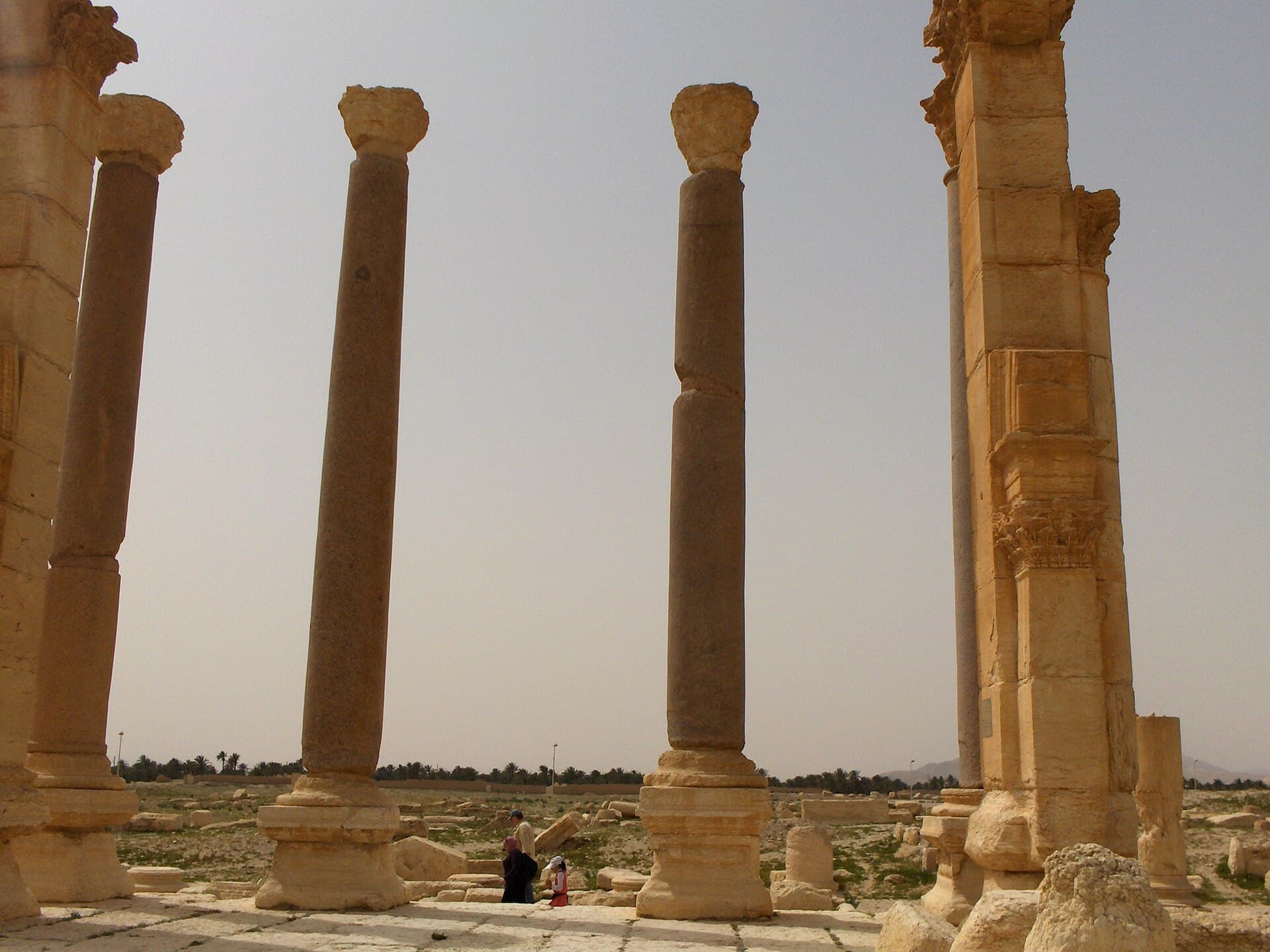
Four giant granite columns mark the entrance to a Roman bath on Palmyra’s colonnaded street. Each is over 12 metres tall; what else survives and where to find it.
- Opening hours
- Open site; no set hours in December 2025
- Entry
- Free (December 2025) — check at the entrance
- Duration
- 15 minutes
- Best time
- Early morning; the street has no shade
- Period
- Roman — renovated under Diocletian
- Address
- North-east side of the colonnaded street, north-west of the monumental arch, Palmyra, Homs governorate
On the north-east side of Palmyra’s colonnaded street, four dark granite columns mark an entrance. Behind them lie the foundations of a Roman bath. Not much of the building survives; the columns are the reason to stop. Among the city’s pale limestone columns, these granite shafts brought from Egypt stand out at once by their colour.
Where it is
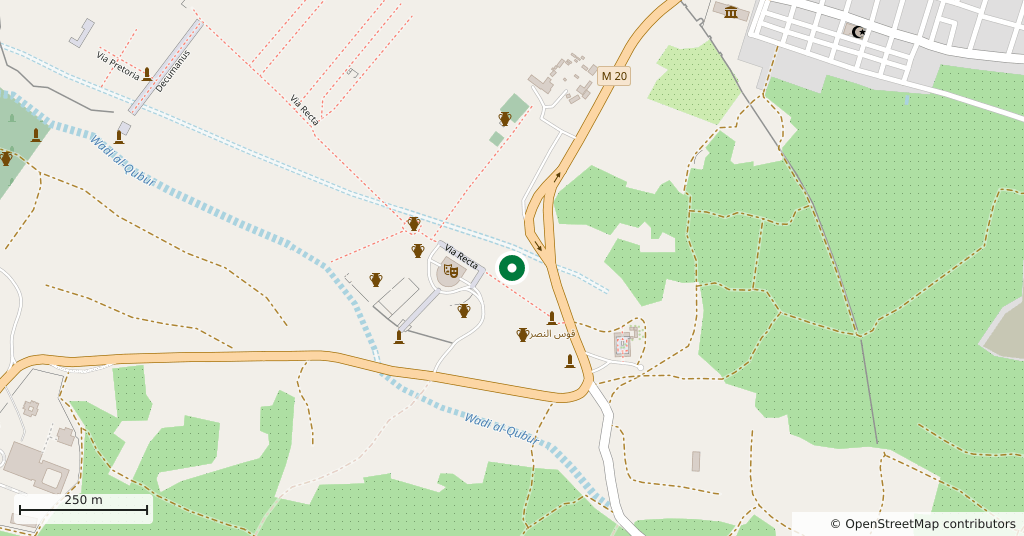
Just north-west of the monumental arch, east of the theatre and across the street from it. The layout of the street is on the Great Colonnade page. Directly opposite the baths, on the south side of the street, is the Temple of Nabu, and the two make one stop.
What the columns are
The four columns carried the monumental entrance of the baths. Each weighs about 20 tons and is more than 12 metres tall. The stone came from Aswan in Egypt. The pediment they supported is lost.
What you can make out inside
Behind the entrance is the outline of a colonnaded pool, the frigidarium or cold room. The changing room was octagonal, and its floor and central drain can still be traced. The rest of the building does not rise above foundation level, so you read the plan from the ground.
Why it is named after Diocletian
The name comes from a renovation under the emperor Diocletian (284-305). The origin of the building is disputed. One view holds that the baths were built after Aurelian destroyed the city in 273, over an older building thought to be Zenobia’s palace. The other puts the building a century earlier, at the end of the 2nd century.
Present state
No separate dated source on the condition of the baths after 2015 was found. The description here relies on pre-war records, and the present state is unverified. Transport, permits and closed sectors are in how to get to Palmyra; the layout of the whole site is on the Palmyra ruins page.
How long it takes and what most people miss
Looking at the columns and the ground plan takes 15 minutes. Most photographs stop at the columns. A few steps past the entrance, the floor of the octagonal changing room and its drain appear at your feet. From here, follow the street south-east and turn south where the arch stood to reach the Temple of Bel.
Tips
- Compare the granite shafts with the limestone columns along the street; the colour difference is obvious
- Step past the entrance: the octagonal changing-room floor and its drain are on the ground
- See the Temple of Nabu opposite on the same stop; just cross the street
- The present state of the baths is unverified; parts may be fenced
Transparency
- How this was chosen
- Written by hand; opening hours, entry fee and coordinates are kept as data. A field that is not known for certain is marked as variable rather than guessed.
- Facts checked
- September 2026
- Last updated
- September 15, 2026