Batuta, a Dead City on the Jebel Sem’an
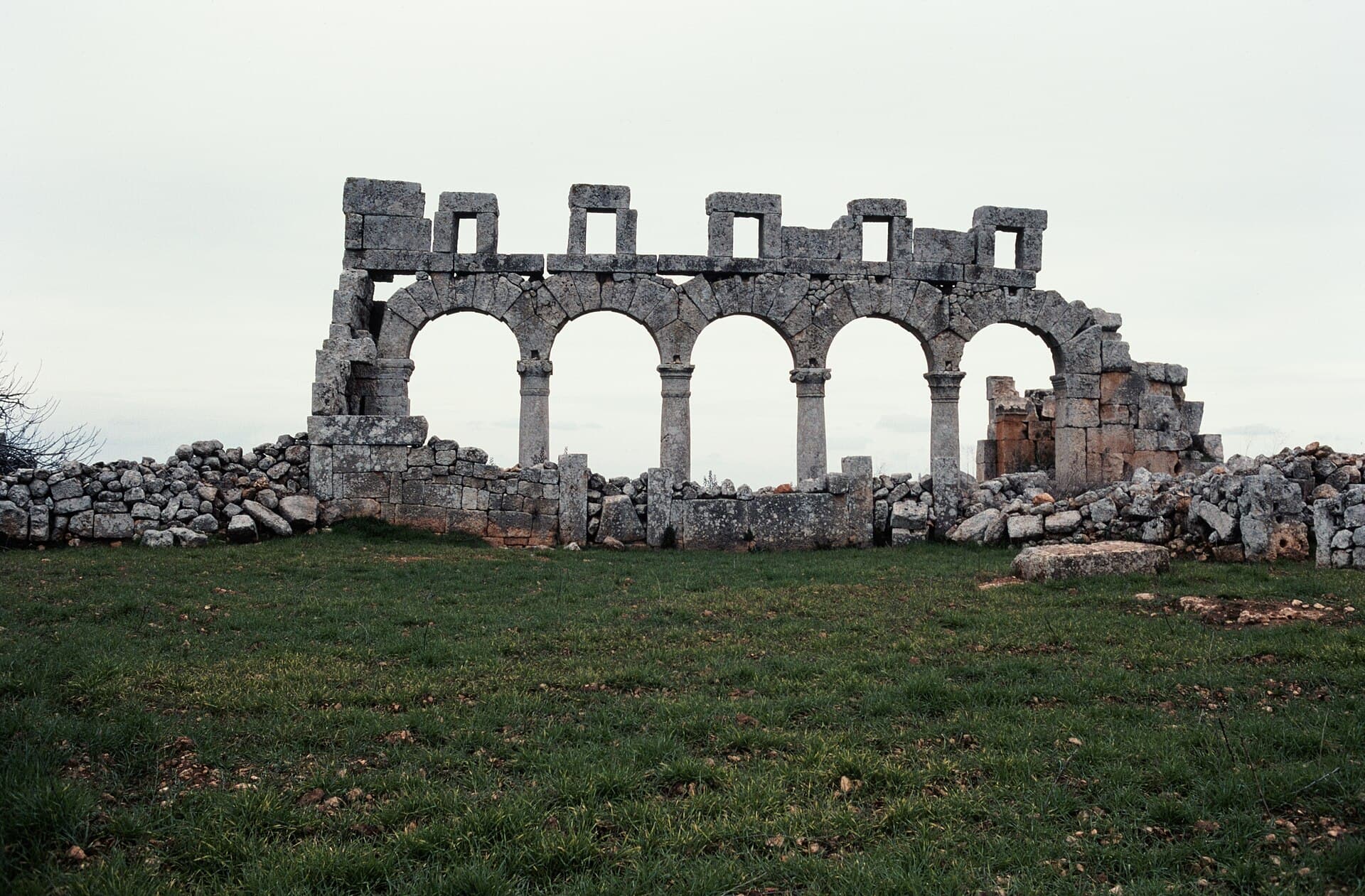
A 4th-century hilltop village where the south arcade of the basilica still stands, each capital carved in a different order. A second church lies 100 metres off.
- Opening hours
- Open site, daylight hours
- Entry
- Variable — confirm on arrival
- Duration
- 60 minutes
- Best time
- Spring and autumn, before the heat sets in
- Period
- Byzantine
- Address
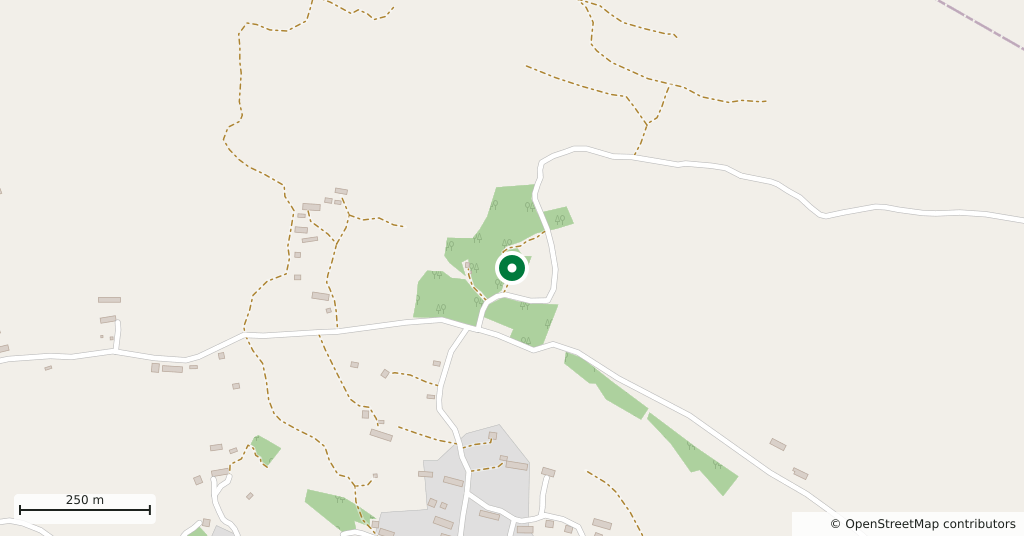
- Batuta, Jebel Sem'an, rural Aleppo
Batuta is one of the Dead Cities — the abandoned late-antique stone villages of northern Syria — and it spreads over high ground on the Jebel Sem’an, west of Fafertin. It was founded in the 4th century; by the 6th century it had two churches and more than a dozen other stone buildings. The south arcade of the basilica at its centre still stands, and no two of its capitals are carved in the same style. In 2011 the village entered the UNESCO World Heritage List as part of the Ancient Villages of Northern Syria.
Getting there
From Aleppo you take the Afrin road up onto the Jebel Sem’an. Batuta lies a little over two kilometres west of Fafertin, with Surqaniya also to the east. The Church of Saint Simeon Stylites at Mar Semaan is just under five kilometres away as the crow flies. There is no public transport. You hire a car and driver in Aleppo, and the driver needs to know the ruins, not just the village.
How long it takes
An hour. The remains are spread out: you walk between the basilica in the centre, the two-storey house 40 metres to its south and the small church 100 metres to the south-east. Fafertin and Surqaniya fit into the same half day.
Why the village sits on a hill
Batuta stands on high ground with other villages scattered around it in the valley and on the slopes. That position made it a junction of the roads crossing the Jebel Sem’an, and what travelled on those roads was olive oil. Like the other villages on this limestone upland, Batuta built its stone houses on the money from that trade. Some buildings carry dated inscriptions.
What you see
The main church is a 4th-century colonnaded basilica with a semicircular apse. It has two main entrances on the south side. Rectangular windows and stone blocks projecting from the wall for support are the familiar marks of church building in that period. The nave had five bays with an aisle on each side; only the south arcade is still standing.
At the west end there is a portico of piers, and on the east wall are graffiti cut by passing pilgrims. When the church was rebuilt in the 5th century a bema was added in the middle of the nave. This raised stone platform, where the clergy sat, is still in place.
40 metres south of the church stands a two-storey building that was most likely a house. Its ground floor keeps a decorated votive balustrade. 100 metres to the south-east, nearer the edge of the village, is the second church, a smaller one with a nave and a square apse. The columned porches that sheltered its south and west doors collapsed not long ago. Pieces of the south porch entablature lie on the ground, and on them you can make out a medallion and part of a band of foliage.
How it stands today
Batuta is in the countryside north-west of Aleppo. There may be fields and animal pens among the ruins; call out before you walk into a yard. Unexploded ordnance is a reported hazard in the countryside: stay on the path and do not touch metal lying on the ground. The situation in the area changes often, so check before you set out.
Don’t miss
The capitals of the south arcade. The capitals in that one row come in four styles: a Corinthian capital without volutes, a Syrian Ionic capital, a Doric-Tuscan capital and a four-faced Ionic capital. From a distance they all look alike; walk slowly along the columns and look at each one.
Tips
- Look at the south arcade capitals one by one; there are four different styles
- The small church is 100 metres south-east; look for the medallion on the fallen entablature
- Fafertin is a little over two kilometres east; put the two in one half day
- Stay on the path and do not touch metal lying on the ground
Transparency
- How this was chosen
- Written by hand; opening hours, entry fee and coordinates are kept as data. A field that is not known for certain is marked as variable rather than guessed.
- Facts checked
- September 2026
- Last updated
- September 15, 2026