Beit Achiqbash, Aleppo
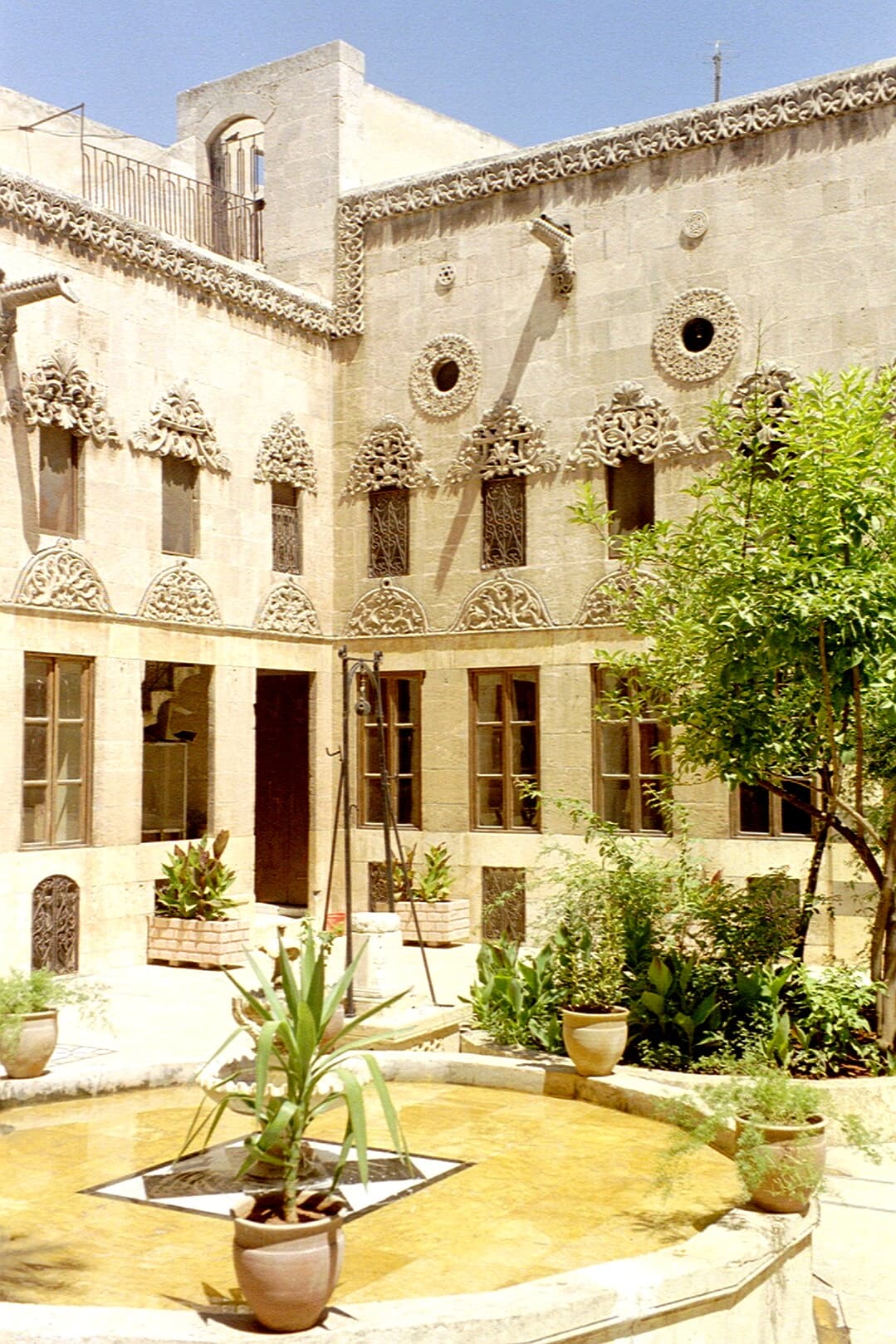
An Aleppine courtyard mansion of 1757 in Jdeideh, home to the Museum of Popular Traditions since 1973. The carving on its court is the city’s richest.
- Opening hours
- Varies — confirm before you go
- Entry
- Varies — confirm at the door
- Duration
- 40 minutes
- Best time
- Late morning; the court takes the light and shadow picks out the carving
- Period
- Ottoman
- Address
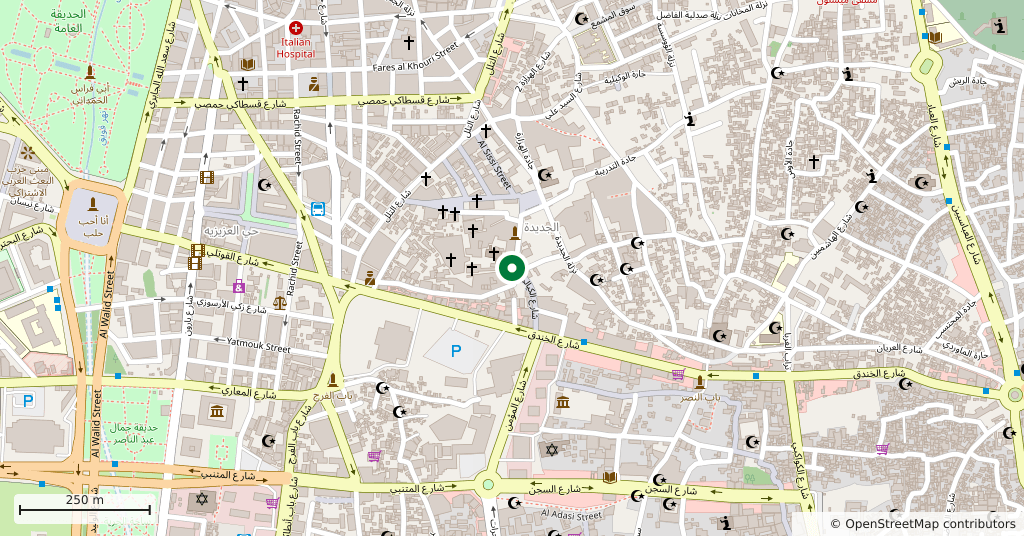
- Jdeideh quarter, Old City, Aleppo
In one of the narrow lanes of Jdeideh, and from outside just a plain wall. Step through the door and the courtyard opens, and all the ornament is in there: closed to the street, turned inward — that is the rule of the Aleppo house.
Who built it
A wealthy Christian merchant named Qara Ali built the house in 1757. When the family later moved to Alexandretta it was bought by a man called Achiqbash, and it is his name the house carries now.
Getting there
In the middle of Jdeideh, two minutes on foot from Beit Ghazaleh. Take the lanes running southwest off Sahat al-Hatab; the sign is small, so watch the door numbers.
What to see
The facade around the courtyard is carved from top to bottom: leaf and flower pediments over the windows, rosette medallions between them, and an unbroken band of ornament along the eaves. The style sits where Mamluk stone carving meets baroque decoration arriving from Europe — the shared language of merchant houses in 18th-century Aleppo. A marble basin stands at the centre with pots and a citrus tree around it. Inside is the collection of the Museum of Popular Traditions: household objects, dress, carved wooden room panelling.
Don’t miss
The wing that is not there. The eastern rooms of the house were taken down to open the street in front of it. Stand in the courtyard and look that way: the cut line of the facade still reads, and it shows how large the house really was.
How it stands now
The building was badly damaged and looted in the street fighting of 2012-2016. A joint survey by the Directorate-General of Antiquities and Museums and UNESCO was completed in November 2017, consolidation began in 2019, original stone was reused in repairing the carving of the courtyard, and the second phase finished in September 2021. Whether the museum is open to visitors varies — ask before you go.
Tips
- Stop just inside the door and take in the courtyard facade as a whole
- Compare the leaf pediments over the windows with the rosettes; they look like two different hands
- Find the cut line of the facade on the east side, where the house was shortened
- Beit Ghazaleh is two lanes away; put both on the same walk
Transparency
- How this was chosen
- Written by hand; opening hours, entry fee and coordinates are kept as data. A field that is not known for certain is marked as variable rather than guessed.
- Facts checked
- September 2026
- Last updated
- September 15, 2026