Circesium (al-Busayra)
The Roman frontier fortress where the Khabur joins the Euphrates. Procopius called it the farthest fortress of the Romans; the town of al-Busayra sits on it.
- Opening hours
- Open settlement, daylight hours
- Entry
- Free
- Duration
- 45 minutes
- Best time
- Late afternoon, when the two rivers separate in colour
- Period
- Roman — Byzantine — Early Islamic
- Address
- Al-Busayra, Khabur–Euphrates junction, Deir ez-Zor Governorate
A Roman fortress built on the spur where the Khabur runs into the Euphrates. It was the easternmost fortified point on the border between Rome and the Sasanian Empire, and the Byzantine historian Procopius calls it the farthest fortress of the Romans. The name comes from the Latin castrum Circense, the castle with the circus. In Arabic it is Qarqisiya.
Getting there
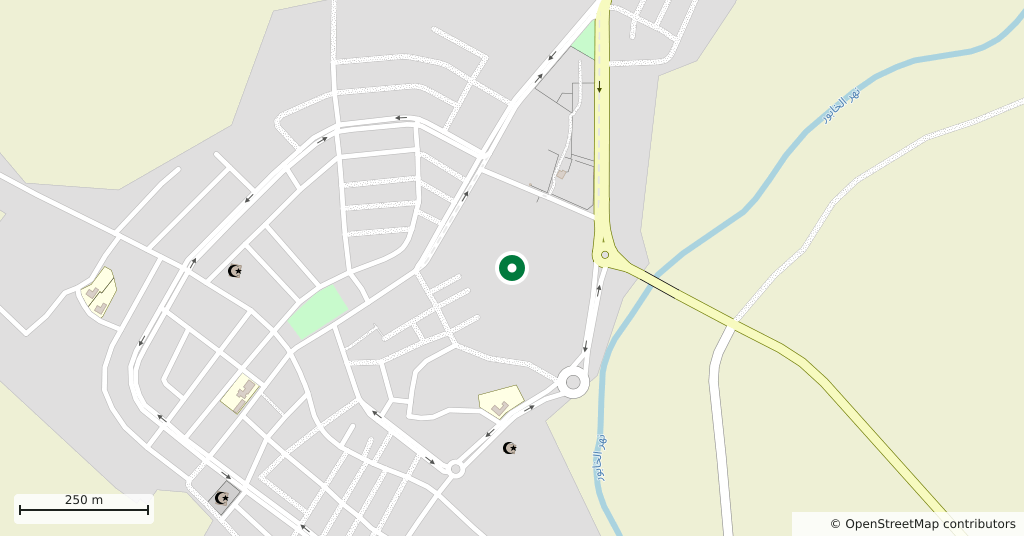
South-east of Deir ez-Zor, along the road that follows the Khabur. The modern town of al-Busayra stands directly on the ancient settlement. There is no separate archaeological gate; you are simply inside the town.
What to see
The confluence of the two rivers. One look explains why the fortress was put here: the road between Damascus and Baghdad crosses at this junction, and whoever holds this bank commands it. Traces of the wall line are absorbed into the fabric of the town. Come without expecting a monument left standing.
What remains
The city appears in the Ka’ba-ye Zartosht inscription of the Sasanian king Shapur, among the places taken from the Romans in 256. Diocletian fortified it heavily. Emperor Jovian ceded it to the Sasanians in the treaty of 363; it was recovered and served as the headquarters of Legio IV Parthica until the 5th century. Justinian rebuilt and extended the fortress. A Muslim army under Habib ibn Maslama took the town around 640.
What not to miss
The junction itself. You can read the line where the Khabur mixes into the Euphrates by the colour of the water. That view explains why the fortress was fought over again and again, and why its name passes from hand to hand for centuries in the sources.
Tips
- Do not expect a standing castle; the ancient city lies under the modern town
- Walk to the north-east edge of the town to see the confluence
- Visit the Deir ez-Zor museum first, the Khabur valley finds are there
Transparency
- How this was chosen
- Written by hand; opening hours, entry fee and coordinates are kept as data. A field that is not known for certain is marked as variable rather than guessed.
- Facts checked
- September 2026
- Last updated
- September 15, 2026