Dabiq and the Battlefield of Marj Dabiq
On the plain by Dabiq, 40 km northeast of Aleppo, the Ottomans beat the Mamluk army on 24 August 1516. What the village and the Marj Dabiq battlefield hold.
- Opening hours
- Village and plain are open ground, daylight hours
- Entry
- Free; open land
- Duration
- 45 minutes
- Best time
- Spring, while the plain is green
- Period
- Umayyad — Mamluk — Ottoman
- Address
- Dabiq village, Akhtarin subdistrict, Azaz district, Aleppo governorate
Dabiq is a village 40 km northeast of Aleppo and 10 km south of the Turkish border. What put it in the history books is not the village but the plain beside it: Marj Dabiq, “the meadow of Dabiq”. On 24 August 1516 the Ottoman army of Sultan Selim I defeated the army of the Mamluk sultan Qansuh al-Ghawri here. It was the decisive battle of the war that ended the Mamluk Sultanate in 1517.
Where it is
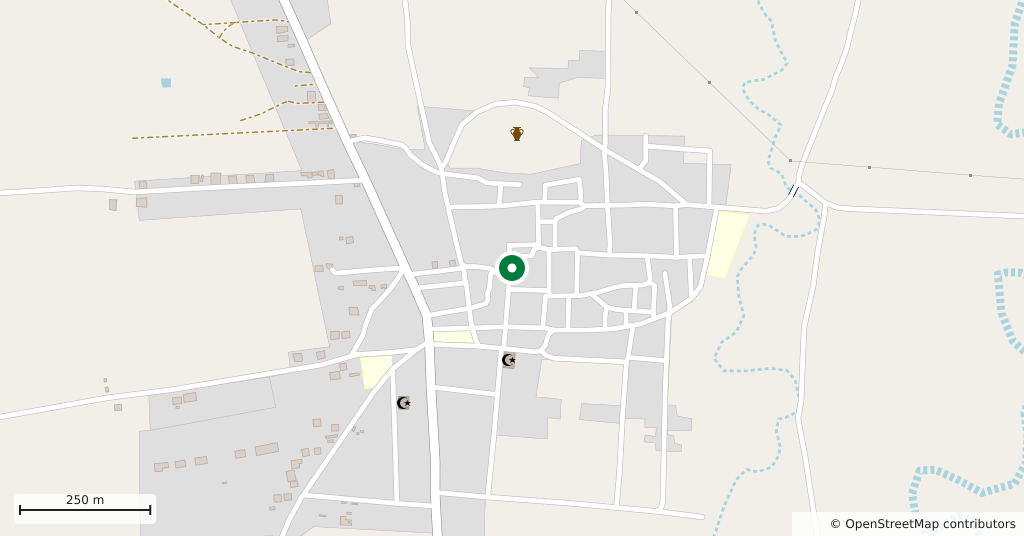
The village belongs to the Akhtarin subdistrict of Azaz district. Mare’ lies to the southwest, Sawran to the northwest and the town of Akhtarin to the southeast. At the 2004 census it had 3364 inhabitants. Just north of the village is an archaeological mound called Tell Dabiq.
What Dabiq was before the battle
Under the caliph Sulayman ibn Abd al-Malik (715-717), Dabiq, close to the Byzantine frontier, became the main Umayyad military camp in northern Syria. The geographer Yaqut al-Hamawi, who came here early in the 13th century, wrote of a green and pleasant meadow next to the village. The Umayyad army had camped on it before an expedition meant to reach as far as Constantinople. Caliph Sulayman, who led that campaign, was buried here; ISIS destroyed his shrine in 2014.
What happened on 24 August 1516
The Mamluk army set up camp on the plain of Marj Dabiq on 20 August and waited for the Ottomans. Sultan al-Ghawri held the centre. Sibay, governor of Damascus, led the right wing, and Khair Bey, governor of Aleppo, the left. Khair Bey had secretly gone over to the Ottomans.
In the first hours, Sibay’s veteran Mamluk units forced the Ottoman wing facing them to fall back and captured several guns. Then a rumour spread through the Mamluk ranks and the battle turned. The sultan died on the field. The Ottoman victory opened all of Syria to Selim’s armies, and Egypt was taken the following year.
How the battle was painted
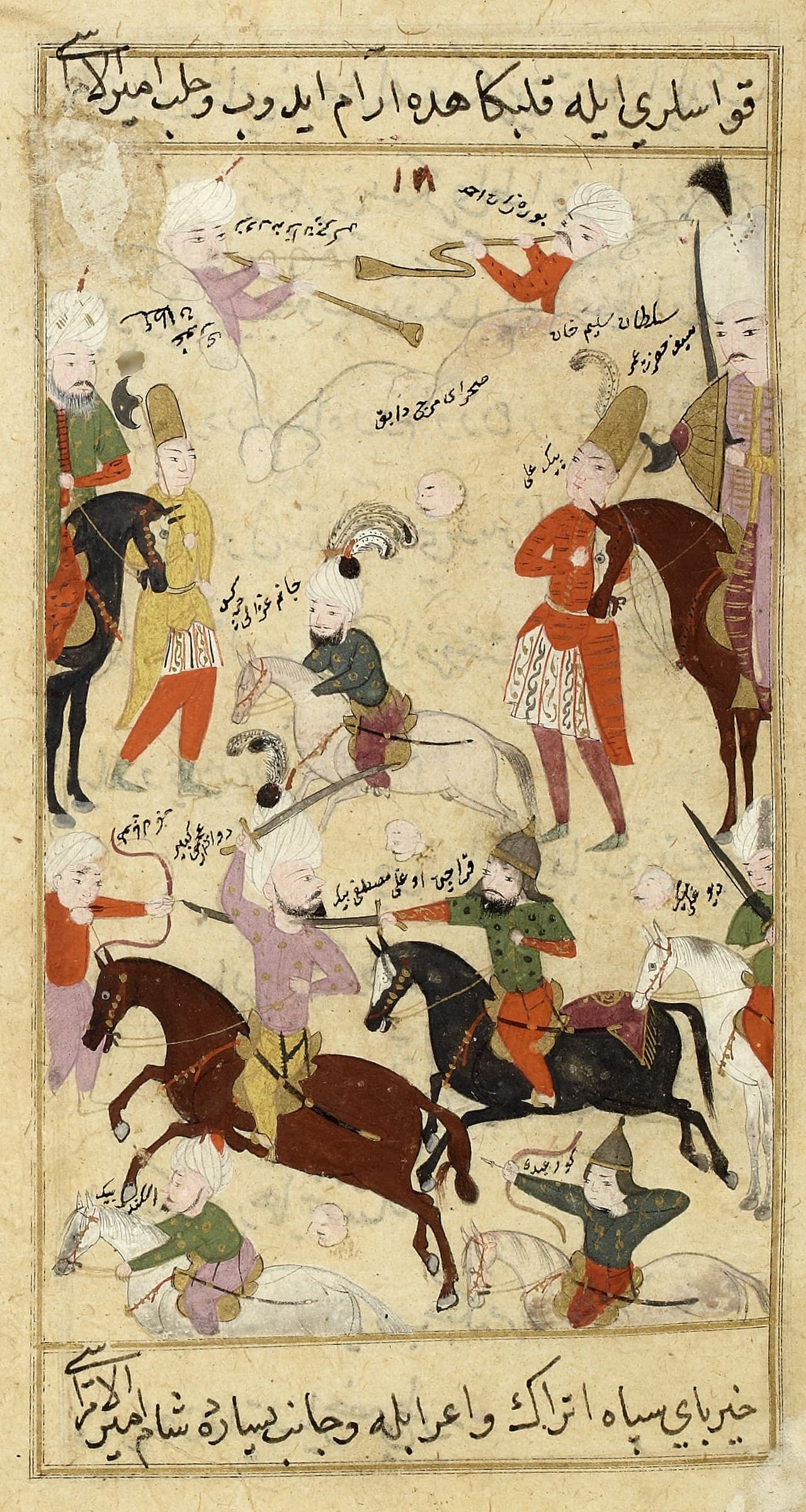
Marj Dabiq appears more than once in Ottoman miniature painting. Şükri-i Bitlisi’s Selimname of 1524 has a scene devoted to it. A copy of the Tac üt-Tevarikh chronicle in the Bibliothèque nationale de France in Paris shows the battle on a single page. Horsemen face each other, trumpeters play above, and the words “the plain of Marj Dabiq” are written into the middle of the scene.
Why the name is known today
A hadith names Dabiq as one of the places of a great battle before the end of time. Drawing on that story, ISIS seized the village in 2014 and named its magazine after it. The group was driven out of the village on 16 October 2016.
What most people miss
The plain itself. The battle is named after a meadow, not a building. Looking north from the village, the flat ground where two cavalry armies met in 1516 is in full view, and it explains better than anything where the horsemen in the miniature were riding.
Tips
- It is unclear whether any monument marks the battle; look over the plain from the north side of the village
- The shrine of Sulayman ibn Abd al-Malik was destroyed in 2014; ask in the village where it stood
- Tell Dabiq is just north of the village; view it from the track rather than walking into the fields
- The border is 10 km north; ask in Aleppo about current crossing conditions in the area
Transparency
- How this was chosen
- Written by hand; opening hours, entry fee and coordinates are kept as data. A field that is not known for certain is marked as variable rather than guessed.
- Facts checked
- September 2026
- Last updated
- September 15, 2026