Dar Qita, a Dead City on Jebel Barisha
On Jebel Barisha, a church of Saints Paul and Moses dated 418, its baptistery of 515 and a church of Saint Sergius from 537. Door inscriptions date the village.
- Opening hours
- Open site, daylight hours
- Entry
- Variable — confirm on arrival
- Duration
- 60 minutes
- Best time
- Spring and autumn, before the summer heat
- Period
- Roman — Byzantine
- Address
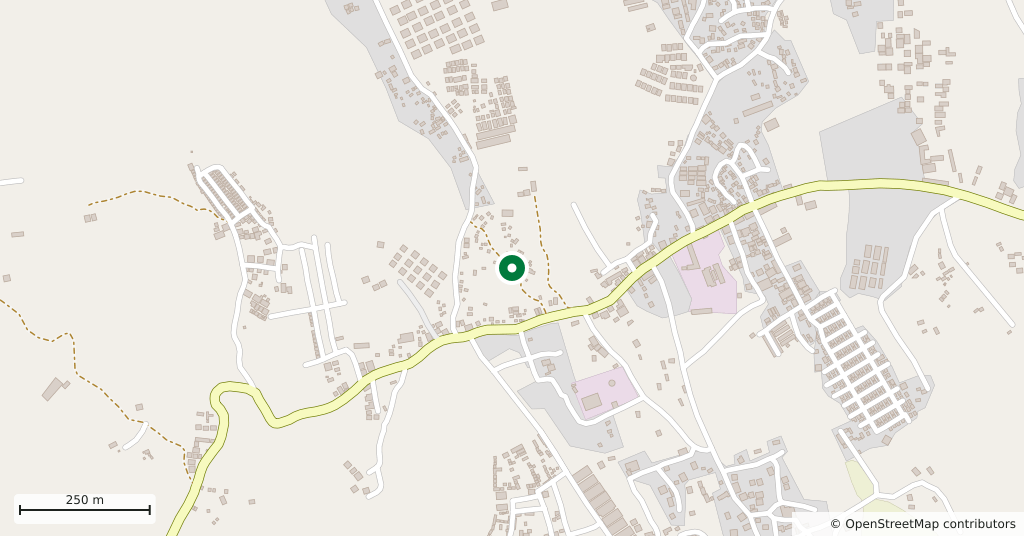
- Northern slope of Jebel Barisha, north of Baqirha, Dana subdistrict, Idlib
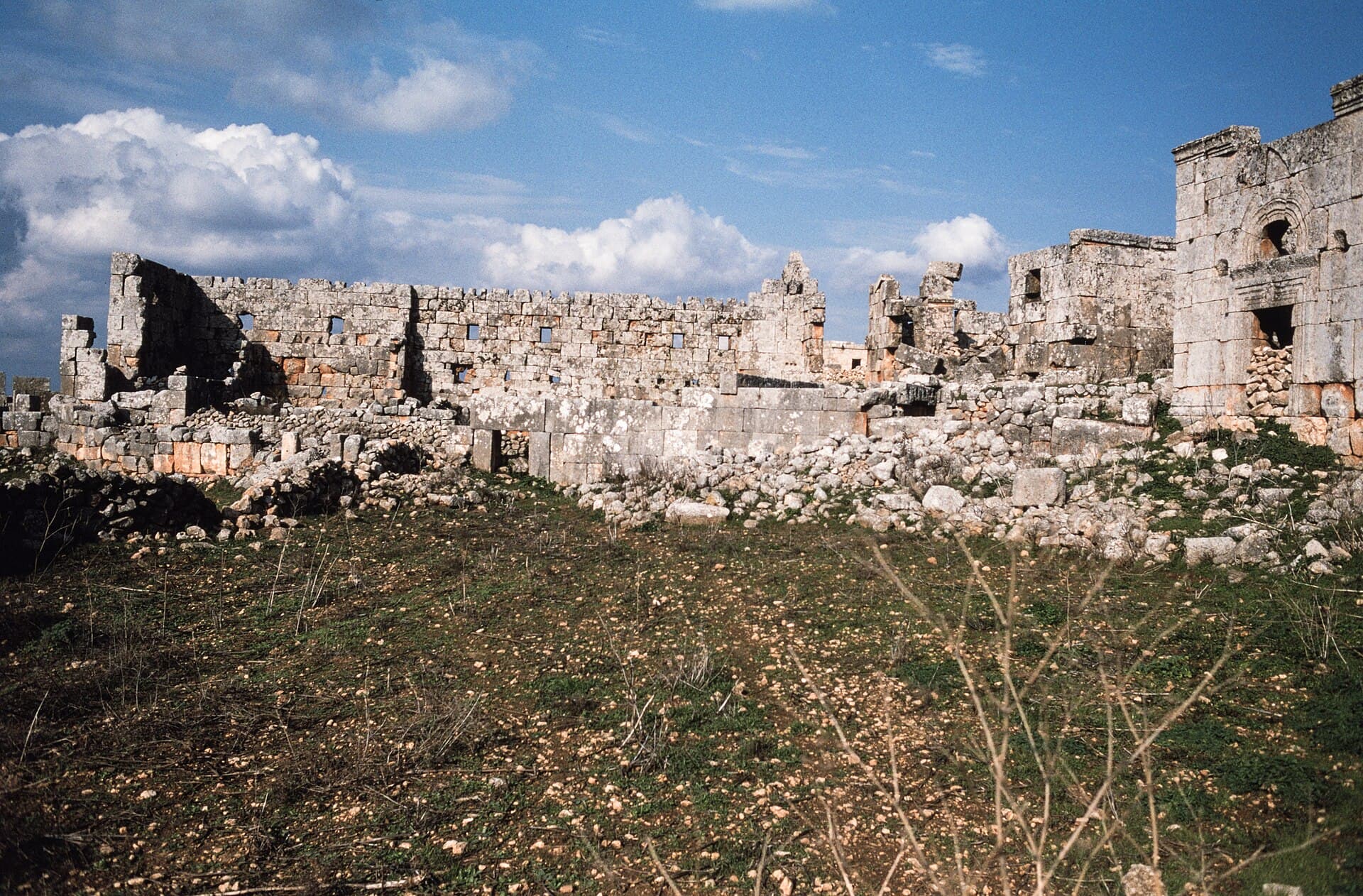
An empty stone settlement on the northern slope of Jebel Barisha, just north of Baqirha. Dar Qita keeps three churches, two baptisteries, towers, some forty houses and a community building. What sets it apart is the writing: Greek inscriptions on the door lintels say, building by building, when the work was finished, from 295/296 to 567. The village lies inside the Jebel Barisha park of the Ancient Villages of Northern Syria, inscribed by UNESCO in 2011.
Getting there
North of Idlib, in the Dana subdistrict, on the slope south of the Bab al-Hawa crossing. In Roman times the road between Chalcis and Antioch ran past the village. There is no public transport today; you hire a car and driver in Idlib or Sarmada. Nothing is signposted, so the driver has to know the place. Baqirha is about a kilometre to the south-west, with the Deirouni Chapel on the slope between the two. Babisqa is 3 kilometres east, and Ba’uda nearly three kilometres east.
How long it takes
An hour. Allow a little more if you want to read the dates on the lintels one by one. With Baqirha, Deirouni and Babisqa it makes a half day.
What you see
The Church of Saints Paul and Moses was finished in August 418, according to its inscription. The architect was Markianos Kyris and the church elder Diodoros. It is a three-aisled basilica a little over 20 metres long, with four columns on each side. The only doors are in the south wall, two of them; there are none on the north or west. A walled courtyard runs along its east side.
The baptistery at the south-west corner of the church is dated 515 and stands up to 6 metres high. Its font is deep enough to take water up to an adult’s chest.
The Church of Saint Sergius was built in 537, according to the inscription at its west entrance. The door of its baptistery was renewed in 566/567, under Patriarch Anastasius and Emperor Justin II. The third church is known as the Church of the Trinity because of the Syriac inscription on it.
What the inscriptions tell
People were living at Dar Qita in the 1st century. The oldest dated inscription, from 295/296, is on the door of a private house. An inscription of 339/340 says the agora was paid for by Flavius Eusebius, son of Kyrillos; one of 355 says the same man paid for a gate. In 355 the village became a market town, selling olive oil and wine.
Eleven door inscriptions dated between 339/340 and 515 open with the words “One God and His Christ”. An inscription of 431 adds the Holy Spirit. That is how the village’s move to the Trinitarian formula can be read. On its doors.
How it stands today
Howard Crosby Butler studied the site in 1900 and 1905, and the church plans still rest on his drawings. Photographs in the Dumbarton Oaks archive show sheep grazing in the nave of the Church of Saint Sergius; the site lies on a shepherds’ route. During the war years, displaced families took shelter in the Dead Cities of Jebel Barisha. We found no verified record of the buildings’ present condition; call out before you walk into a courtyard.
Don’t miss
The door lintels. Most visitors see the two large churches and turn back. The village’s calendar is not on the church walls, though; it is written over the doors. The oldest inscription, from 295/296, is on the door of a house.
Tips
- Nothing is signposted; a driver who knows Baqirha will find Dar Qita
- The baptistery is at the south-west corner of the Church of Saints Paul and Moses
- Look for dates on the door lintels; the oldest, 295/296, is on a house
- Baqirha, the Deirouni Chapel and Babisqa fit into the same half day
Transparency
- How this was chosen
- Written by hand; opening hours, entry fee and coordinates are kept as data. A field that is not known for certain is marked as variable rather than guessed.
- Facts checked
- September 2026
- Last updated
- September 15, 2026