Deirouni Chapel on the Jebel Barisha
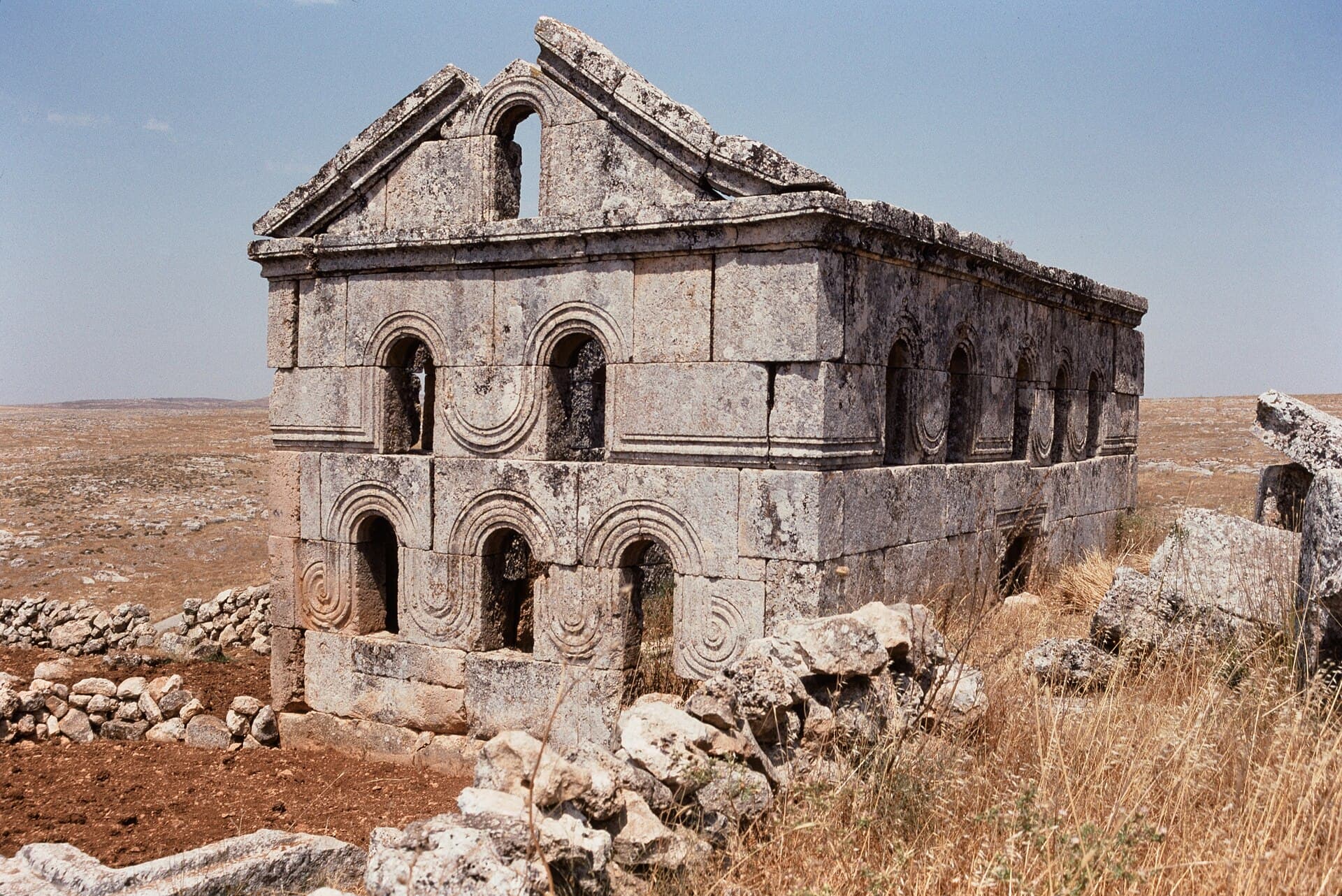
A monastic chapel standing alone on the slope below Baqirha. The mouldings that loop over its window arches and end in spirals are all still in their place.
- Opening hours
- Open site, daylight hours
- Entry
- Variable — confirm on arrival
- Duration
- 30 minutes
- Best time
- Spring; morning light picks out the mouldings on the east and south sides
- Period
- Byzantine
- Address
- Slope below Baqirha, Jebel Barisha, Dana subdistrict, Idlib
A small monastic chapel standing on its own on the slope below Baqirha, on the Jebel Barisha. In plan it is a plain rectangle, but the stone carving round its windows is fine work. In its 2011 evaluation ICOMOS, UNESCO’s advisory body, describes Deirouni as a monastic chapel of rare decorative quality and very well preserved. It is one of four elements named for the Jebel Barisha archaeological park.
Getting there
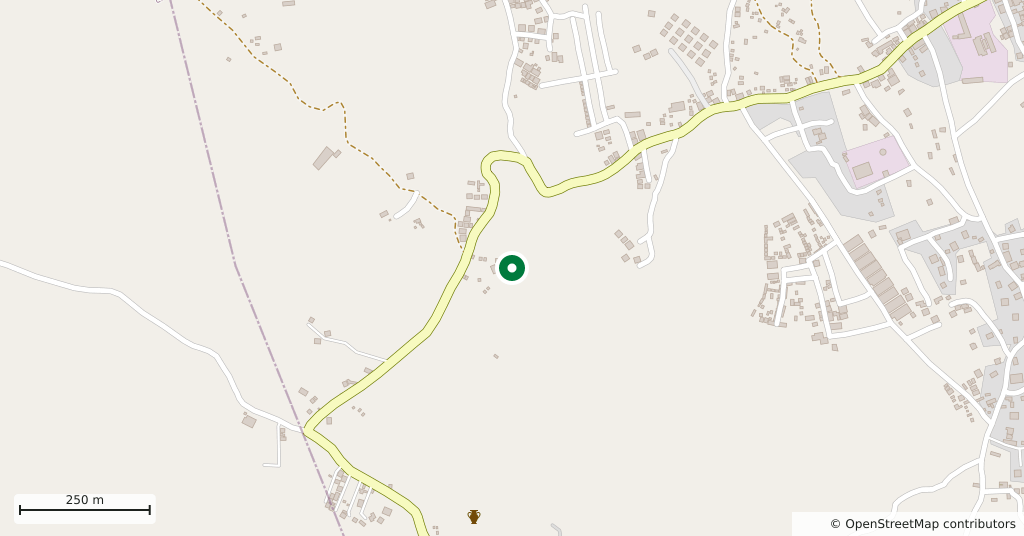
South of the Bab al-Hawa border crossing, in the Dana subdistrict. You go to Baqirha first; the chapel is 580 metres north of the settlement there, lower down the slope. Dar Qita is 685 metres to the north-east. So the chapel lies on the walking line between two Dead Cities — the abandoned late-antique stone villages of northern Syria. There is no public transport; you hire a car and driver in Idlib or Sarmada.
How long it takes
Half an hour. That is enough to walk round all four sides and read the rows of windows. It works best as a stop on the walk between Baqirha and Dar Qita.
What you see
In Early Churches in Syria, published in 1929, Howard Crosby Butler uses this chapel to show that the simplest plan did not mean the simplest decoration. The plan is a single rectangle with one door. Each long side has five windows high up. Each short end has three windows low down and two above, plus one more in the gable.
The decoration gathers round the windows. The doorways have rich mouldings. A deep moulding at the sill level of the upper windows runs all the way round the building, climbing over the round arch of each window and dropping back down. The three low windows at each end are framed by mouldings that curl between them and finish in a spiral at the end of the row. The gables carry a heavy cornice, and their windows have moulded frames. In photographs taken in 1996 for the Dumbarton Oaks archive, the west and south fronts stand up to the gable.
Where the name comes from
Maps give it as Deirouni, the ICOMOS report as Deiroune and Butler’s book as Burdj id-Deruni. Burj is Arabic for tower. When searching, try all three spellings.
How it stands today
During the war years, displaced families took shelter in the Dead Cities of the Jebel Barisha. We found no verified recent record of the chapel’s condition. Do not walk into a building people are living in. Unexploded ordnance is a reported hazard in rural Idlib: stay on the path and do not touch metal lying on the ground.
Don’t miss
The lower row of windows on the west front. The mouldings between the three windows curl and turn into spirals at both ends. This is where the carving Butler describes reads most clearly.
Tips
- See Baqirha first, then walk down the slope to the chapel; Dar Qita is 685 metres on
- Look for the mouldings that end in spirals on the lower row of the west front
- Each long side has five upper windows; count them from the south front
- People may be living in the building; call out before you approach
Transparency
- How this was chosen
- Written by hand; opening hours, entry fee and coordinates are kept as data. A field that is not known for certain is marked as variable rather than guessed.
- Facts checked
- September 2026
- Last updated
- September 15, 2026