Dura-Europos
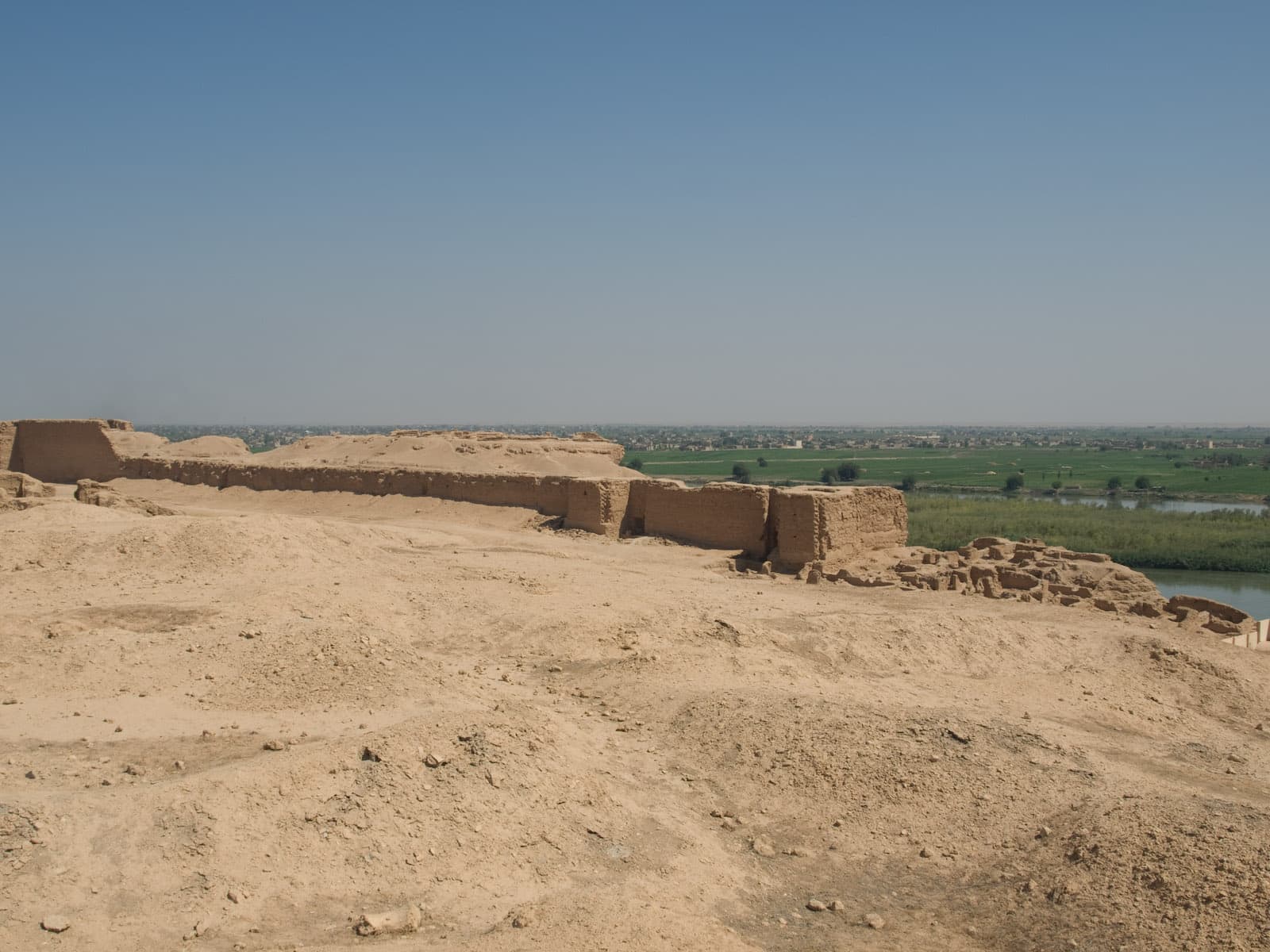
A frontier city on a bluff 90 metres above the Euphrates, known for its synagogue, its house church and its siege tunnels. It was looted heavily after 2011.
- Opening hours
- Open ground, daylight hours; confirm on arrival
- Entry
- Variable — confirm at the entrance
- Duration
- 150 minutes
- Best time
- Early morning or late afternoon; there is no shade at midday
- Period
- Seleucid — Parthian — Roman
- Address
- Near Salhiyeh, south-west bank of the Euphrates; 95 km south-east of Deir ez-Zor
Dura-Europos was founded around 300 BC by Seleucus, then changed hands along the Parthian and Roman frontier. Rome took it in 165 and made it its easternmost stronghold in Mesopotamia; the Sasanians took it by siege in 256, deported the population, and the city was never rebuilt. Because nobody built on top of it, it stayed as it was under the sand — which is why its excavators called it the Pompeii of the desert. Three religions turned up here with their buildings side by side: a synagogue dated by an Aramaic inscription to 244, one of the earliest known house churches, and a temple of Mithras.
Getting there
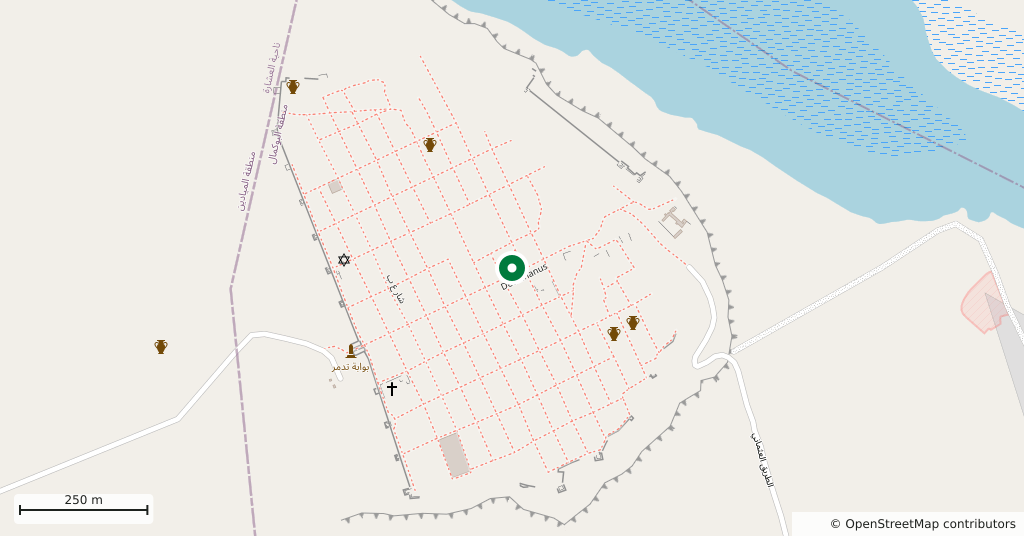
95 kilometres south-east of Deir ez-Zor, beside the village of Salhiyeh. About an hour and a half by car; no public transport runs there, and your driver needs to know the area. The site is on the south-western bank of the Euphrates, on a bluff 90 metres above the valley, and the point nearest the road is the Palmyrene Gate on the west side.
How long it takes
Two and a half hours. The flat part of the site runs to forty-five hectares and there is no shade; the distances are long, and longer in heat.
What to see
Go in through the Palmyrene Gate: it is the main gate in the west wall and the point nearest the road. The main street runs in from it, with blocks laid out on a grid to either side. The most legible part of the site is Wall Street, running along the inside of the west rampart: the synagogue, the house church and the mithraeum all came out of that one strip. To the north is what is left of the Temple of Bel, where in 1920 a soldier digging a trench found the wall paintings. At the eastern end, above the valley, stands the mud-brick citadel, and the view is complete only from there.
What not to miss
The siege itself. In 256 the Sasanians drove a mine under the wall, the Romans dug a countermine, and the two met underground. The armour, shields and scale horse armour of the Roman soldiers caught under the collapse survived precisely because that day froze where it fell: the only complete sets of scale horse armour known anywhere came out of here. The tunnel mouths are around Tower 19. The painted shields found in the same place are in the Yale University Art Gallery, and part of the material is in the Deir ez-Zor Museum.
The site today
There is no point hiding this: the site was dug over by looters between 2011 and 2014. Satellite imagery assessed in 2015 showed more than 70 per cent of the surface pitted with looting holes. The grid you see is still there, but the ground is broken everywhere and most of the stratigraphy is gone. Keep away from the edges of the holes and stay on the marked line.
Tips
- Enter through the Palmyrene Gate: the main street and the city blocks run in that direction
- Follow the inside of the west rampart — synagogue, house church and mithraeum all sit on that strip
- Climb to the citadel; the Euphrates valley only reads whole from up there
- The ground is pitted with looting holes; do not stand on their edges, and wear closed shoes
- At least two litres of water per person and a hat: there is no shade anywhere on the site
Transparency
- How this was chosen
- Written by hand; opening hours, entry fee and coordinates are kept as data. A field that is not known for certain is marked as variable rather than guessed.
- Facts checked
- September 2026
- Last updated
- September 15, 2026