Mari
A mud-brick mound at Tell Hariri and 25,000 cuneiform tablets. The Euphrates city of the 3rd millennium BC, how it was dug, and the state of the site today.
- Opening hours
- Open ground, daylight hours; confirm on arrival
- Entry
- Variable — confirm at the entrance
- Duration
- 120 minutes
- Best time
- Early morning; there is no shade at all on the mound
- Period
- Early Bronze Age — Shakkanakku — Amorite Lim dynasty
- Address
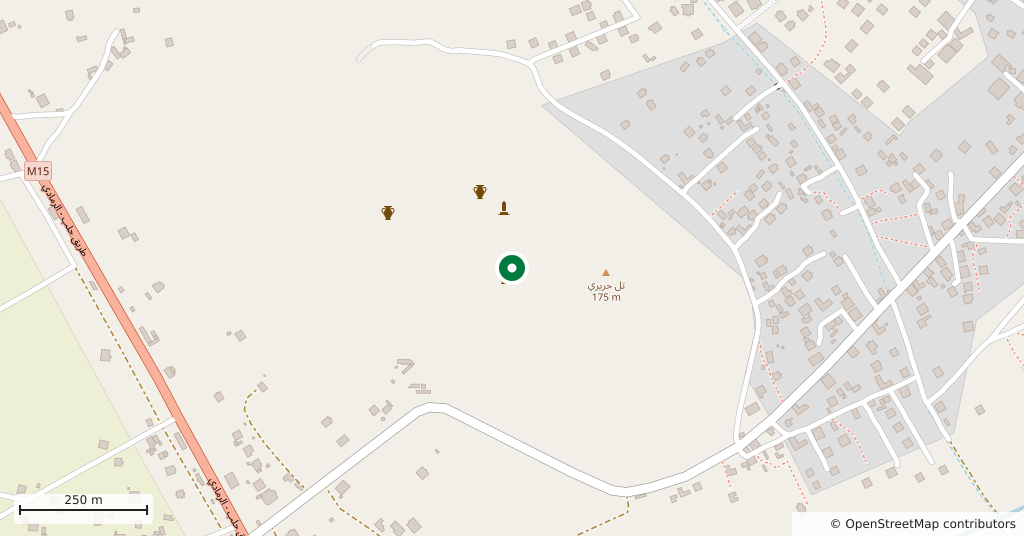
- Tell Hariri, west bank of the Euphrates; 125 km south-east of Deir ez-Zor
Mari is not a monument that stands on its own; it is an archive. On the mound of Tell Hariri on the west bank of the Euphrates, it was a city-state between 2900 and 1759 BC, sitting squarely on the trade route between Sumer to the south and Ebla to the west. Some 25,000 cuneiform tablets came out of the mound. They set out the political map of the 2nd millennium BC in a detail no other source can match: trade networks reaching from Afghanistan to Crete, correspondence between kings, the daily record of running a state.
Getting there
125 kilometres south-east of Deir ez-Zor and 11 kilometres north-west of Abu Kamal, close to the Iraqi border. It lies on the same road as Dura-Europos, 30 kilometres apart, so the two go into one day.
How long it takes
Two hours. The site is large, but what you see is sections of mud-brick wall and excavation pits; without a guide to talk you through it, more than two hours is hard work.
What to see
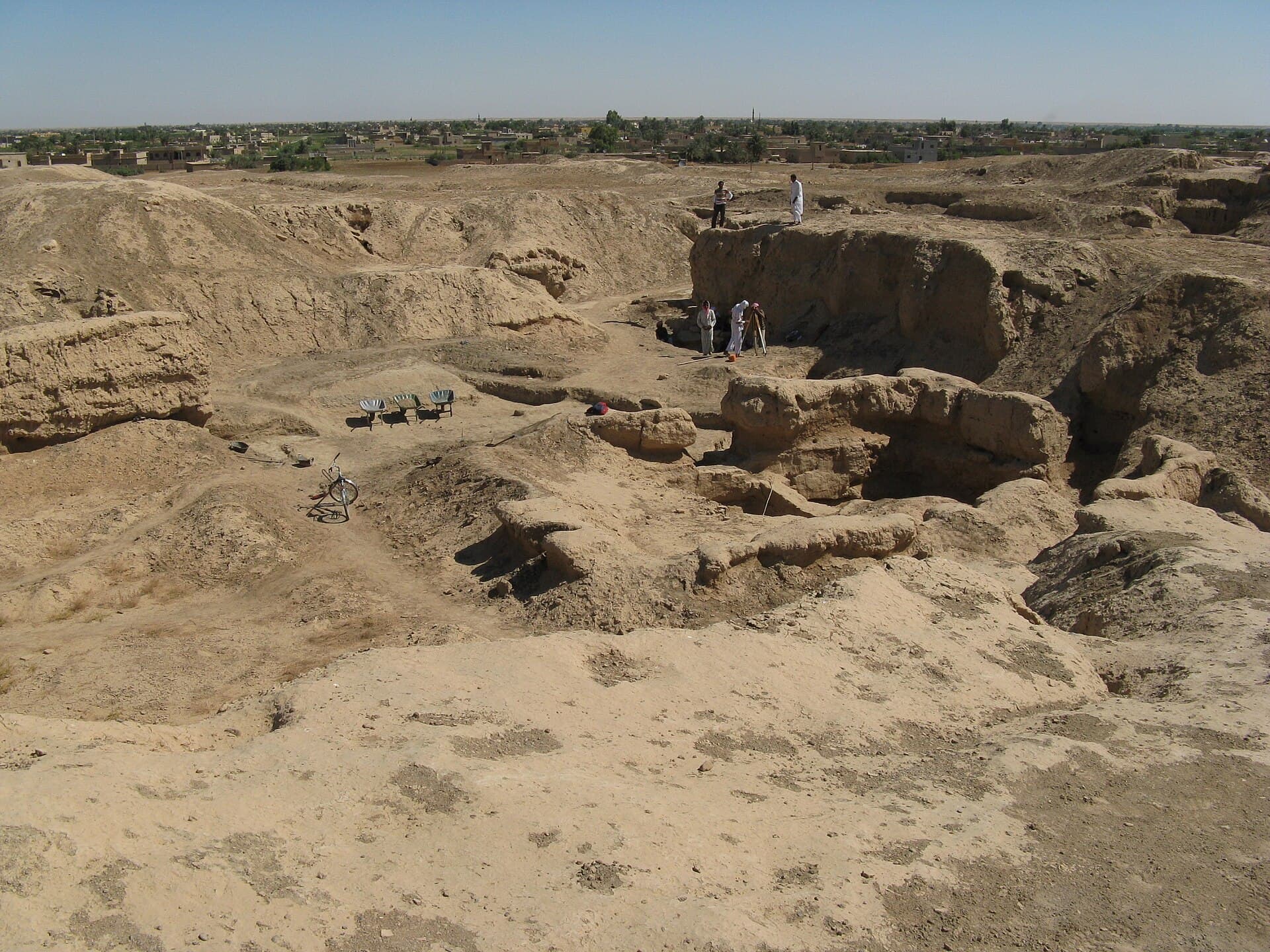
The plan of Zimri-Lim’s palace can be read on top of the mound: the courtyards, the throne room and the archive rooms. Beside them are the remains of the temples of Ishtar and Dagan. Mud brick erodes once excavation exposes it to the air, so the walls stand lower now than they do in the dig photographs. The painted south façade of the part of the palace called the Court of the Palms has been rebuilt full-size in the Deir ez-Zor Museum — the plan is on the mound, the surface is in the museum.
What not to miss
How the mound was found. In 1933 a bedouin family digging into Tell Hariri for a gravestone struck a headless statue. Word reached the French authorities, a team from the Louvre began work that December, and the first thing they opened was the temple of Ishtar. The finds are now in the Louvre and in the museums of Damascus, Aleppo and Deir ez-Zor.
The site today
Excavation stopped in 2011 and has not resumed. The site fell under the control of armed groups and was looted on a large scale. An official report drawn up in 2014 records that the diggers concentrated on the royal palace, the baths, the temple of Ishtar and the temple of Dagan. Satellite imagery shows the digging continuing until at least 2017. The surface today is pitted with holes. Go knowing that: what there is to see here is as much the measure of the loss as the ruin itself.
Tips
- See the Deir ez-Zor Museum first: what the plan on the mound corresponds to is there
- Put it in the same day as Dura-Europos — the two are 30 kilometres apart
- Mud brick erodes; do not lean on the wall sections or climb them
- Looting pits are deep and their edges are loose; stay on the marked line
- Bring your own water and a hat; nothing is sold on site
Transparency
- How this was chosen
- Written by hand; opening hours, entry fee and coordinates are kept as data. A field that is not known for certain is marked as variable rather than guessed.
- Facts checked
- September 2026
- Last updated
- September 15, 2026