Emar (Tell Meskene)
Bronze Age Emar lies at Tell Meskene on Lake Assad. Its tablets are not palace records but deeds, wills, marriages and adoptions, up to the city’s end in 1187 BC.
- Opening hours
- Open ground; the keeper's presence varies — confirm on site
- Entry
- Variable — confirm on site
- Duration
- 60 minutes
- Best time
- Spring or autumn; in summer there is no shade on the flat lakeshore
- Period
- Bronze Age
- Address
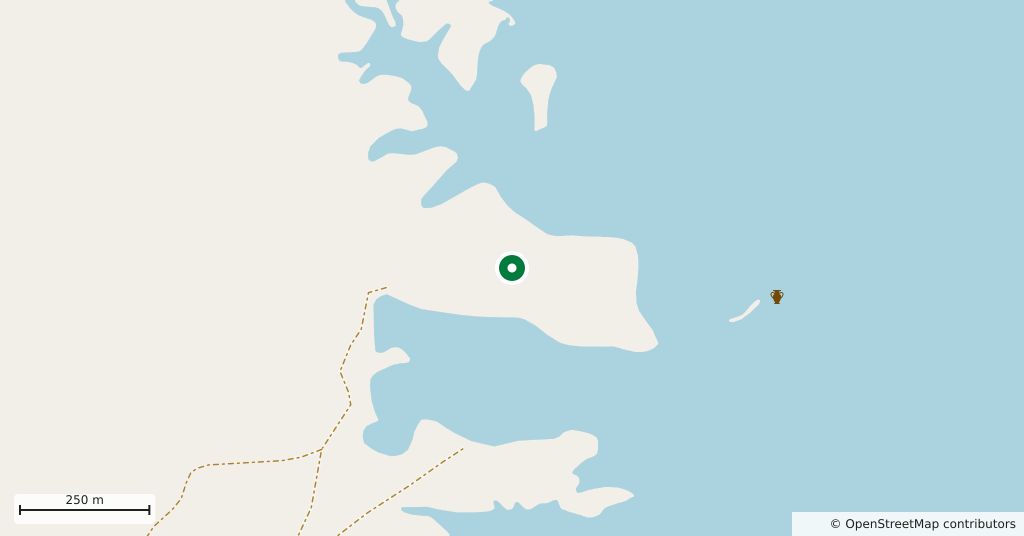
- Tell Meskene, near Maskanah, shore of Lake Assad, Aleppo governorate
Emar is a Bronze Age city at Tell Meskene, a mound in the great bend of the Euphrates that now sits on the shore of Lake Assad. Along with Ugarit, Mari and Ebla, it produced one of the most important cuneiform archives in Syria. The difference is this: most of its tablets are not royal or state records but the private papers of ordinary people.
Where it is
The mound is in Aleppo governorate, near the town of Maskanah, on the shore of Lake Assad. It was investigated during the rescue excavations carried out before the reservoir of the Tabqa Dam filled. The same area holds Barbalissos, or Balis, fortified by the Romans, the Byzantines and the medieval Arabs; that site stands slightly apart from the older tell.
Why the city mattered
Emar was a transfer point: goods coming along the Euphrates were unloaded here and put on the overland route. In the middle of the 3rd millennium BC the city was under the influence of the rulers of Ebla, and its name appears in the Ebla archives.
In Mari texts of the 18th century BC, Emar appears under the influence of Yamhad, the Amorite state centred on Aleppo, and the city had no local tradition of kingship. Under Yarim-Lim of Aleppo, Yamhad’s trade routes peaked: goods from the Mediterranean reached the port of Emar on the Euphrates in the east. At the same time the route from Qatna through Palmyra to Mari was losing importance.
What the tablets say
The tablets run from the 14th century BC to the end of the city in 1187 BC; most are in Akkadian and date from the 13th century BC. They record land sales, court cases, marriages, wills and formal adoptions.
A library was also found in the house of a priest. It held literary texts and word lists in the Mesopotamian tradition, alongside ritual texts for local cults.
Where the finds are
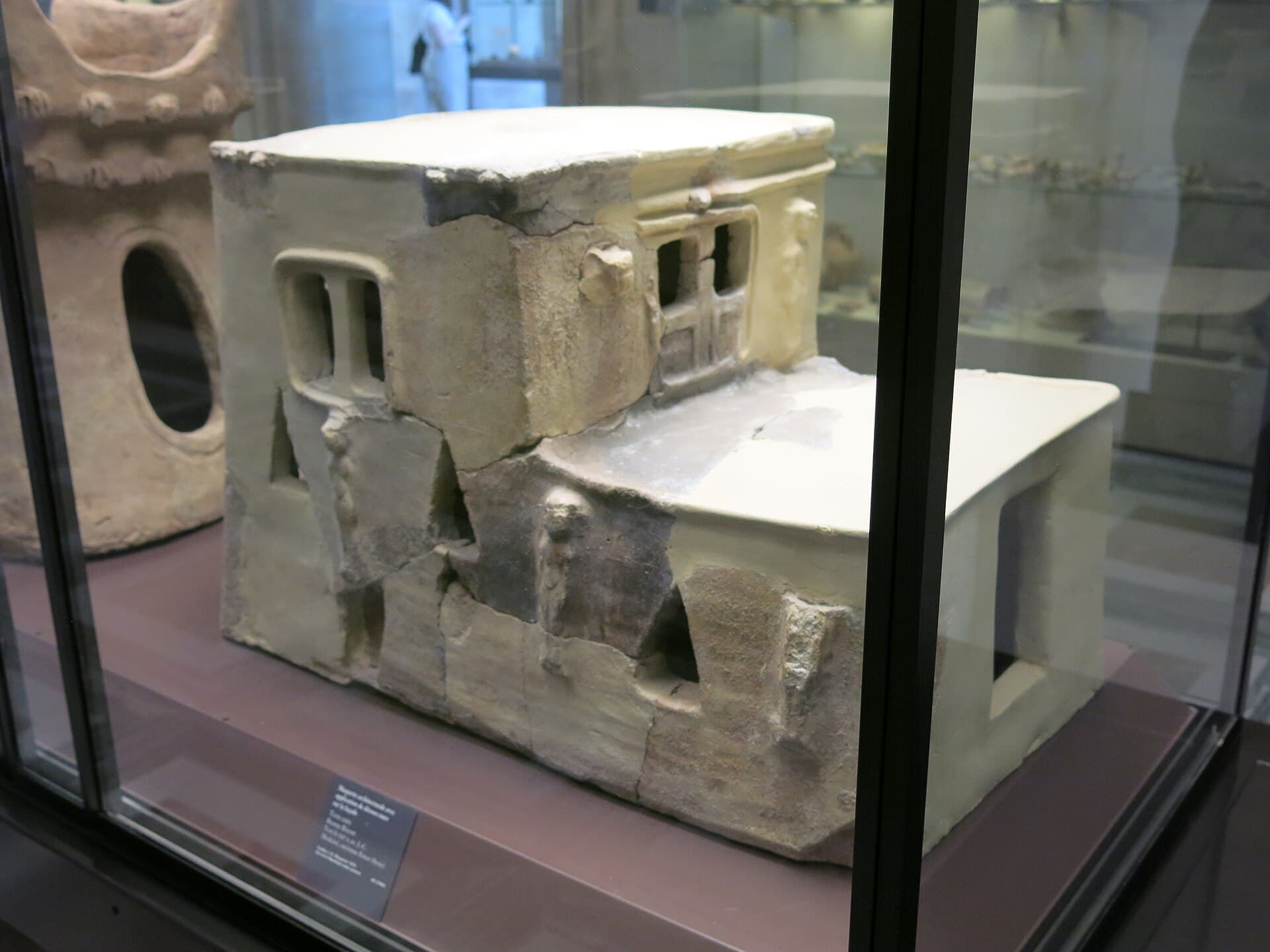
Several seasons of excavation have taken place on the mound since the 1970s, and part of the finds went to museums abroad. One of them is a terracotta house model in the Louvre in Paris: 44 cm high, with naked goddess figures on its facade, dated between 1200 and 1150 BC. It is a small example of how a house in the city was laid out.
What most people miss
How ordinary the texts are. What came out of Emar is not a king’s victory inscription but a family selling a field, adopting a child, dividing an inheritance. Look at the mound with that in mind and you realise you are looking less for a palace than for the traces of a town that kept records.
Tips
- The tablets are not here; what you see on the mound is the dig area and the lake
- Nearby Balis (Barbalissos) is a separate, later site; do not confuse it with the Emar mound
- Ask in Aleppo about current road conditions in the area before you go
Transparency
- How this was chosen
- Written by hand; opening hours, entry fee and coordinates are kept as data. A field that is not known for certain is marked as variable rather than guessed.
- Facts checked
- September 2026
- Last updated
- September 15, 2026