Fafertin, the Oldest Dated Church in Syria
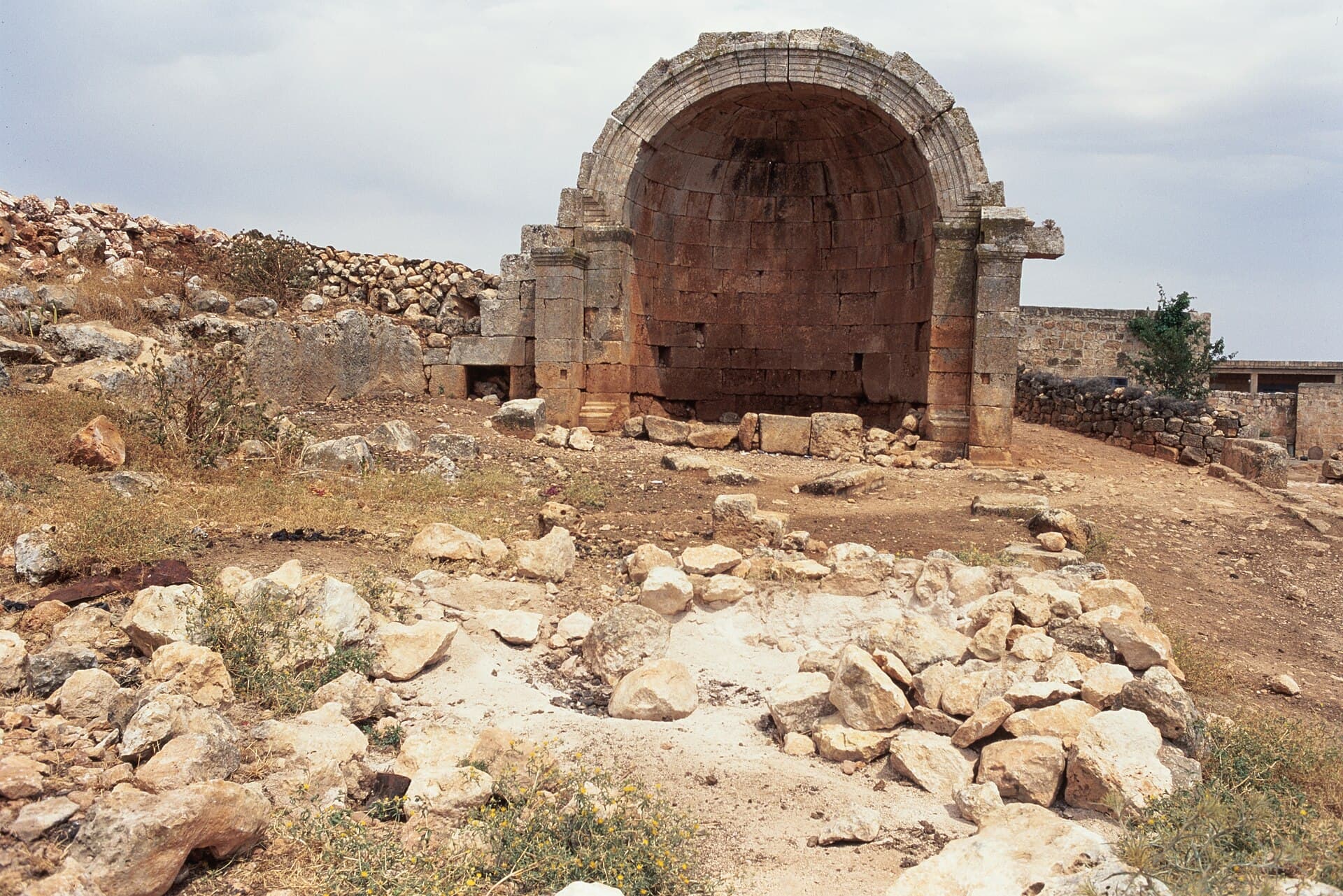
An inscription fixes this church at 372. All that stands today is the apse, but the monogram on the keystone of its triumphal arch is still in its place.
- Opening hours
- Open site, daylight hours
- Entry
- Variable — confirm on arrival
- Duration
- 30 minutes
- Best time
- Spring and autumn; the morning light reaches into the apse
- Period
- Byzantine
- Address
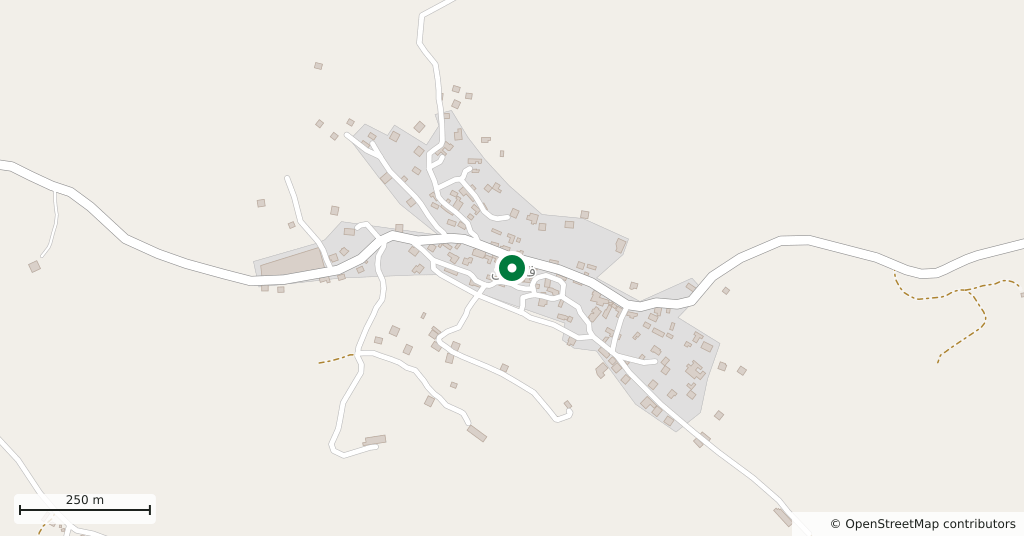
- Fafertin village, Jebel Sem'an, Afrin district, Aleppo
A small village in the heart of the Jebel Sem’an, on an east-facing slope. The one ancient structure still standing at Fafertin is the apse of its church — but that apse belongs to the oldest securely dated church in Syria: 372. The date comes from an inscription Howard Crosby Butler found on the east doorway lintel of the south aisle.
Getting there
From Aleppo you take the Afrin road as far as Deir Sem’an, where a side road winds north-east through Basufan and Burj Haidar to here. Kharab Shams is 4 kilometres north-east. There is no public transport; you hire a car and driver in Aleppo. The village is still inhabited.
How long it takes
Half an hour. There is one piece of building to look at and it is beside the road. Fafertin is not a place to come to on its own; it goes on the same route as Kharab Shams and Burj Haidar.
What you see
The triumphal arch at the east end of the church is standing. The arch has four bands, and a circle with a chi-rho monogram — the first two letters of Christ in Greek — is cut into the keystone. Square chambers flanked the apse, both entered from the aisles; the doorway from the aisle into the north chamber still survives. The south chamber also had a door leading outside.
Butler recorded the complete plan of the church during the Princeton expedition in 1905, and much of the structure has deteriorated since. From the plan we know the nave had seven bays, with one entrance at the west end and two onto the south aisle. The capitals of the nave arcade were Doric and Tuscan. The doorways and the rectangular clerestory windows carried no ornament. The north wall was essentially cut out of the natural rock of the hillside. Nothing remains of the bema that once stood in the middle of the nave.
How it stands today
Fafertin entered the UNESCO list in 2011 as part of the Ancient Villages of Northern Syria. The apse stands inside a living village: there are heaps of stone at the foot of the wall, animal pens and house gardens. This is not an excavation site, it is somebody’s yard. Do not walk in without asking, and do not photograph anyone without asking either. Unexploded ordnance is a reported hazard in the countryside; stay on the path and do not touch metal lying on the ground.
Don’t miss
The keystone of the arch. Instead of looking at the rubble on the ground, look up: the monogram is directly overhead, and in a church this early it is the one piece of carving that reads clearly.
Tips
- Look for the monogram on the keystone, directly over the crown of the arch
- Kharab Shams is 4 kilometres north-east; put the two in one half day
- The apse stands in a living village; keep out of yards and ask before photographing
- On its own this is a half-hour stop; do not build a day around it
Transparency
- How this was chosen
- Written by hand; opening hours, entry fee and coordinates are kept as data. A field that is not known for certain is marked as variable rather than guessed.
- Facts checked
- September 2026
- Last updated
- September 15, 2026