Halabiye
A walled city in the gorge where the Euphrates narrows, named in antiquity after Zenobia of Palmyra. Its walls, praetorium and two churches are largely intact.
- Opening hours
- Open ground, daylight hours; confirm on arrival
- Entry
- Variable — confirm at the entrance
- Duration
- 120 minutes
- Best time
- Late afternoon; the hill at the west corner stands against the river at sunset
- Period
- Palmyrene — Roman — Byzantine
- Address
- Right bank of the Euphrates, the al-Khanuqa gorge; 57 km north-west of Deir ez-Zor
The Euphrates narrows here between basalt outcrops that locals call the strangler. Halabiye is the walled city that holds that gap. In the 3rd century Zenobia, queen of Palmyra, fortified the place, and in antiquity the city carried her name. When Palmyra rose against Rome, the Romans took it in 273 and tied it into the defensive line of the eastern frontier. Most of the walls you see now are 6th century: the emperor Justinian had the city refortified under the architect Isidore the Younger.
Getting there
57 kilometres north-west of Deir ez-Zor, on the right bank of the Euphrates. About an hour by car. Because it lies in the opposite direction from the sites south-east of the city, it wants a half-day of its own.
How long it takes
Two hours. The site covers twelve hectares and you walk it along the walls; add half an hour for the climb to the citadel.
What to see
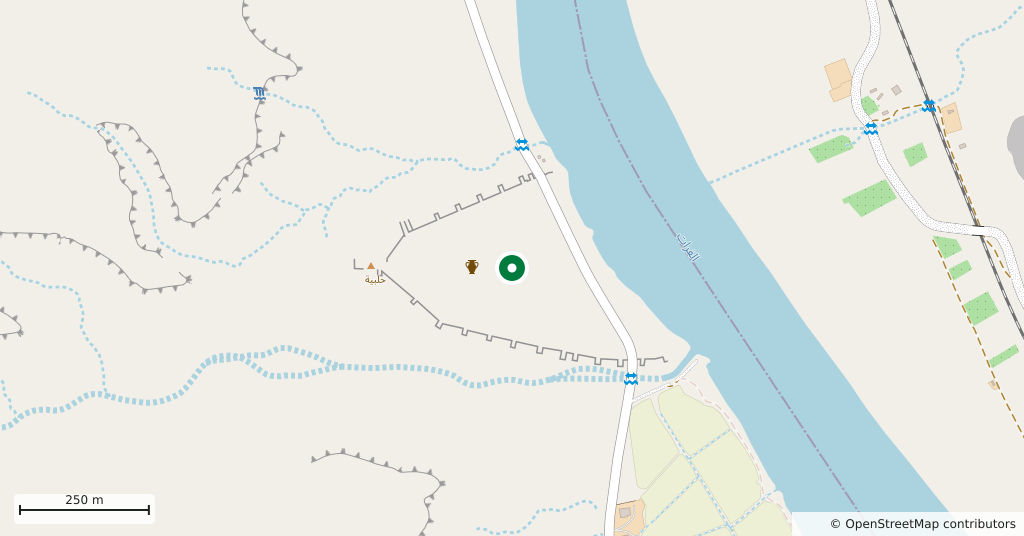
The city is a crooked triangle: the east side runs parallel to the river, the west corner sits on top of a hill. The north and south walls are largely sound, while the east wall faces the river and survives more in pieces. The walls stand between eight and fifteen metres high. The south wall carries a tower every fifty metres, and all of them follow the same plan: square, two storeys, reached through covered galleries inside the curtain wall and by stairways. A colonnaded street divides the city, joining the north and south gates; the forum lay north-west of the crossing and a bath complex north-east of it. Two churches have been located, the larger in the north-west quarter.
What not to miss
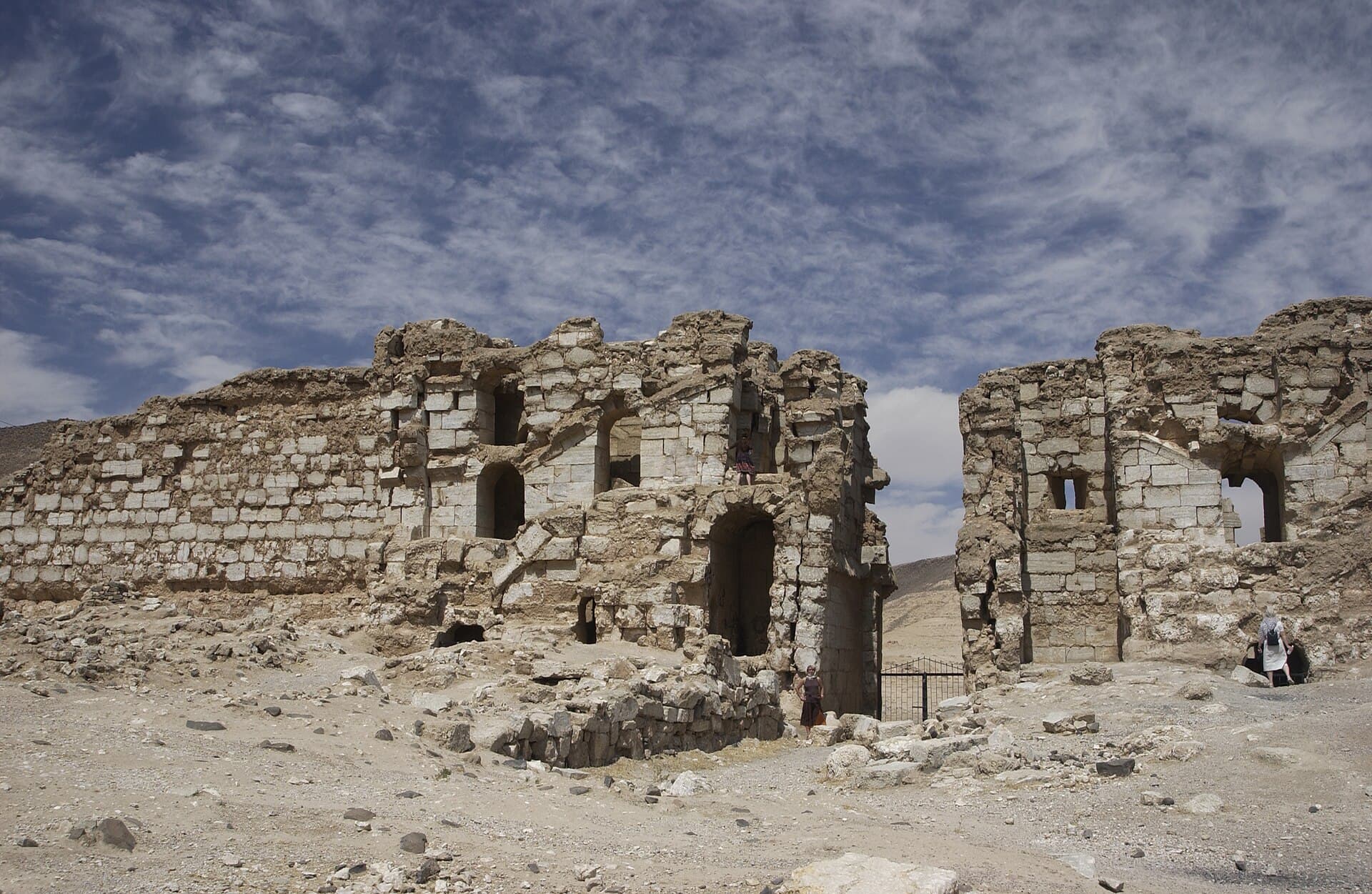
The praetorium. Halfway up the slope of the hill, set into the body of the wall, a massive square barracks of three storeys. This is the building that identifies Halabiye in photographs, and you can go inside; from the windows of the upper floor the Euphrates valley runs the full width of the view. The citadel on the hilltop measures forty-five metres by twenty and has two parts: a polygonal curtain wall with flanking towers to the west, and a massive block to the east that resembles the praetorium. Roman, Byzantine and Arab masonry read one on top of another in its walls. To the north, along the river, is a cemetery of tower tombs and rock-cut tombs — late Roman, with the influence of Palmyra plain to see.
The site today
Because there was no settlement next door to quarry it, Halabiye was never stripped for building stone, and its real damage has come from earthquakes. If the proposed Halabiye Dam south of the site is built, the reservoir is expected to flood part of the city. Before you go, ask in Deir ez-Zor whether the site is open and what the road is like.
Tips
- Go into the praetorium and up to the top floor: the valley runs the full width of the view
- Follow the colonnaded street from the north gate to the south gate — that is how the plan reads
- The stones on the way up to the citadel are loose; wear shoes with a firm sole
- Do not skip the tower tombs north of the site; they are within walking distance along the river
- It lies opposite the sites south-east of Deir ez-Zor, so give it its own half-day
Transparency
- How this was chosen
- Written by hand; opening hours, entry fee and coordinates are kept as data. A field that is not known for certain is marked as variable rather than guessed.
- Facts checked
- September 2026
- Last updated
- September 15, 2026