Hammam Yalbugha al-Nasiri
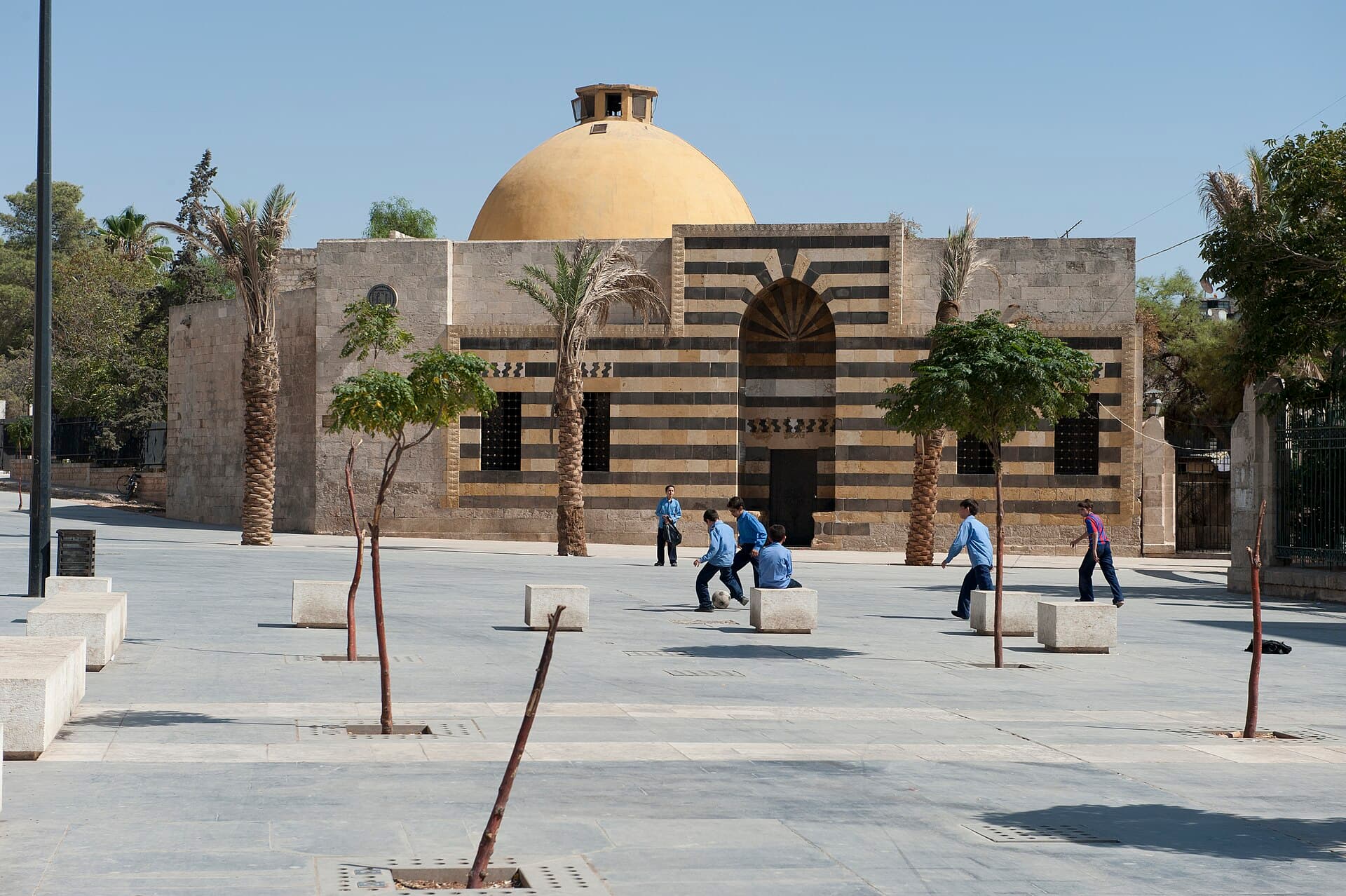
A Mamluk bathhouse named after Yalbugha al-Nasiri at the west end of the citadel square: black and yellow stone bands, a yellow dome, repaired in 1985.
Editor: Faruk Çiftler
- Opening hours
- Varies — confirm at the door
- Entry
- Varies — confirm at the door
- Duration
- 30 minutes
- Best time
- Before you climb the citadel or after you come down; it is across the square
- Period
- Mamluk
- Address
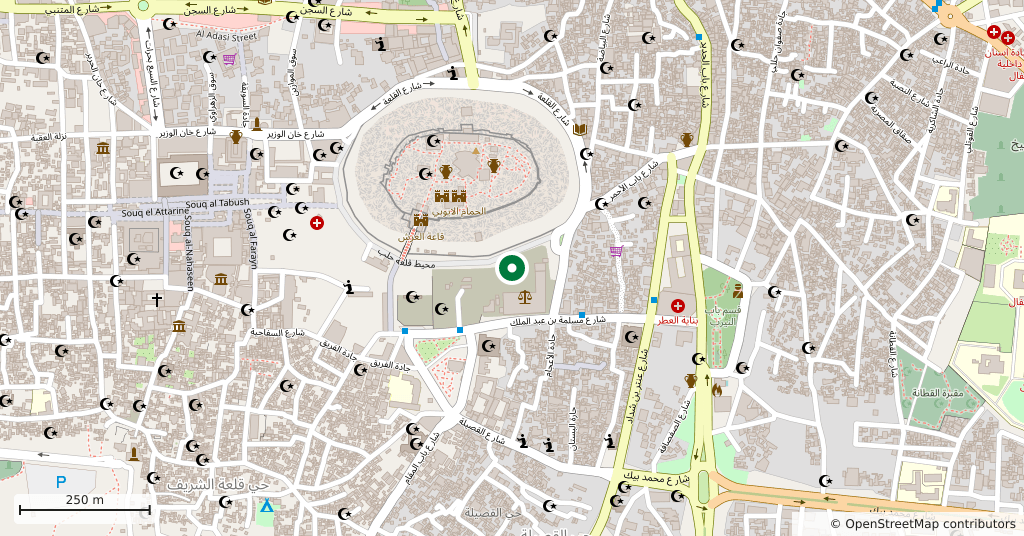
- West end of the citadel square, Old City, Aleppo
It stands at the far end of the citadel square and you pick it out from a distance: the façade is striped in bands of black and yellow stone. It carries the name of Saif ad-Din Yalbugha al-Nasiri, a Mamluk emir who governed Aleppo. Sources disagree on when it was built: the often quoted year 1491 does not fit Yalbugha, who lived in the 14th century. It is one of the largest Mamluk bathhouses in Syria — single-storey, about 1500 square metres, on the bank of the Quweiq.
Getting there
Come down from the citadel’s entrance bridge onto the square. The bathhouse is at its west end, a two-minute walk. The Al-Madina souq starts from the same square heading west, so the two fit in one round.
What to see
The façade first. Black basalt and yellow limestone are laid course by course; the pattern is called ablaq and it is the signature of Mamluk building. The fan-shaped arch over the door is the same work at a smaller scale. Behind it the yellow dome rises, with a small lantern on top.
How it stands today
The bathhouse was repaired in 1985 and reopened as a working hammam; before the war it was one of the places in Aleppo where people actually bathed. It was damaged during the war. Whether it is in service now varies, so ask before you go if you mean to go inside. Looking at it from the square is possible either way.
Do not miss
The small lantern on top of the dome. From the square it is easy to walk past. It is the one piece that explains where the light inside comes from.
Tips
- Look across the square from the citadel's entrance bridge; the bathhouse is at the far end
- Look closely at the black and yellow banding; the pattern, called ablaq, is Mamluk work
- Ask first if you plan to bathe — whether it is in service varies
Transparency
- How this was chosen
- Written by hand; opening hours, entry fee and coordinates are kept as data. A field that is not known for certain is marked as variable rather than guessed.
- Facts checked
- August 2026
- Last updated
- November 28, 2026