Sheikh Deeb Castle (Qulay’a)
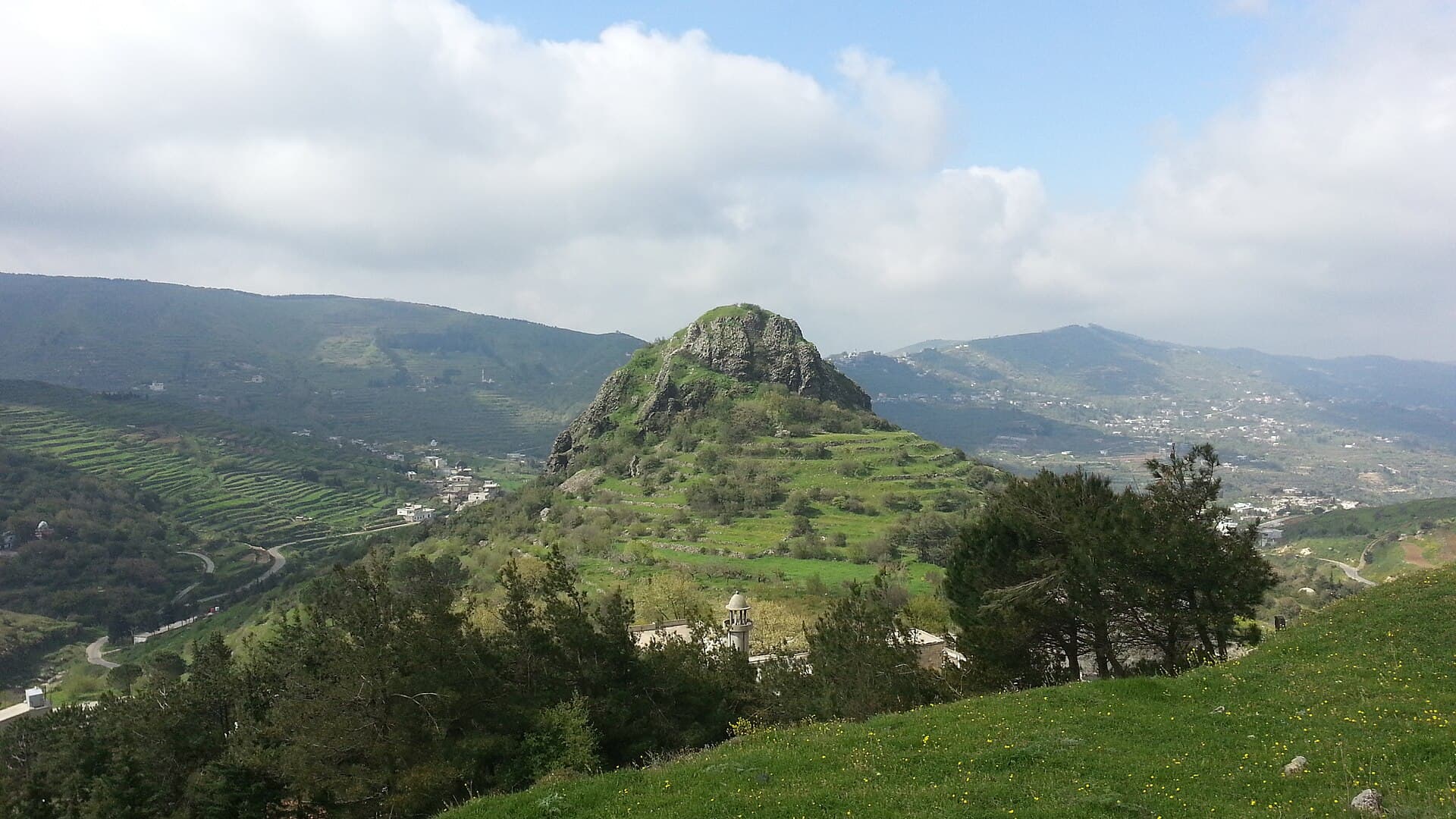
A Nizari Ismaili castle on a cone of volcanic rock above Qulay’a village, about 2 km from Hosn Suleiman: wall stubs between the crags and a well cut into the rock.
- Opening hours
- Open ground, sunrise to sunset
- Entry
- No known fee — check locally
- Duration
- 90 minutes
- Best time
- Spring, when the valley is green and the winter torrent has gone
- Period
- Ismaili — Mamluk — Ottoman
- Address
- Qulay'a village, Dreikish district, Tartus governorate
In the mountains inland from Tartus, a cone of volcanic rock rises above the village of Qulay’a in the Dreikish district. The castle has merged into the rock: stubs of wall close the gaps between the crags, a well is cut into the stone, and the whole site covers no more than 230 m². In the 12th century it was one of the strongholds the Nizari Ismailis held in the coastal mountains.
Getting there
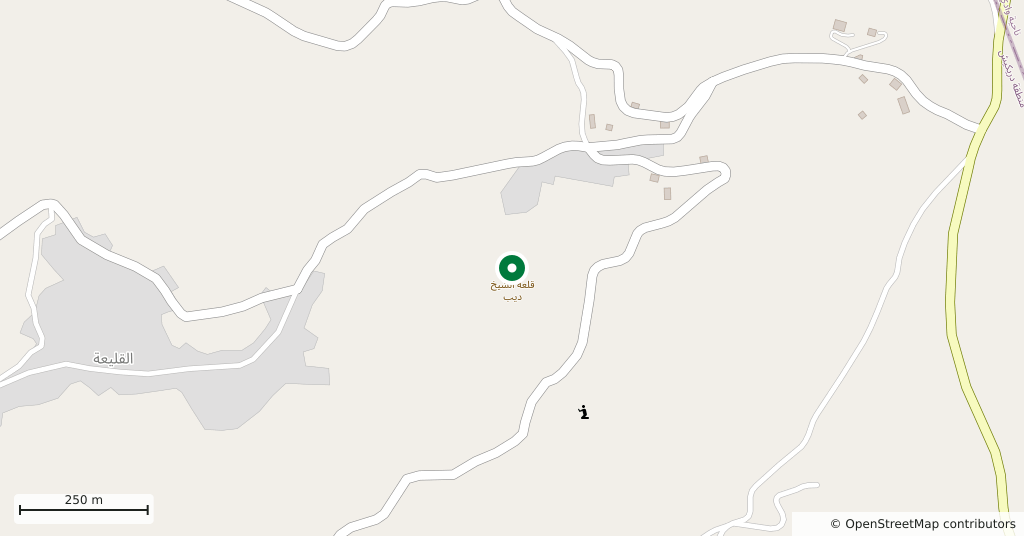
The castle is about 2 km north-east of the Hosn Suleiman temple as the crow flies, so the two fit into one trip. The rock stands in the middle of an 18 km valley between Jebel al-Nabi Saleh to the south-east and Jebel al-Nabi Matta to the north-west. In winter a torrent runs down the valley, and reaching the castle becomes very difficult.
Whose castle it was
The Nizari Ismailis took Qulay’a around the time they gained Masyaf, in about 1140–1141. When the Mamluk sultan Baybars took the Ismaili castles between 1270 and 1273, Qulay’a surrendered too. Under the Ottomans it was the centre of a small nahiye, or sub-district, and it appears in tax records from 1547 and 1645. By the 17th century the people living in the castle were Alawites, which set it apart from many former fortresses in the region, where the residents were Sunni or Ismaili.
Two names
Qulay’a, “the little castle”, is the older name. Sheikh Deeb comes from the family that has lived at the castle for about 300 years. Crusader sources record the place as “Coleé”. The castle was added to Syria’s list of antiquities in 2011.
What most people miss
The line of sight. Qulay’a stands on the same sightline as Masyaf Castle and was used as a signalling point. Below the rock is the Serdad spring, whose water is mineral-rich; a small village probably stood beside it.
Tips
- Avoid winter; the castle sits in a valley that floods and the approach gets very hard
- The way up the rock is stony; wear shoes with grip
- Pair it with the Hosn Suleiman temple on the same day; the two sites are very close
Transparency
- How this was chosen
- Written by hand; opening hours, entry fee and coordinates are kept as data. A field that is not known for certain is marked as variable rather than guessed.
- Facts checked
- September 2026
- Last updated
- September 15, 2026