Jabal al-Nabi Matta Forest Reserve
A 650-hectare reserve at 1100 metres in the Tartus mountains, planted with chestnut, pine and cedar since 1976, with a shrine on top. Protected since 2009.
- Opening hours
- Open forest; there are no posted visiting hours, so go in daylight
- Entry
- Varies — confirm at the entrance
- Duration
- 120 minutes
- Best time
- October, while the chestnut leaves turn; midsummer for the cooler air
- Period
- Reserve since 2009; planting since 1976
- Address
- Duwayr Raslan subdistrict, Duraykish district, Tartus
A 650-hectare forest reserve at 1100 metres in the mountains of Tartus. It was declared protected on 29 September 2009 by decision no. 211, but most of the forest is much older than that: people have been planting it by hand since 1976. Chestnut, pine and cedar now share the same slopes, and a small shrine on the summit still draws people from the villages around.
Where it is and getting there
The reserve lies in the Duwayr Raslan subdistrict of Duraykish, about 20 kilometres from Duraykish town and 53 kilometres from Tartus. Villages ring it: Muhaylibeh and Birat al-Jurd to the east, Bimenneh, Haylata and Ayn Bustan to the west, Qulay’a to the south. The road climbs from Tartus to Duraykish and on into the hills. A narrow paved lane runs through the forest, and there is a separate pedestrian entrance. Village minibuses keep no fixed timetable, so without a car you will need to ask in Duraykish. The Hosn Suleiman temple stands on the southern side of the same massif, and the two fit into one day.
Why the forest is so mixed
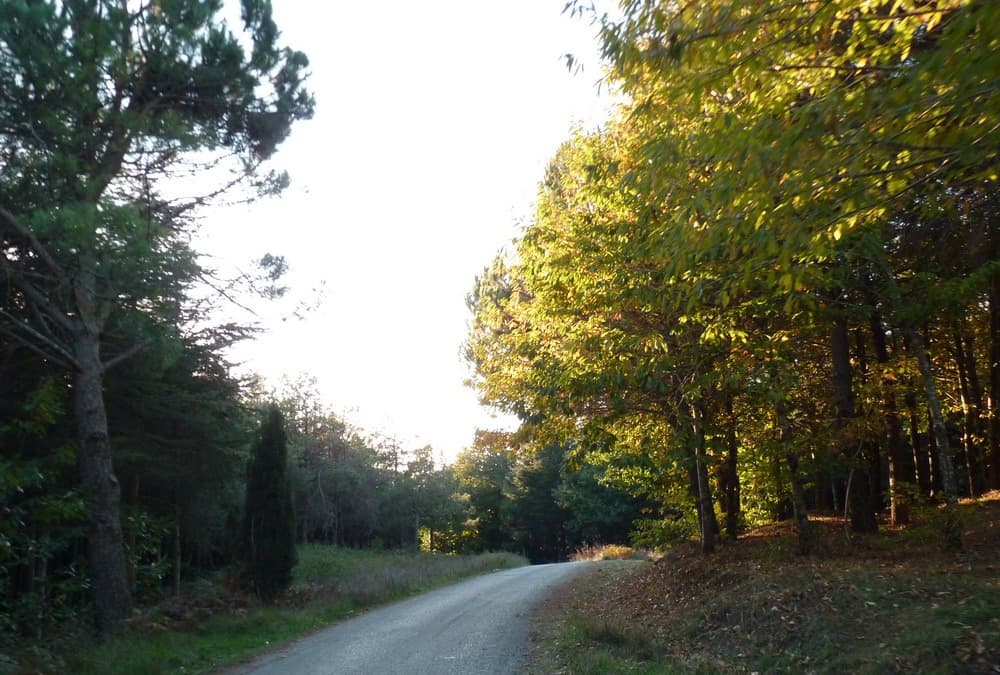
Of the total, 450 hectares were planted by hand, and 200 hectares of that is chestnut. The planted list is long: Turkish pine, Aleppo pine, stone pine, Canary Island pine, black pine, black locust, Lebanon cedar, cypress and Cilician fir. Other plants came on their own: oak, hawthorn, thorny burnet, willow, bramble and male fern. The result is no neat plantation. Along one stretch of road you get dark pine on one side and broad-leaved chestnut on the other.
Water is plentiful. Annual rainfall is around 1800 millimetres, and some of the springs run all summer. The soil comes from basalt and sedimentary rock and carries no lime, which is why chestnut does well here.
What lives here
Recorded mammals include wild boar, hyena, wolf, jackal, squirrel, hedgehog, mole and badger. The bird list has partridge, blackbird, quail, hoopoe, sparrowhawk, griffon vulture, robin, goldfinch, jay, crested lark and bee-eater. Tortoises and other reptiles turn up too. Most of these keep away from people; early in the morning you are far more likely to see birds by the road than to meet one of the large mammals.
How long it takes and when to go
Two hours is enough to walk in the forest and climb to the top. In midsummer, when the coast turns heavy with heat, the air at this height is cooler. In autumn the chestnut leaves turn yellow against the dark green of the pine, and that is when the forest photographs best. Winters are wet, so ask about the road before you set out.
What most people miss
The small building on the summit. It is known as the shrine of Nabi Matta, and inside is a tomb 6 metres long. Whose tomb it is has never been documented; people from the surrounding villages climb up to ask for blessings. The forest takes its name from this shrine.
Tips
- Chestnut turns yellow in autumn; pick October for the colour
- Bring water and food; the nearest market is in Duraykish
- The summit shrine is still visited; follow local visitors on shoes and dress
- The Hosn Suleiman temple is on the same massif; put both in one day
Transparency
- How this was chosen
- Written by hand; opening hours, entry fee and coordinates are kept as data. A field that is not known for certain is marked as variable rather than guessed.
- Facts checked
- September 2026
- Last updated
- September 15, 2026