Jarabulus
A border town on the west bank of the Euphrates. The first train out of Aleppo reached it in 1912, Lausanne drew the line, and the name came from Hierapolis.
- Opening hours
- Streets at any hour; the market during the day
- Entry
- Free
- Duration
- 90 minutes
- Best time
- Late afternoon, on the river side
- Period
- Late Ottoman
- Address
- Jarabulus, north-east Aleppo Governorate
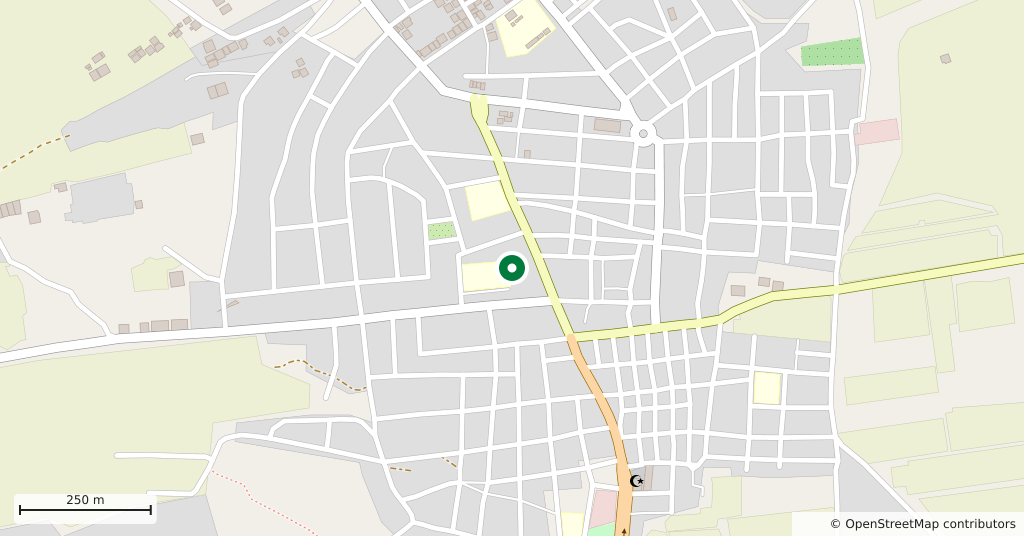
Jarabulus is a town on the west bank of the Euphrates, north of the reservoir lake and just south of the Turkish border. Across the border is the Turkish town of Karkamış. Two things shaped the town as it is: a railway and a treaty. Neither began here.
Where the name comes from
In 18th century records the name appears as Djerabis, then as Djeraboolos and Djerablus. The usual explanation is that it comes from Hierapolis to the south-west, the town now called Manbij. The Greek name wore down in local speech and stuck to this settlement on the river. The link is likely, not certain.
The first train
In 1912 the first train out of Aleppo station arrived at Jarabulus. The line was part of the route meant to join Istanbul to Baghdad, and the town grew at the end of that construction site. The station building in Aleppo still stands; Jarabulus is the other end of the same story.
How the border was drawn
The town lay on the southern side of the Istanbul–Baghdad railway. After the First World War the Treaty of Lausanne set the border north of the line, and Jarabulus became a border town. The railway had made the place, and then the same railway left it on one side of a frontier. At the 2004 census the population was a little over eleven thousand. In the civil war ISIL took the town in July 2013, and Turkish-backed forces took it back in August 2016.
What is nearby
Tell Ahmar, ancient Til Barsip, is 20 kilometres south. Follow the river bank and Qalaat Najm comes up 30 kilometres to the south-west. Manbij is inland on the same axis, and it is where the name came from.
What most people miss
How close the border is. The ruins of ancient Carchemish lie just north of the town, and half of the site is now in Turkey; the border cuts the excavation in two. Crossing is not a walk; it is a border procedure. Plan for that before you come.
Tips
- The crossing and its rules change; check before you come
- Walk down to the river bank; the line the town grew along reads clearly from there
- Tell Ahmar and Qalaat Najm fit into the same day
Transparency
- How this was chosen
- Written by hand; opening hours, entry fee and coordinates are kept as data. A field that is not known for certain is marked as variable rather than guessed.
- Facts checked
- September 2026
- Last updated
- September 15, 2026