Kalota, a Hill with Three Layers
A pagan sanctuary on the summit, a basilica dated 492, and church buildings turned into a fort in the Middle Ages. The Arabic name comes from that last layer.
- Opening hours
- Open site, daylight hours
- Entry
- Variable — confirm on arrival
- Duration
- 75 minutes
- Best time
- Spring and autumn; there is no shade on the summit
- Period
- Roman — Byzantine — medieval
- Address
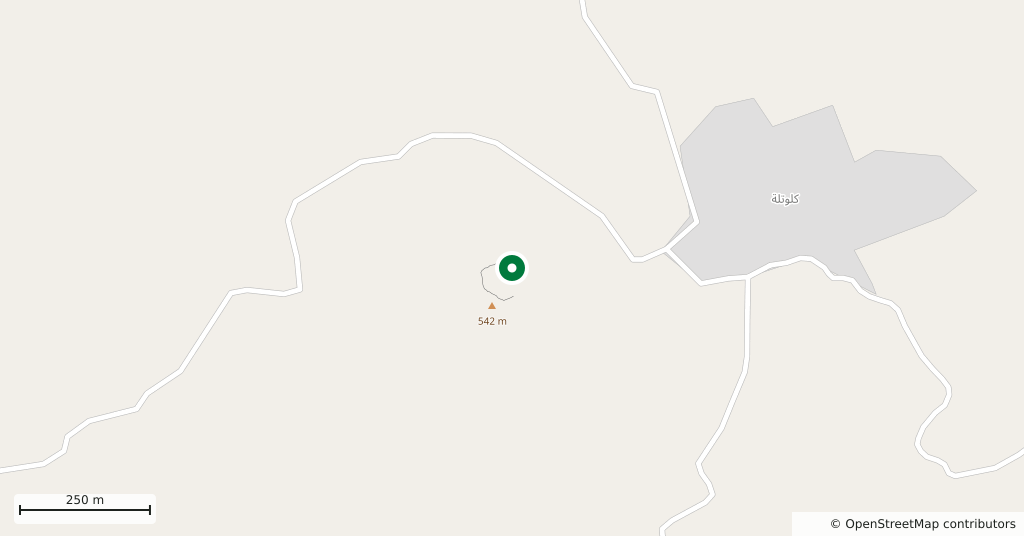
- Eastern Jebel Sem'an, near Burj Haidar, Afrin district, Aleppo
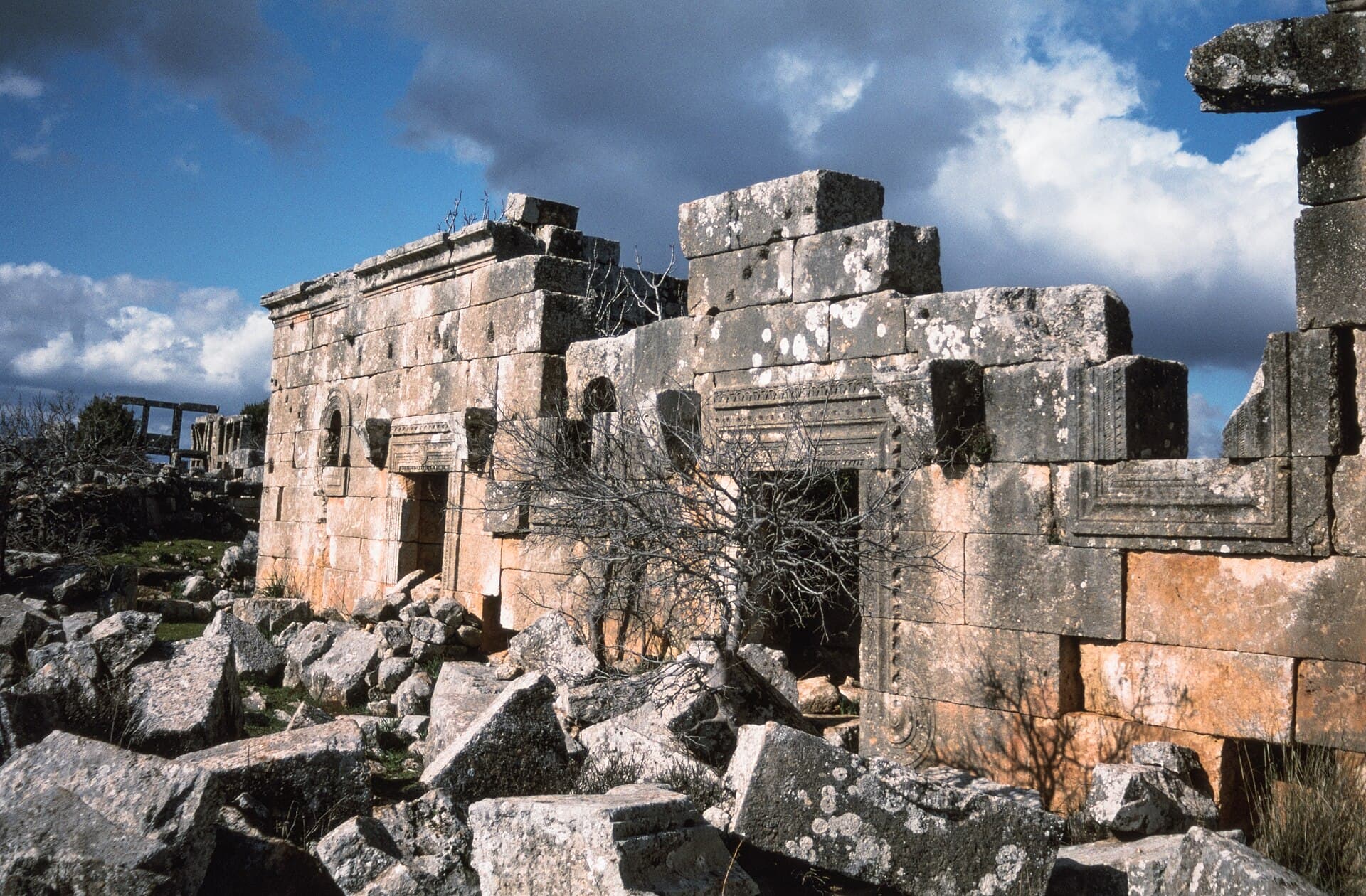
A hill 28 kilometres north-west of Aleppo, in the eastern part of the Jebel Sem’an, at 550 metres. What makes Kalota worth the drive is not one building but three layers sitting on top of each other. On the summit stood a pre-Christian temple or cave sanctuary. Below it are residences of massive limestone blocks put up in the 4th and 5th centuries. In the Middle Ages those same church buildings were turned into a fort. The Arabic name the place carries today — Qal’at Kalota, Kalota castle — comes from that last layer.
Getting there
From Aleppo you take the Afrin road as far as Deir Sem’an. A side road runs east from there to Basufan and, 3 kilometres further, to Burj Haidar; Kafr Nabo is 2 kilometres north of that. Dirt roads leave both villages eastward and reach Kalota after 4 kilometres. There is no public transport, and the driver has to know the area.
How long it takes
An hour and a half. The east church stands on the summit, 500 metres from the ancient village; the houses and the west church lie below. You walk between them, but the slope is stony.
What you see
The east church is a three-aisled arcaded basilica. It measures 26 by about 17 metres outside. The nave is extraordinarily wide: the columns stand 7 metres apart and the arches rise 7 metres on slender shafts. A Greek inscription over the west doorway gives the year the work was finished: 492. Most of the south façade survives to the eaves cornice and the east side to single-storey height; the inner wall of the apse stands to the springing of the triumphal arch.
The façades are plain. The one emphasis is the west doorway: a profiled lintel with a round-arched window directly above it. That door-and-window pairing is unusual among the churches of the region, but it occurs in at least ten synagogues built in earlier centuries in Galilee and the Golan.
The older layer on top
A fragmentary inscription found on the summit speaks of the dedication of a temple and of a golden cult object. The gods worshipped here may be the same three ancestral deities named on an inscription dated 224 on an olive press at Kafr Nabo: Seimios, Symbetylos and Leon. One of them was most likely the local form of Baal, the sky god the Greeks called Zeus. Blocks taken from an earlier temple are built into the walls of the east church.
How it stands today
Kalota entered the UNESCO list in 2011 as part of the Ancient Villages of Northern Syria. The general decline of the Christian settlements began around 600, that is before the Islamic conquest; even so the place stayed inhabited for a while, and in the 11th or 12th century the buildings on the hill were fortified. Displaced families sheltered in the Dead Cities during the war years; do not enter a building someone is living in, and do not photograph people without asking. Unexploded ordnance is a reported hazard in the countryside: stay on the path and do not touch metal lying on the ground.
Don’t miss
The west doorway of the east church. The inscription is there, above eye level, and the date 492 anchors the dating of this building and of Mushabbak alike. Most visitors come in from the south side and never look above the door.
Tips
- Find the inscription over the west doorway; the date 492 is there
- The east church is 500 metres above the ancient village; walk the two separately
- The last stretch is a dirt road; a high vehicle makes it easier
- Basufan and Burj Haidar are on the same road; make a day of the three
Transparency
- How this was chosen
- Written by hand; opening hours, entry fee and coordinates are kept as data. A field that is not known for certain is marked as variable rather than guessed.
- Facts checked
- September 2026
- Last updated
- September 15, 2026