Khan al-Saboun
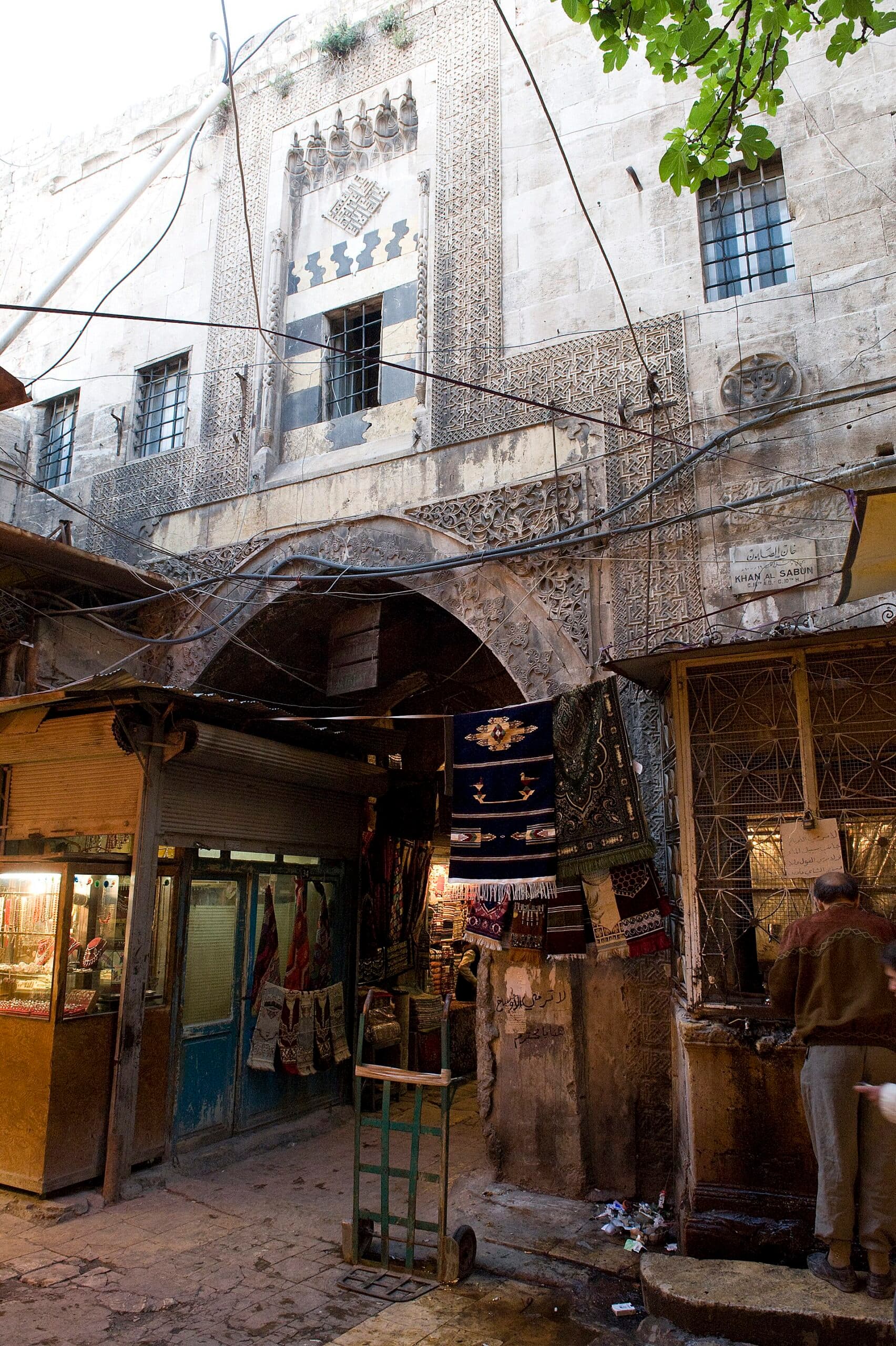
The Mamluk soap khan inside the Al-Madina souq in Aleppo. Its carved portal still stands, and the building reopened in October 2020 after a long repair.
- Opening hours
- Daylight hours — depends on the traders
- Entry
- Free
- Duration
- 30 minutes
- Best time
- Late morning, while the workshop is running
- Period
- Mamluk
- Address
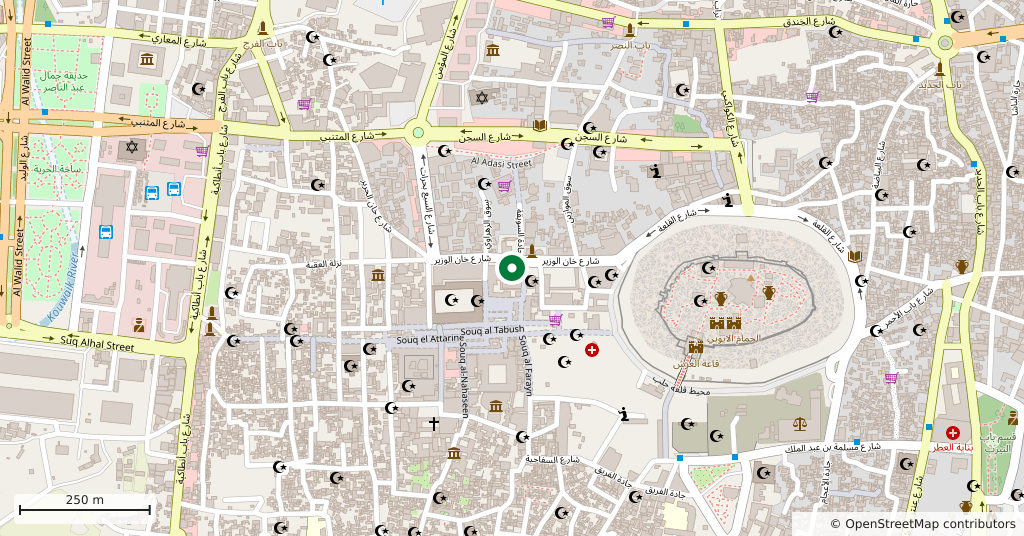
- Khan al-Wazir street, Al-Madina souq, Old City, Aleppo
It sits inside the Al-Madina souq, on Khan al-Wazir street. The Mamluk emir Izdemir had it built, though the sources part ways on the date: the end of the 9th century AH, which is the late 15th century, or as others have it the early 16th. The name comes from soap, and it is not decorative. This was one of the places where Aleppo soap was both made and sold, and it still is.
Getting there
If you have found Khan al-Wazir the rest is easy. Same street, about 100 metres west. You are inside the souq here, under cover and out of the sun. Stacks of soap blocks by a doorway mean you have arrived.
What to see
The portal first. Geometric and vegetal carving fills the stone around the arch; it counts as one of the best-preserved pieces of Aleppo stonework and one of the showiest Mamluk gates in the city. There are bullet scars on the facade, and the carving comes through from underneath them. Inside there is a courtyard with two storeys of rooms — storage and selling below, merchants’ rooms above.
Why soap came out of this building
Aleppo soap is boiled from olive oil and laurel oil, left to cure for months, then cut. Boiling, curing and cutting each need their own space, and a khan built around a courtyard put all three under one roof. That is why the soap khans cluster inside the souq: the goods were sold a few steps from where they were cooked.
Is it open now
It was badly damaged in the war. After a thorough repair it reopened in October 2020 as a soap production and trading centre. So the khan is not a ruin you look at. It is a working place with people cutting and stacking blocks inside. Ask before you photograph them.
What most people miss
One layer of the building has nothing to do with soap. A photograph taken here in December 1919 shows a Sunday service in the courtyard: the khan was in use as an Armenian orphanage in those years, one of the buildings that sheltered the people who reached Aleppo after 1915. No plaque in the courtyard says so. The photograph is still there.
Tips
- Shoot the carved portal from the far side of the lane; the arch will not fit the frame up close
- Production goes on inside — ask a worker before walking between the stacks
- Khan al-Wazir is on the same street, so take both khans in one walk
Transparency
- How this was chosen
- Written by hand; opening hours, entry fee and coordinates are kept as data. A field that is not known for certain is marked as variable rather than guessed.
- Facts checked
- September 2026
- Last updated
- September 15, 2026