Khanasir, ancient Anasartha
A town on the steppe road southeast of Aleppo. The stones of Byzantine Anasartha sit inside today’s walls: Greek inscriptions over doors, carved crosses.
- Opening hours
- A living town; the remains stand in the streets and walls, daylight hours
- Entry
- Free — there is no enclosed site and no ticket
- Duration
- 30 minutes
- Best time
- Early or late in the day, when raking light brings out the carving
- Period
- Roman — Byzantine — Umayyad
- Address
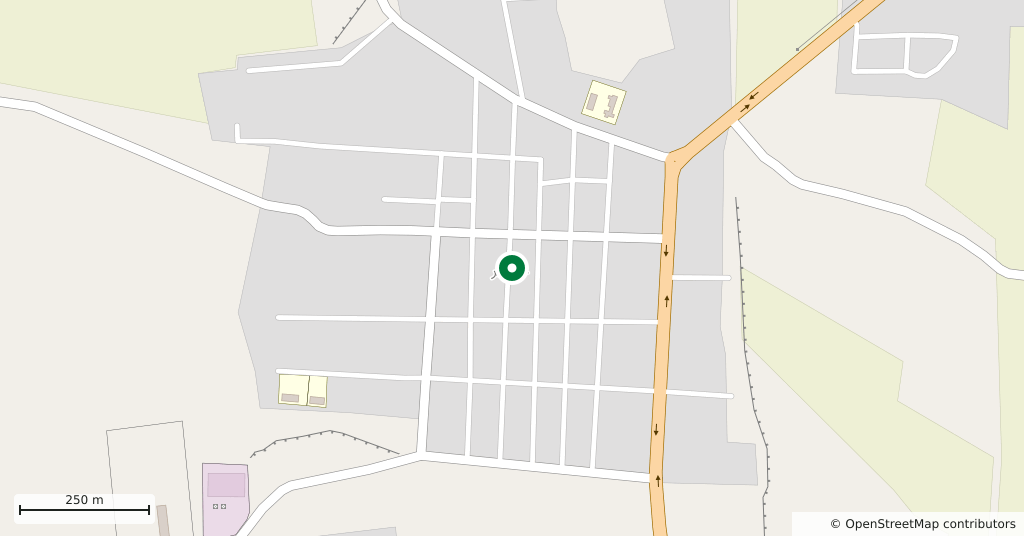
- Khanasir town, al-Safira district, Aleppo governorate
A town on the road that climbs southeast out of Aleppo into the steppe. If you are after a fenced archaeological park, Khanasir is not it: there is no enclosure, no ticket desk, no sign. Byzantine Anasartha is still here, but in pieces — a Greek inscription on a door lintel, a medallion with a cross halfway up a wall, a length of column in a yard. The town was rebuilt at the start of the 20th century by Circassian families from Manbij, who used the ancient city itself as their quarry.
Getting there
Roughly 60 kilometres southeast of Aleppo by way of al-Safira. The road carries on towards Ithriya and Hama; Khanasir sits on that line. The steppe is empty. There is nowhere else to stop, so the drive runs in one piece. Carry cash: expecting a card to work anywhere along this road is not realistic.
What you see
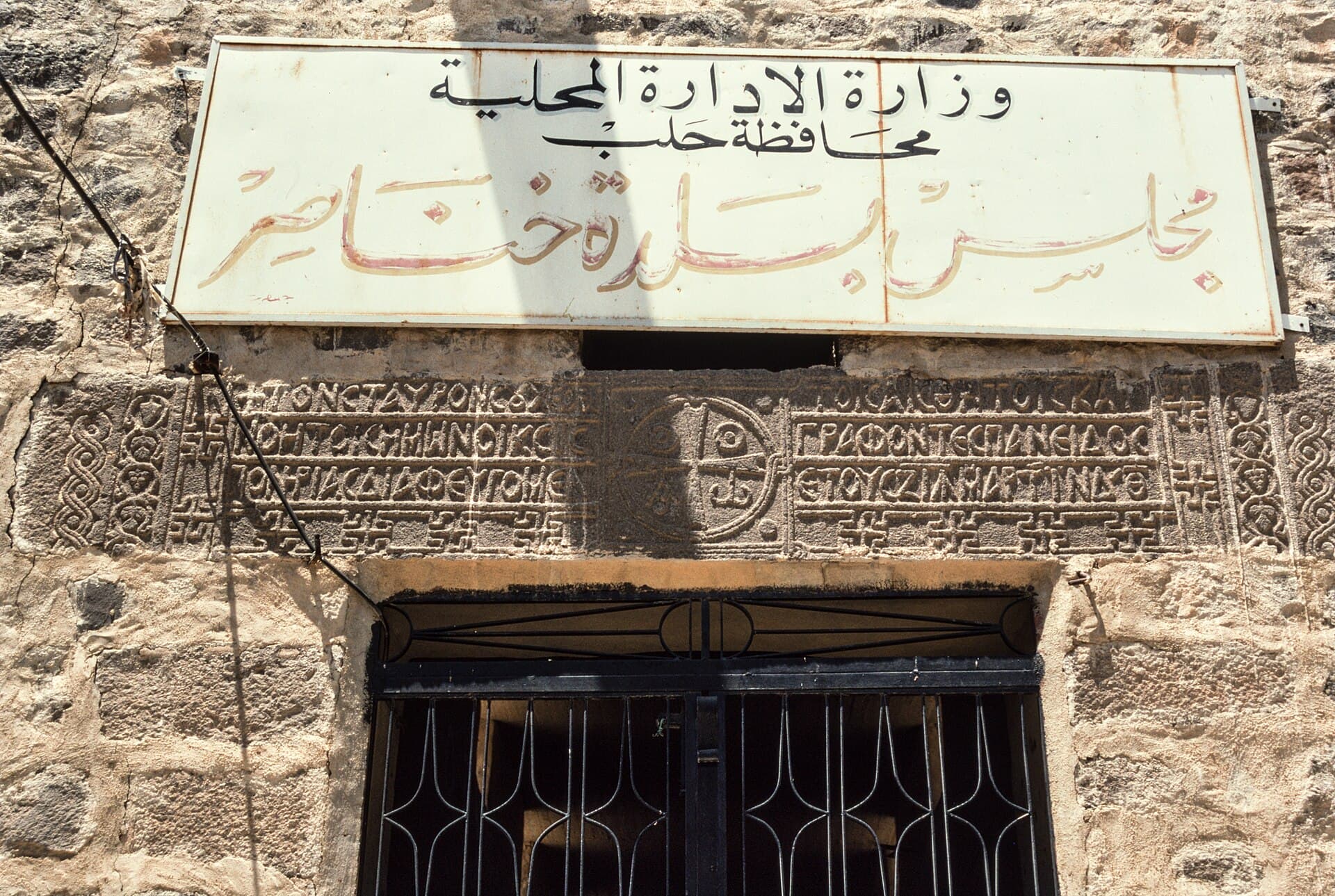
The tidiest piece is set into the facade of the town council building. A Byzantine lintel sits above the door: a Greek inscription runs the width of the stone, a medallion with a cross marks its centre, plaited ornament closes either end. Lower down the same wall are reliefs of crosses and wheels. Look low as well as high. The church of the town is dated 426, and its bishop Maras attended the Council of Chalcedon in 451. Malalas calls Anasartha a walled kastron and records that Justinian raised it to the rank of a city. Some of the inscriptions run as late as the 7th century.
Where the water came from
Rainfall on this steppe averages around 210 millimetres a year, which will not carry a town on its own. Anasartha drew its water through a qanat 12 kilometres long — an underground channel cut on a slight gradient. The Byzantine line was still running in the middle of the 20th century; in 1959 it was measured at eight litres per second. It dried up in 1975, when deep wells were sunk west of the valley.
The estate of Umar II
Early Arabic sources call the place Khunasira. The Umayyad caliph Umar ibn Abd al-Aziz built a fortified headquarters here and spent much of his caliphate (717-720) on the spot. He fell ill on the way back from Damascus and died in 720 at Dayr Sim’an near Maarat al-Numan, where he was buried. Nothing of the estate is visible in Khanasir today. But a caliph choosing to govern from the northern Syrian steppe explains why this town has a name at all.
Don’t miss
The lintel over the council door. The inscription runs the full width of the stone and the letters come out in raking light; at midday it reads as a flat surface.
Tips
- Look at the facade of the town council building; the tidiest Byzantine stone is there
- Most of the remains are in walls people live behind; ask before entering a yard
- There is no shade on the steppe and summer middays are heavy; take water and a hat
- Carry cash; no card is accepted anywhere along this road
Transparency
- How this was chosen
- Written by hand; opening hours, entry fee and coordinates are kept as data. A field that is not known for certain is marked as variable rather than guessed.
- Facts checked
- September 2026
- Last updated
- September 15, 2026