The Basilica of Mushabbak
The most complete church in the Dead Cities. No village ever grew around it: it is read as a staging post for pilgrims walking from Aleppo to Saint Simeon.
- Opening hours
- Open site, daylight hours
- Entry
- Variable — confirm on arrival
- Duration
- 40 minutes
- Best time
- Morning, when the light comes in through the east windows
- Period
- Byzantine
- Address
- Jebel Halaqa, Daret Azza subdistrict, Jebel Sem'an district, Aleppo
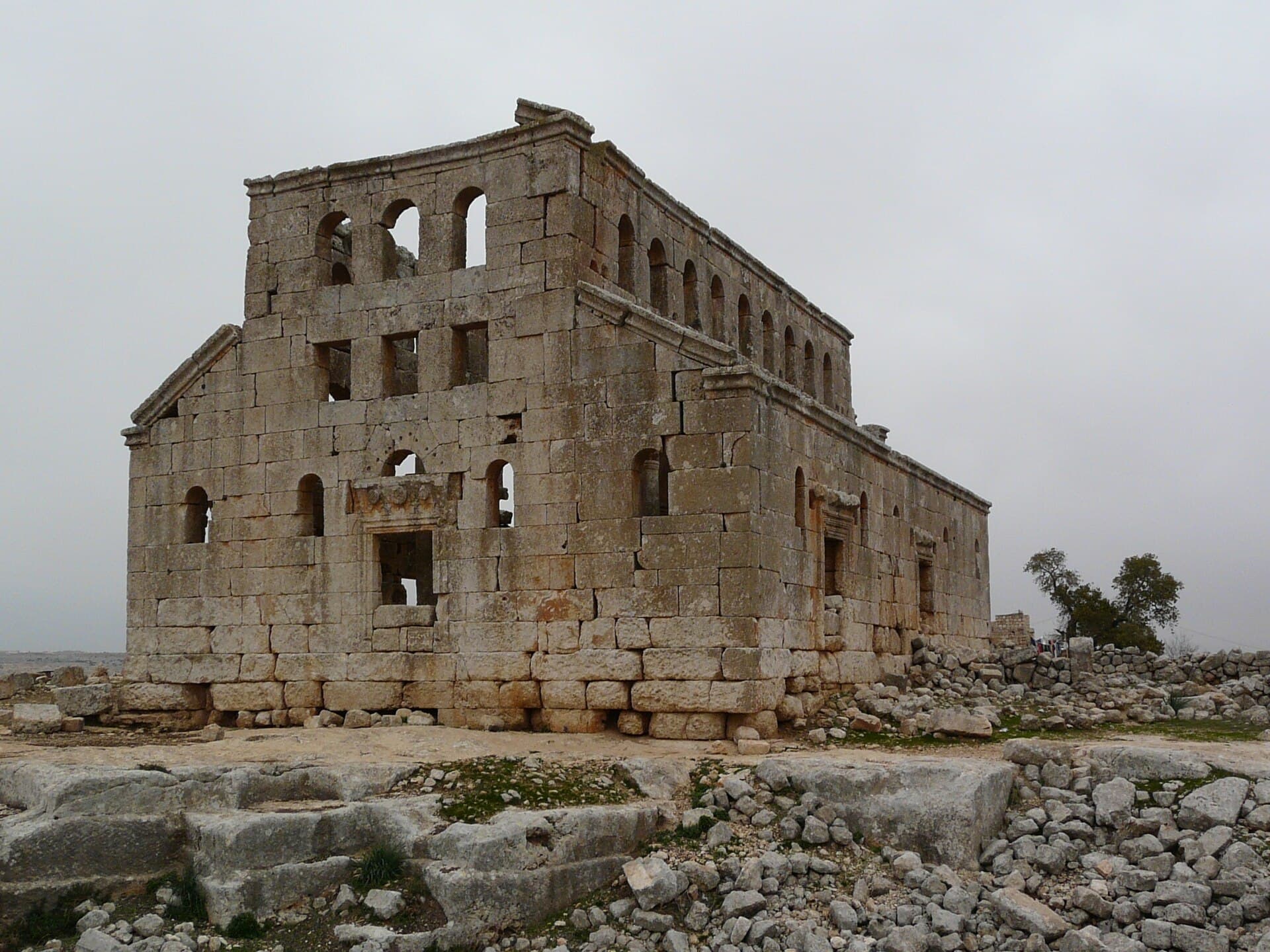
A church standing alone on a stony hilltop in the Jebel Halaqa, 25 kilometres west of Aleppo. Its walls, gables, arcades and rows of windows are all in place: it is called the most complete church building in the Dead Cities. There is no village beside it, and there never was. No trace of large-scale ancient building has been found in the surroundings, which argues that this was neither a pilgrimage church nor a parish church.
Getting there
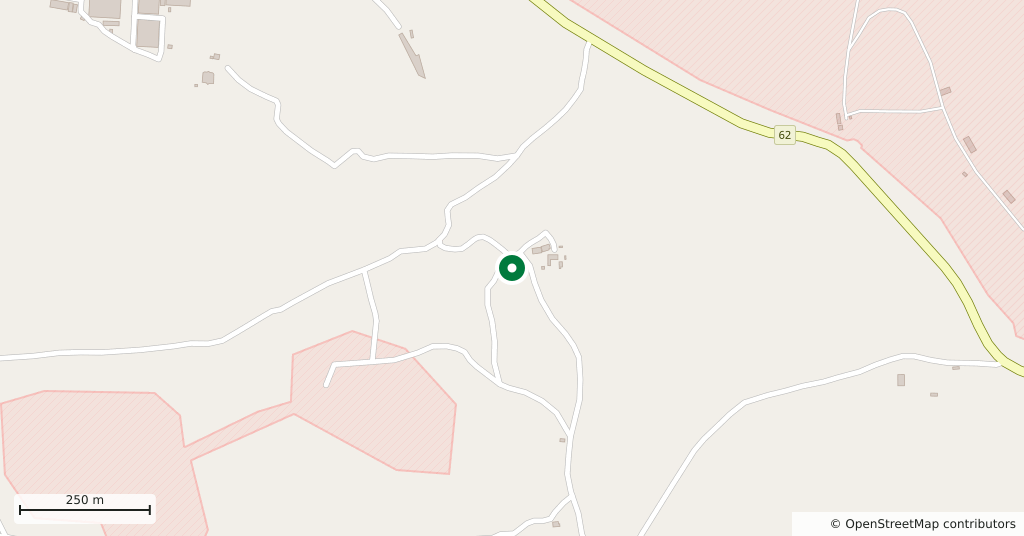
West from Aleppo, towards Daret Azza. The church lies about 600 metres south of the road and a surfaced access track runs right up to it. The monastery of Saint Simeon is 8 kilometres on; the two sit on the same route, and most people driving to the monastery stop here.
How long it takes
Forty minutes. It is one building and you can walk inside. A small farm still draws water from the ancient cistern beside it, and nobody knows what the underground room with its cut stair, on the west side of the church, was for.
What you see
A columned basilica of three aisles. The building is just under 20 metres long and 15 metres wide, of which 7 metres is the nave. That makes it half the size of the great church at al-Bara, built at the same time. The semicircular apse at the east is 6 metres across and invisible from outside, because it hides behind the straight east wall. Of the two rectangular rooms flanking it, the south one connects to the aisle through a round-arched opening; the north one served as the relic chamber and has doors to both the aisle and the apse.
The windows are the real point. The high nave walls are pierced by nine windows each, a count that answers to the six arches not at all; each lower side wall has five round-arched windows; the west front is pierced by three rows. Only the two east windows are framed by a flat cornice. That decorative form spread widely across the region later, and may appear here for the first time; its like can be seen on the church at Serjilla, dated 473.
When it was built
There is no fixed date. Butler proposed about 460; Strube, comparing styles, considered about 500 or a date after 530. Her evidence is the capitals: the forms here follow the church of Saint Simeon, built between 476 and 490, and the same debt shows in the east church at Kalota, dated 492. The capitals themselves give away a local workshop: eight different capital forms were used on twice six columns.
How it stands today
The building entered the UNESCO list in 2011 as part of the Ancient Villages of Northern Syria. Its closeness to the road is both a convenience and a risk: it is easy to reach and there is no guard. The farm next to it is a working household; do not walk into the yard and do not photograph anyone without asking. Unexploded ordnance is a reported hazard in the countryside; keep to the surfaced track and the path.
Don’t miss
The three medallions on the lintel of the west doorway. The rest of the façade is bare; the carving is on that one stone, and it passes directly over your head as you go in.
Tips
- Go inside and compare the nave capitals one by one; there are eight different forms
- Look at the three medallions on the west lintel as you pass under it
- The monastery of Saint Simeon is 8 kilometres on; put the two in one half day
- A farm uses the cistern beside the church; keep out of the yard
Transparency
- How this was chosen
- Written by hand; opening hours, entry fee and coordinates are kept as data. A field that is not known for certain is marked as variable rather than guessed.
- Facts checked
- September 2026
- Last updated
- September 15, 2026