Nebi Huri Mosque and Tower Tomb
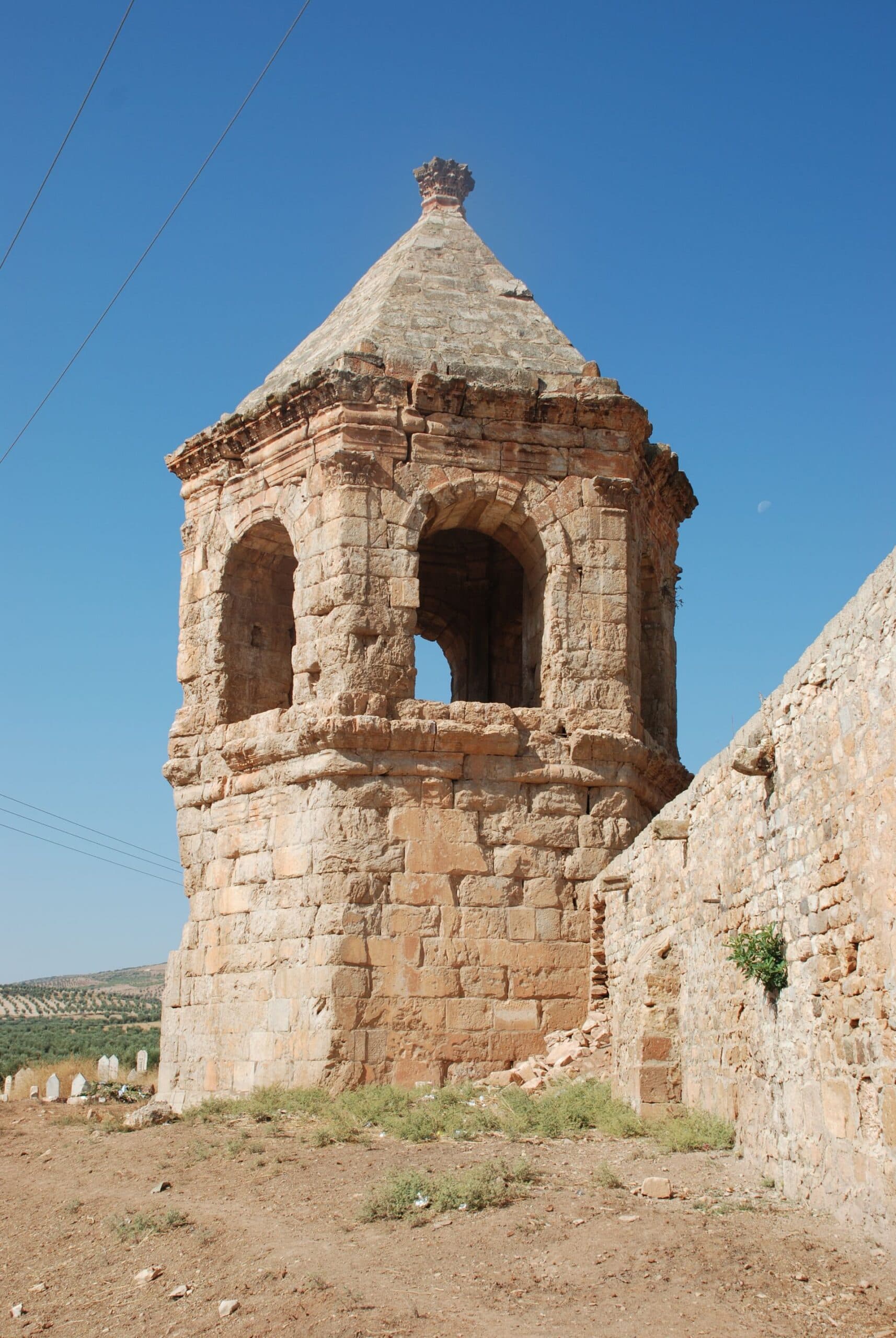
A hexagonal Roman tower tomb at the Cyrrhus site near Afrin: turned into a shrine in 1303, given a mosque beside it in 1314, and rebuilt after damage in 2020.
- Opening hours
- Daylight hours; the mosque opens at prayer times
- Entry
- Variable — check on arrival
- Duration
- 30 minutes
- Best time
- Spring, when the plain is green and the tower sits above the olive groves
- Period
- Roman — Mamluk — Ottoman
- Address
- South end of the Cyrrhus (Nebi Huri) site, Sharran, Afrin, Aleppo
At the southern edge of the ancient city of Cyrrhus north of Aleppo — Nebi Huri in its present name — stands a hexagonal Roman tower tomb. The tower owes its survival to a second life: centuries later it was turned into a Muslim shrine, a mosque was built beside it, and it has been in use ever since. The main ruin field lies about 1 kilometre to the north.
Who Nebi Huri was
In local telling Nebi Huri is a Sufi saint who granted the wish of anyone who asked sincerely. Another account reads the name as an Islamised form of Uriah the Hittite, a commander in the army of King David. The man actually buried in the tower was an officer of the Roman army. The name of the place came out of those three stories lying on top of one another. The tower carries all three.
How the tower became a mosque
The tower went up in the Roman period as a funerary monument, and the ground around it was damaged by the great earthquake of 1140. In 1303, under the Mamluks, the building was attached to a saint and turned into a shrine. Its lower level was taken to be the grave of Nebi Huri. The Roman cemetery beside it began to be used for Muslim burials. In 1314 Ala ad-Din ibn Altunbugha, the Mamluk governor of Aleppo, built a mosque next to the tower. That mosque was pulled down in 1875 and replaced, and the new one served the Friday prayer for the villages around.
What to see
A hexagonal shaft, a stone roof cut as a pyramid, and one arched opening on each face of the upper storey. From outside that upper level reads almost as a pavilion. The burial chamber is below. The mosque wall and the gravestones start at the foot of the tower, and behind them olive groves run down to the plain. Look at the building without cutting it out of that setting, because the setting is exactly what made it what it is now.
How it stands today
The tower was damaged and looted in 2018 during the fighting in the region; the wooden cenotaph over the grave was overturned. In 2020 it was rebuilt and became part of a larger mosque complex: a wooden gallery was added and the minbar was replaced with a new one in Ottoman form. Specialists criticised the work for not leaving some of the original pieces on site. The tower you see is a repaired tower. Close up, old and new pull apart.
Tips
- The main ruin field is about 1 kilometre north; put the two into one trip
- Walk round all six faces to see the arched openings of the upper storey
- The cemetery is in use: tread carefully among the stones and ask before photographing
- The mosque is in use for prayer: cover shoulders and knees, stay outside at prayer time
Transparency
- How this was chosen
- Written by hand; opening hours, entry fee and coordinates are kept as data. A field that is not known for certain is marked as variable rather than guessed.
- Facts checked
- September 2026
- Last updated
- September 15, 2026