The Old City of Aleppo
A walled core, a covered souq 13 km long and the quarters that grew outside the wall. On the UNESCO list since 1986. What the war took, and what is open now.
- Opening hours
- An open quarter of the city, all day
- Entry
- Free; the citadel and the museums charge their own tickets
- Duration
- 240 minutes
- Best time
- Morning, as the souq opens and the lanes are still cool
- Period
- Ayyubid — Mamluk — Ottoman
- Address
- The citadel square and around it, Old City, Aleppo
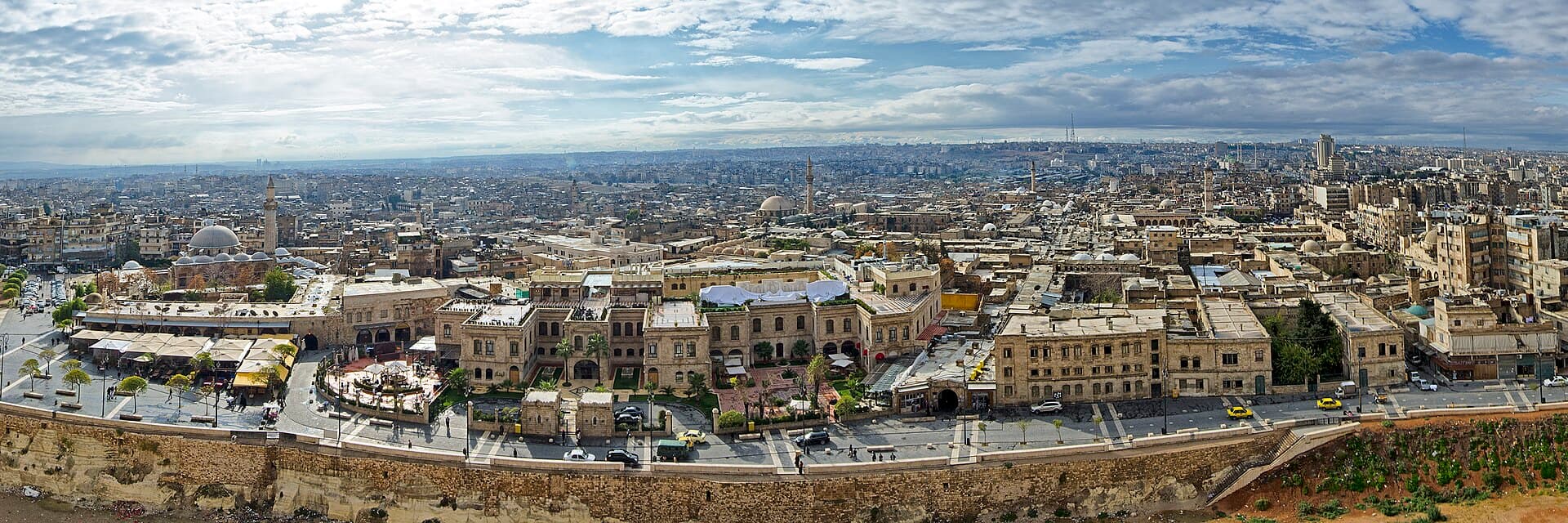
The old city of Aleppo is not one building but an urban fabric of 350 hectares: a walled core, the quarters that grew around it, and a covered souq that ties them together. UNESCO listed it in 1986. Most of the quarters still held the shape they took between the 11th and 16th centuries. About 30 per cent of that fabric was damaged in the war, and repair work continues.
Getting there
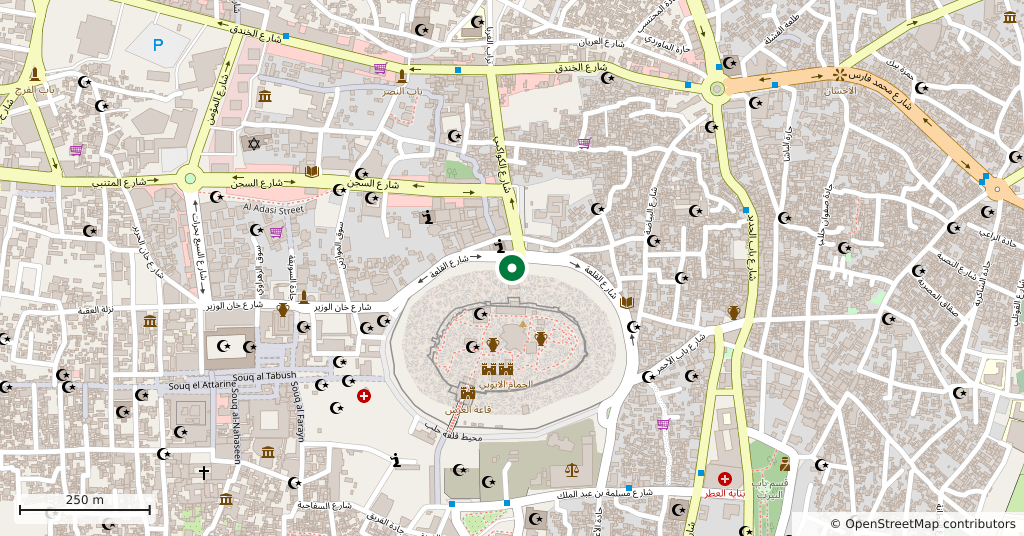
The square below the citadel is the easiest way in. Walk west from it and you enter the souq; walk south and you reach the quarters where the madrasas stand. The wall ran in a circuit of 5 km with nine gates, and five of them are still standing. Coming from the west, Bab Antakya is the natural entrance; from the south, Bab Qinnasrin.
How long it takes
Half a day. Four hours is realistic for the souq, the ground around the citadel and one or two khans. Walking all of it in a day is not possible: the fabric is wide, the lanes do not run straight, and you cross the same corner twice.
What to see
The spine is the Al-Madina souq, the longest covered market in the world at 13 km. Khans open off it: courtyard buildings where a merchant left both his goods and himself. Aleppo had 177 hammams in the medieval period, and around 18 of them still work in the old city. The stone is the same everywhere, the city’s own yellowish limestone.
What the war left
Long arms of the souq, the khans beside them and houses in the quarters burned or collapsed. Repair moves piece by piece: one lane opens, the next stays shut. Not every route drawn on a map can be walked. Ask which arm is open before you go.
What not to miss
Jdeydeh. Christian merchants of Aleppo founded this quarter outside the walls to the north-west in the 15th century. Mansions from the two centuries that followed stand in its narrow lanes. The carving on their stone façades reads more clearly than on any house inside the wall. Most visitors stay within the walls and never go up there.
Tips
- Start at the citadel square; the directions of the old city are easiest to work out from there
- Ask which arm of the souq is open before you go, repair moves lane by lane
- Jdeydeh lies outside the walls to the north-west; keep it for the end of the walk
- The ground is slippery stone with rubble in places; wear a firm sole
Transparency
- How this was chosen
- Written by hand; opening hours, entry fee and coordinates are kept as data. A field that is not known for certain is marked as variable rather than guessed.
- Facts checked
- September 2026
- Last updated
- September 15, 2026