The Old Town of Tartus
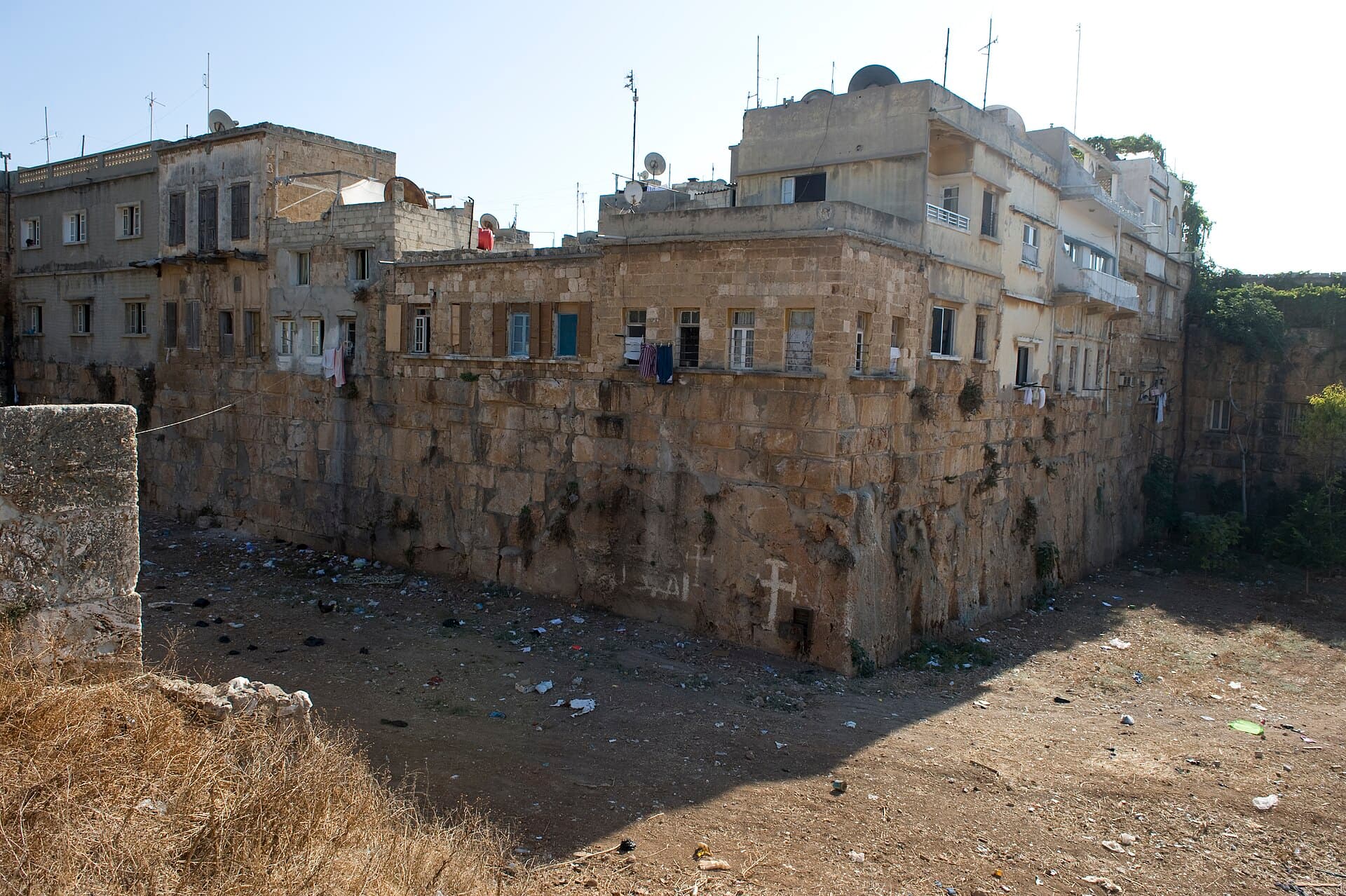
A lived-in quarter built inside the Templar fortress of Tartus. The curtain wall carries the houses, the moat is still open, and none of it is a museum.
- Opening hours
- Open quarter, all day
- Entry
- Free
- Duration
- 60 minutes
- Best time
- Late afternoon, when the lanes cool and the wall holds the western light
- Period
- Crusader — Mamluk — Ottoman
- Address
- Old town, north of the seafront promenade, Tartus
The old town of Tartus sits inside a castle. The Templars took over the city in 1152 and built a fortress on the shore behind double concentric walls; over the centuries that followed, people put houses on top of those walls and inside them. The quarter is still lived in. On the north and east sides the moat is open, and that ditch is what separates the old town from the modern city.
Getting there
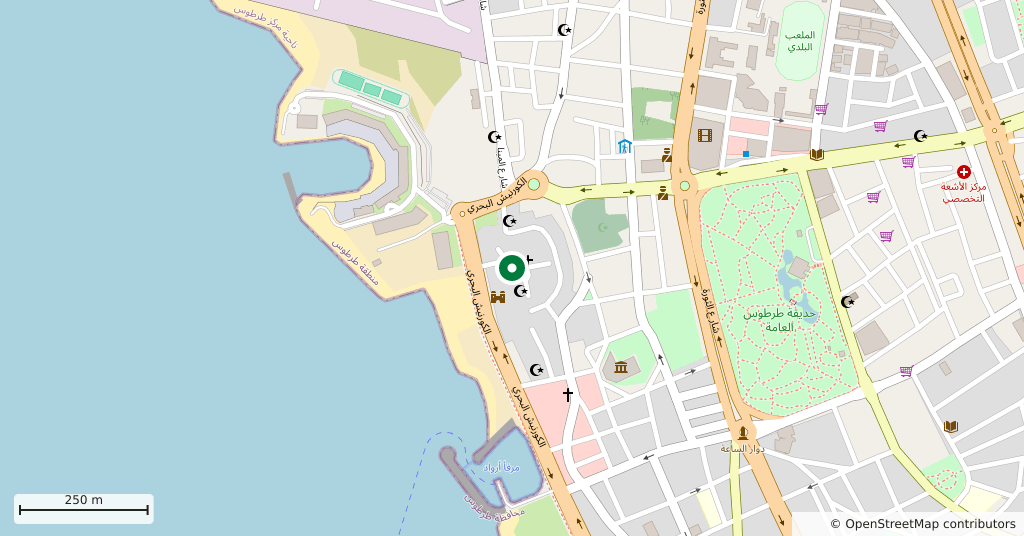
Turn inland from the seafront promenade; at its northern end the curtain wall starts right at the edge of the road. One gate is on the north-west corner, another on the north side. Both read as ordinary street mouths and neither is signposted. The cathedral, now the Tartus Museum, lies a few hundred metres to the south-east, outside the walls.
What to see
Inside there is a square courtyard ringed with houses of two and three storeys, with the dressed blocks of Crusader stone showing between them. One tower has become a mosque; another is now the back wall of a house. The east front makes the situation plainest: the lower eight or ten metres are 12th-century wall, the floors above are flats with balconies, and a washing line runs across the join. The two layers are not side by side. They are stacked.
Why the town is inside the castle
Saladin took Tartus in 1188, but the Templars withdrew into the keep and stayed; the castle held out until 1291 and was the last Templar position on the Syrian mainland. Its military life did not end there — in 1840 British ships landed marines against it and failed to take it. When the military use finally ran out, the wall was simply there, and the town used it instead of pulling it down. Carrying stone was cheaper than cutting new stone.
What most visitors miss
Go down into the moat and look up at the wall from below. Only from there does the height register; from street level the wall reads as an ordinary retaining wall. Down there you can also pick out masons’ marks on the blocks.
Tips
- This is a lived-in quarter, not a museum; ask before stepping into a courtyard
- Go down into the moat and look up; the height of the wall registers only from there
- The cathedral is outside the walls, a few hundred metres to the south-east
- The lanes are narrow and irregular, so do not try to drive in
Transparency
- How this was chosen
- Written by hand; opening hours, entry fee and coordinates are kept as data. A field that is not known for certain is marked as variable rather than guessed.
- Facts checked
- August 2026
- Last updated
- September 15, 2026