Khawabi Castle
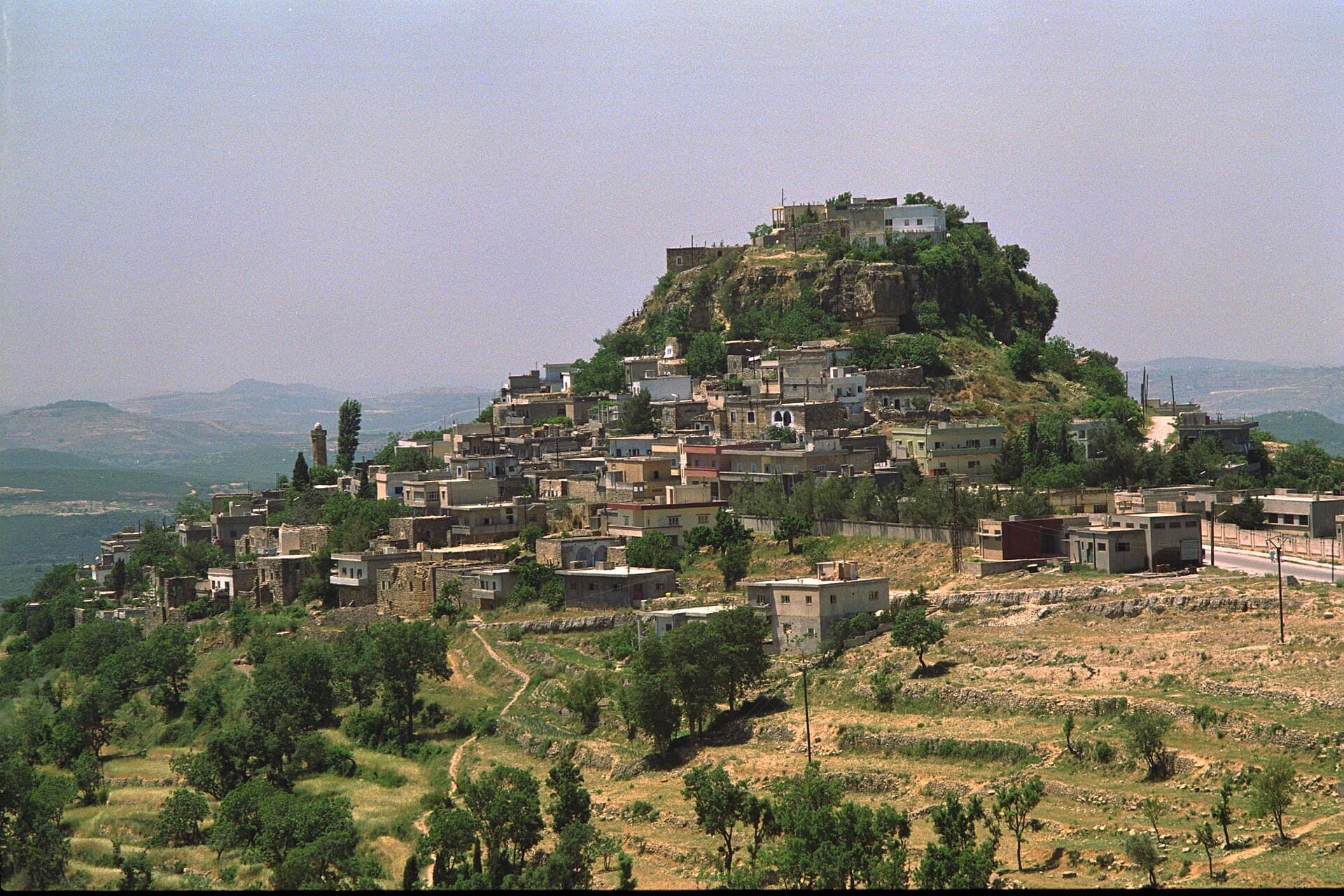
An Ismaili castle on a rock hill among olive groves northeast of Tartus. Inside the walls is a village people still live in, not a monument to walk around.
- Opening hours
- An inhabited village; open to walk through in daylight
- Entry
- Free
- Duration
- 60 minutes
- Best time
- Morning; the climb is hot in the afternoon and there is little shade
- Period
- Byzantine — Ismaili — Mamluk
- Address
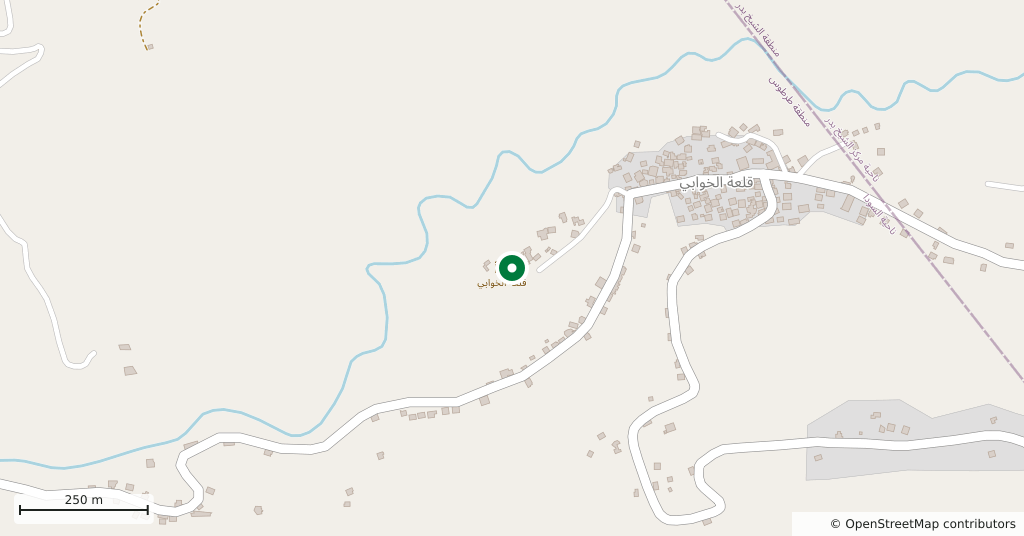
- Towards al-Shaykh Badr, northeast of Tartus
A castle in the coastal mountains northeast of Tartus. It is not a ruin you walk around: inside the walls is a village that is still lived in. The houses are built from the castle’s stone, the lanes run over its old vaults, and whoever comes through the gate meets neighbours rather than a ticket desk.
Getting there
It is 30 kilometres from Tartus by mountain road, turning towards al-Shaykh Badr, with a narrow, twisting climb at the end. Valleys surround the site on every side and the only way in is the stone stair on the eastern slope; vehicles do not go all the way up, so the last stretch is on foot.
What to see
The rock the castle sits on is about 350 metres long and 200 metres across. It divides into two quarters. In the upper one, named after Sinan, most of the old fabric now lies under modern houses; even so the vaults, the horse stables and the wells cut into the rock are still there. The mosque in the middle of it was rebuilt under the Ottomans, and a block of black basalt set above the door lintel carries an inscription giving the date of that work. Of the lower quarter, al-Saqi, nothing stands but the stones of house footings. Olive groves run in every direction around the hill.
How it reached today
The name comes from the Arabic word for a storage jar, from a root that goes back to an Aramaic word for a store. In the tenth century it is named as a fort of the military district of Homs, and in the eleventh the Byzantines repaired it. Shortly after taking Masyaf the Nizari Ismailis established themselves here too, and Khawabi became one of their religious centres. Rashid al-Din Sinan refortified it around 1160, adding a tower at the entrance and rebuilding parts of the walls. In 1214, after the son of the prince of Antioch was killed in the cathedral at Tartus, the prince and the Templars besieged the castle but withdrew without taking it. The Mamluk sultan Baybars took it in 1273 and had its military structure dismantled; from then on the remains were put to agricultural and domestic use. Some of today’s villagers descend from tribesmen the Mamluks settled here.
How long it takes
An hour. Climbing up, walking both quarters and looking down into the valley is enough. It never gets crowded; this is not on a tourist route.
What most people miss
The underground vaults between the lanes. The castle’s stores and cisterns are still down there beneath the village and some are still in use; their doors are set between houses and are invisible from outside. If a householder offers, look into one — the soundest surviving part of the castle is below, not above.
Tips
- People live here: keep out of courtyards and do not photograph through windows
- The last stretch is a stair and no vehicle goes up — wear shoes with grip
- Turn into the side lanes to see the castle from within; the main road takes you past the edge and out
- Add Qalaat al-Kahf to the same day; both castles belonged to the same Ismaili network
Transparency
- How this was chosen
- Written by hand; opening hours, entry fee and coordinates are kept as data. A field that is not known for certain is marked as variable rather than guessed.
- Facts checked
- September 2026
- Last updated
- September 15, 2026