Areimeh Castle
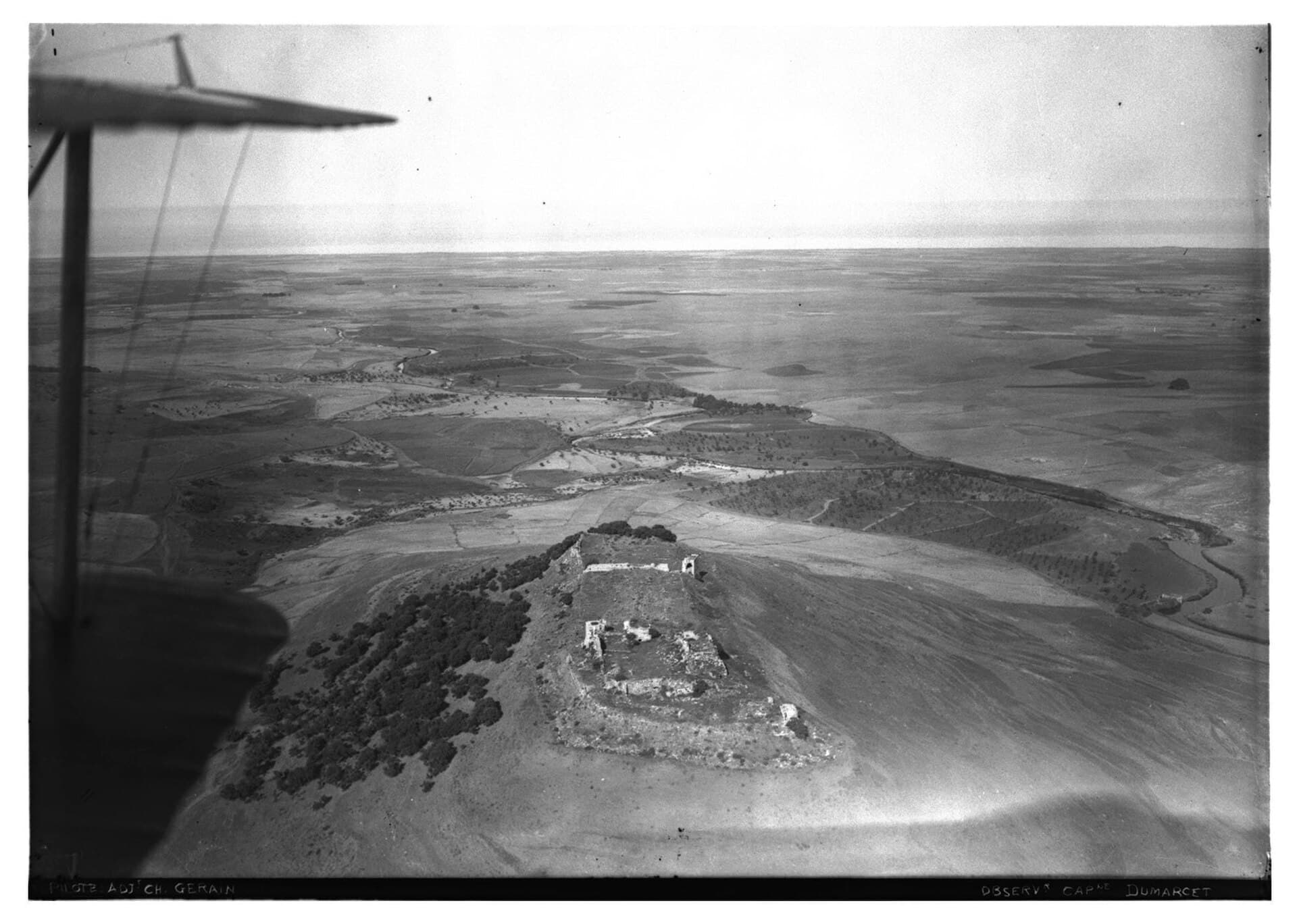
A Crusader castle on a rock plateau above the Akkar plain, built to signal between Safita and Tripoli: two watchtowers, vaulted halls and a broken wall.
- Opening hours
- Open site; if a guard is present, check at the entrance
- Entry
- Variable — check at the entrance
- Duration
- 75 minutes
- Best time
- A clear day; if the horizon is closed the point of the castle is lost
- Period
- Byzantine — Crusader — Mamluk
- Address
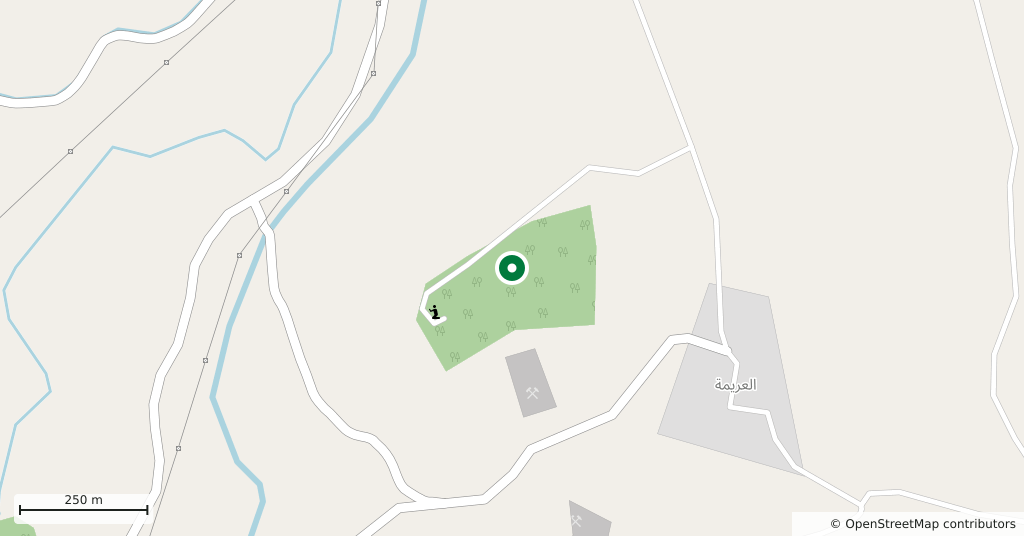
- North-west of Safsafa, near Safita, Tartus Governorate
South-east of Tartus, on a rock plateau a hundred and eighty metres above the Akkar plain. The castle went up in the 12th century on older Byzantine remains and changed hands repeatedly: Raymond II, Count of Tripoli, then Bertrand of Toulouse, then the Knights Templar. Nur ad-Din Zengi took it in 1167, the earthquake of 1170 damaged it, the Templars had it back in 1177, and Saladin held it for a time in 1187. It passed to Muslim hands for good in 1291.
Getting there
Twenty-five kilometres south-east of Tartus, south-west of Safita and north-west of the town of Safsafa. There is no public transport; hire a car and driver in Tartus or Safita. The last stretch is narrow and steep, and hard going after rain.
How long it takes
An hour and a quarter. The castle runs three hundred metres and is made of two courtyards with ditches between them. You walk it on stone and uneven ground.
What to see
The two towers are the soundest thing still standing. The south-western one reaches about thirty metres and is broken on its north face; both are solid inside, which means they were built for watching rather than living. Two building phases can be read: basalt from the early 12th century, limestone from the late 12th or early 13th century, the second most likely the work of the Templars. Below are wide vaulted halls, arched doorways, and arrow slits narrow outside and wide within.
What most people miss
Climb a tower and look at the horizon. From here the White Tower of Safita, Yahmur Castle and the direction of Tripoli are visible to the naked eye. The castles signalled to one another with smoke by day and fire by night, and Areimeh was a link in that chain. The building was raised to see rather than to hold, and its plan says so.
Tips
- Wear shoes with a firm sole; parts of the walls have collapsed recently
- Climb a tower and look towards Safita and Yahmur — this is what it was built for
- There is no light in the vaulted halls; carry a torch
- The last road is narrow and steep; tell your driver beforehand
Transparency
- How this was chosen
- Written by hand; opening hours, entry fee and coordinates are kept as data. A field that is not known for certain is marked as variable rather than guessed.
- Facts checked
- September 2026
- Last updated
- September 15, 2026