The Cathedral of Our Lady of Tortosa
The best-preserved Crusader church in Syria, now the Tartus Museum. A three-aisled interior, finds from Amrit and Ugarit, Roman sarcophagi in the garden.
- Opening hours
- Variable — confirm on site
- Entry
- Variable — confirm on site
- Duration
- 60 minutes
- Best time
- Late afternoon, when the west front takes the light
- Period
- Crusader — Mamluk
- Address
- Old City, Tartus
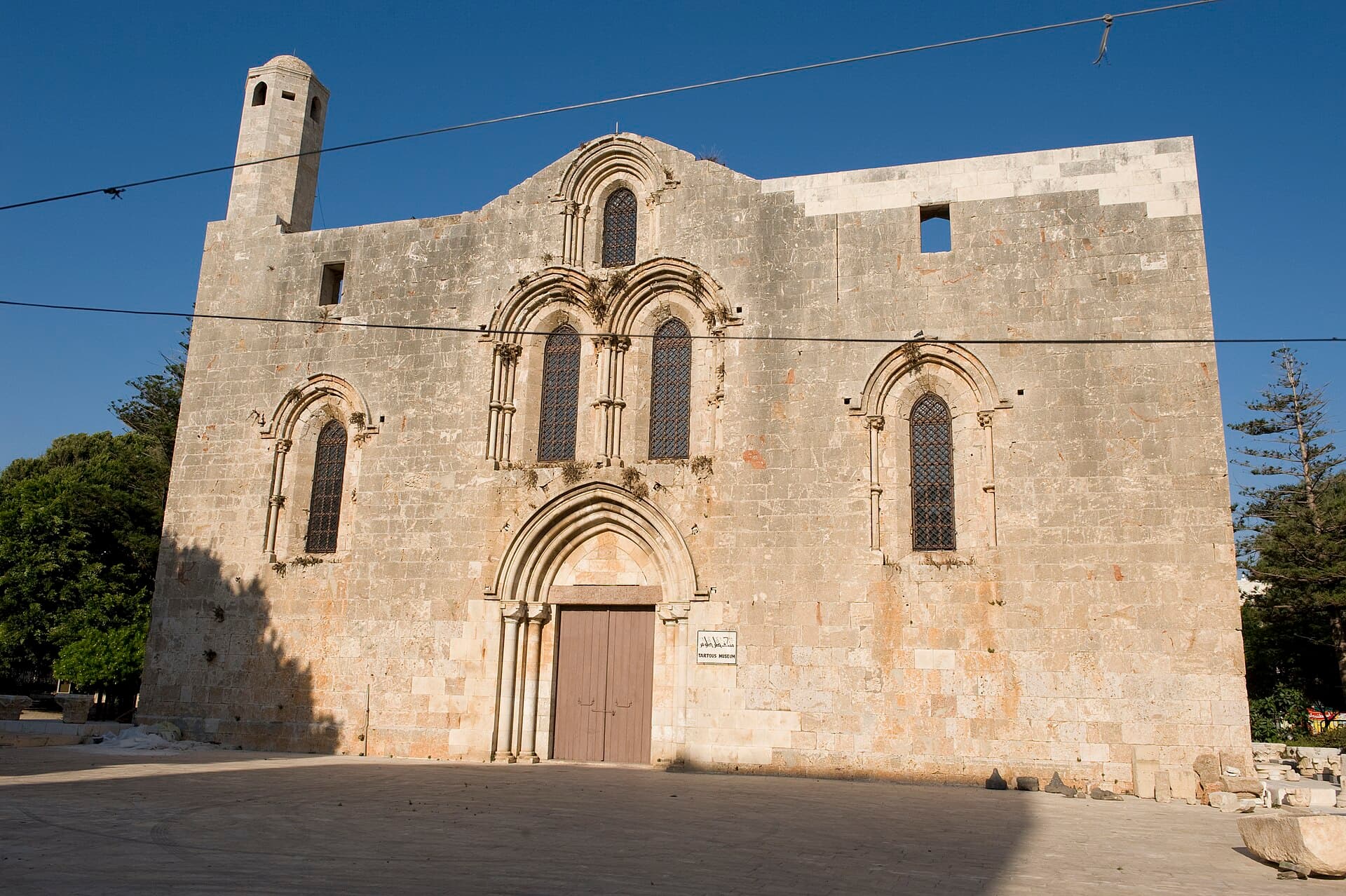
A 12th-century church in the old town of Tartus, a few streets back from the sea. It is reckoned the soundest surviving religious building of the Crusader period. The plaque by the door now reads “Tartous Museum”: after restoration the building became the Tartus Museum, so seeing the church and seeing the museum are one visit.
Getting there
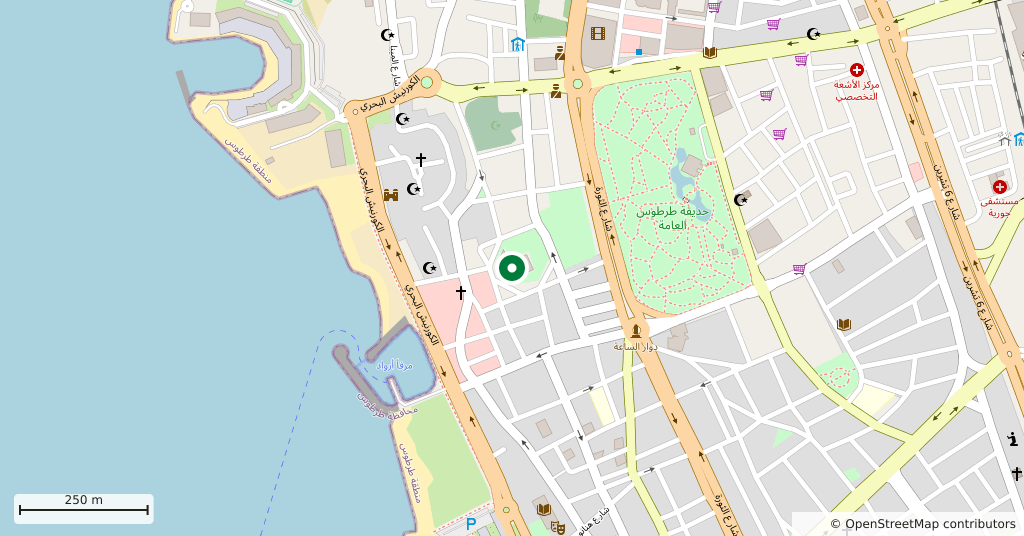
Inside the old town, a few minutes’ walk from the seafront corniche. The streets around it are narrow, but the ground in front of the church opens into a square; you see the whole west front the moment you turn the corner.
What to see
The plan has three aisles: 40 metres long, 27 metres wide. The west front carries a large pointed portal with a door on either side and rows of windows above. The walls are thick, the openings narrow, and a tower stands at the north corner — the building was raised as much as a stronghold as a church, which on the Crusader coast were not separate things.
Inside, the excavations of the Syrian coast are on display. Cases are given to finds from Ugarit, Amrit, Tell Sukas and Tell Kazel, alongside Roman mosaics, a statue of Baal cut from basalt, and Roman sarcophagi carved in relief.
From church to museum
The church was built in the 12th century as a stop for pilgrims; tradition holds that Saint Peter founded a small chapel here in the name of the Virgin. After the Mamluk conquest it was turned into a mosque, it served military use under the Ottomans, and the Syrian Directorate-General of Antiquities then restored it and made it a museum. That is why the interior today reads as neither church nor mosque: the aisles have been cleared and the rows given over to display cases.
How long it takes
An hour is enough. The three aisles follow one after another and the route is easy to keep; the stonework in the garden takes another ten minutes.
What most people miss
In the right-hand aisle stand small 5th-century BC figures brought from Amrit, each carrying an offering. They are not at the head of the sequence, and most visitors walk past them on the way to the mosaics. Look at the marble and basalt in the garden too: column capitals and sarcophagus lids stand in the open.
Tips
- The plaque says museum; the church and the museum are one building, do not look for a second entrance
- See the front in late light: morning is backlit and flattens the stone
- Look at the sarcophagi and capitals in the garden before you go into the halls
- Amrit and Arwad fit into the same day; both are a short trip from Tartus
Transparency
- How this was chosen
- Written by hand; opening hours, entry fee and coordinates are kept as data. A field that is not known for certain is marked as variable rather than guessed.
- Facts checked
- August 2026
- Last updated
- September 15, 2026