Ras al-Ayn and the Khabur Springs
Ras al-Ayn, the border town at the springs that feed the Khabur: Roman Rhesaina, Byzantine Theodosiopolis. Its name, its history and why access today is unclear.
- Opening hours
- A town; access not confirmed, check in Hasakah before going
- Entry
- Free
- Duration
- 90 minutes
- Best time
- Only once current conditions are confirmed in Hasakah; spring and autumn are mild
- Period
- Assyrian — Roman — Byzantine — Islamic
- Address
- Turkish border, north-west of Hasakah; Ceylanpınar lies opposite
Ras al-Ayn is a town on the Turkish border in the north-west of Hasakah province. Its name means the same thing in Arabic and in Kurdish: “head of the spring”. Most of the Khabur’s year-round water comes from here, from karst springs that surface around the town. Its written history goes back nearly three thousand years: Res ina in Assyrian records, Rhesaina under Rome, Theodosiopolis under Byzantium. The half north of the border is now Ceylanpınar, in Turkey. Whether visitors can reach the town could not be confirmed.
The springs
More than 100 springs are counted around the town. The best known is Neba al-Kibrit, the “sulphur spring”, which gives warm mineral water. Ayn al-Hasan and Ayn al-Bayda form the southern branch of the Khabur. The medieval geographer al-Idrisi mentioned some 300 springs here. No current source says how many of them still flow; that needs checking on the ground.
Name and history
The Akkadian name, Res ina, appears in the records of the Assyrian king Adad-nirari II (911-891 BC). Ptolemy calls it Raisena, the Romans Resaina or Rhesaina, and under Septimius Severus it became a colony. The emperor Theodosius I enlarged the town in 380 and named it Theodosiopolis. In AD 243 the Battle of Resaena between Rome and the Sasanians was fought here. The town was destroyed in the Sasanian attacks of 578 and 580 and rebuilt; the Arabs took it in 640.
In the Middle Ages it was the chief town of the Diyar Rabia region, with a Syriac Orthodox bishopric and monasteries. Crusaders held it briefly in 1129. In the 12th and 13th centuries it passed between the Zengids, the Ayyubids — the dynasty founded by Saladin — and the Khwarazmshahs, and at the end of the 14th century Timur sacked it. In the 19th century the Ottomans settled Chechen refugees here and built barracks. From 1915 it was one of the main assembly points for deported Armenians. The 1921 Treaty of Ankara split the town in two, leaving the northern part in Turkey as Ceylanpınar. The 2004 census put the population at about 29 thousand.
Nearby mounds
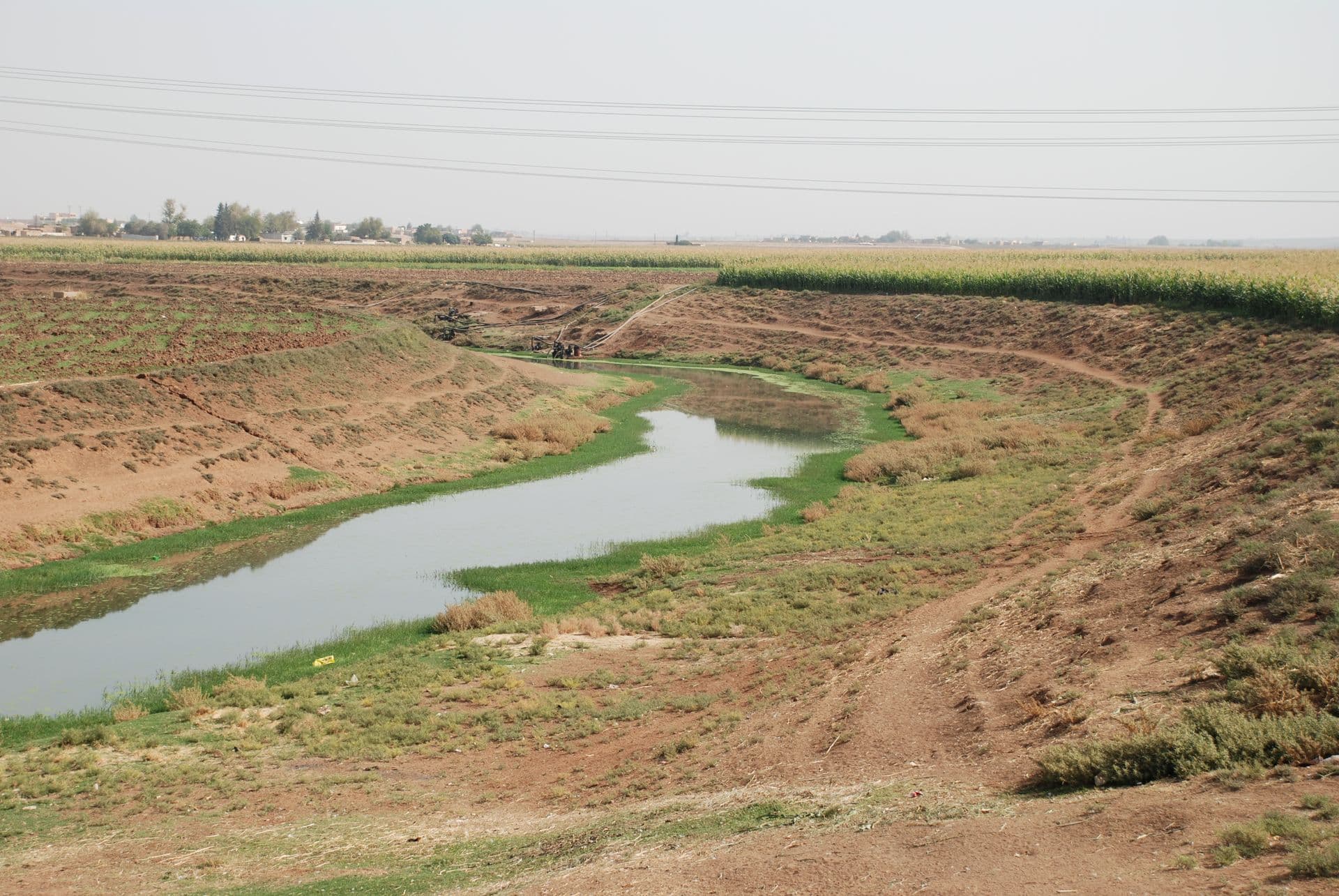
Tell Fekheriye, the Aramaean town of Sikkan, lies just south of the town, and Tell Halaf is 4 kilometres to the south-west. Both have their own entries on this site. The Khabur River entry follows the water from here to the Euphrates. The cover photograph, taken in October 2009, shows the shallow bed of the Khabur near Tell Halaf.
Can you get there today
Not confirmed. The Ras al-Ayn area passed to the transitional government’s administration in early 2026. In August 2026, after army engineering units had cleared the area of mines, 440 families began returning from Hasakah by the Tell Tamer–al-Aliya road. In April 2026 mines and explosives exposed on the surface had been reported on the dirt road between the village of Hirbeke and Ras al-Ayn. No source says whether visitors can reach the town and the springs, and the border strip runs just north of the town. This page is not a recommendation to visit.
Tips
- Before setting out, ask in Hasakah about the road and the town; visitor access is not confirmed
- Mines were reported on the Hirbeke–Ras al-Ayn dirt road in April 2026; stay on the asphalt
- Keep away from the border strip and military posts, and do not photograph them
- Tell Fekheriye lies just south of the town, Tell Halaf 4 kilometres to the south-west
Transparency
- How this was chosen
- Written by hand; opening hours, entry fee and coordinates are kept as data. A field that is not known for certain is marked as variable rather than guessed.
- Facts checked
- September 2026
- Last updated
- September 15, 2026