The Maronite Cathedral of Saint Elijah, Aleppo
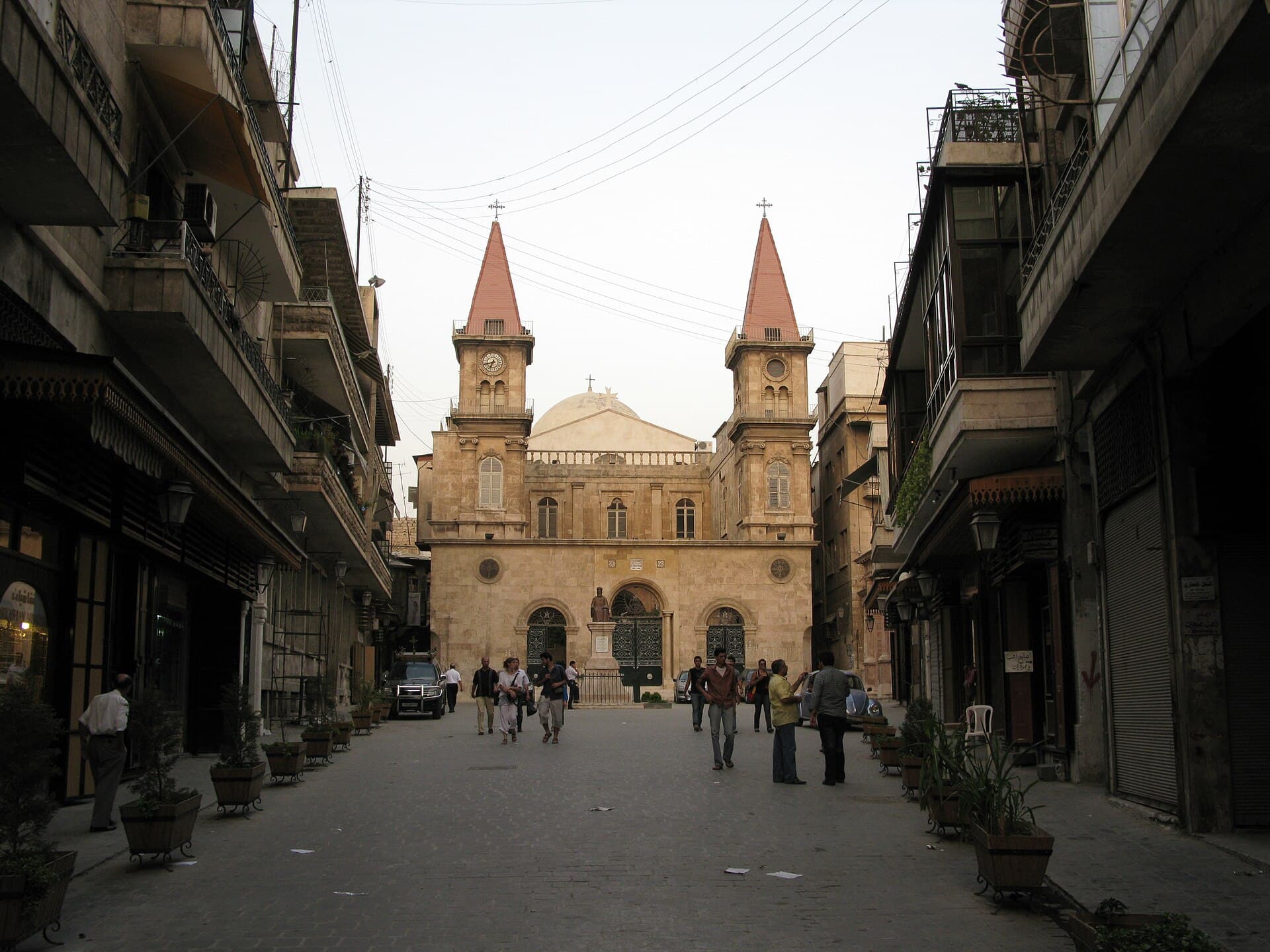
The Maronite cathedral on Farhat Square in Jdeideh, built in 1873. Its dome was rebuilt in concrete in 1914, and it reopened after repairs in July 2020.
- Opening hours
- Open at service times; otherwise ask on the square
- Entry
- Free
- Duration
- 40 minutes
- Best time
- Late afternoon; the square is in shade and the front catches the light
- Period
- Ottoman
- Address
- Farhat Square, Jdeideh, Old City, Aleppo
It closes the end of Farhat Square, in the Jdeideh quarter. This is the seat of the Maronite eparchy of Aleppo, dedicated to the prophet Elijah. Do not confuse it with the Mar Elias Cathedral also on this site: that one stands by the Quwayq, belongs to the Greek Orthodox and was consecrated in 2000. This one is in the Old City, Maronite, and dates from 1873.
Getting there
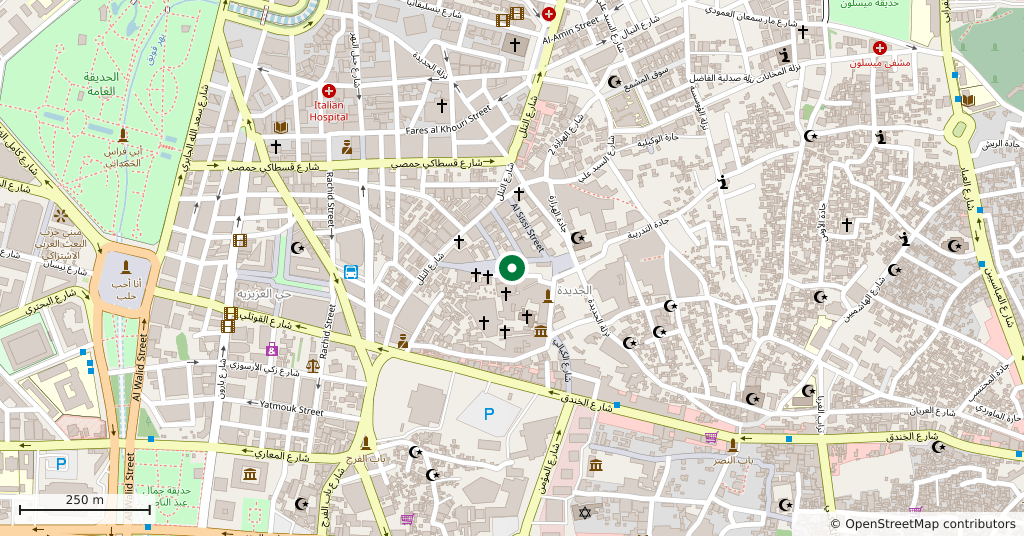
Walk west from Sahat al-Hatab into Jdeideh. The façade seals the far side of the square and you can see it from the end of the street. The Forty Martyrs, Mar Assia al-Hakim and the Greek Catholic cathedral are all a few minutes away.
How long it takes
Forty minutes. The façade and the statue are out on the square, and the interior takes a single circuit.
What to see
The present building replaced an earlier one. Before it there was a small Maronite church from the 15th century here. The Italian traveller Pietro Della Valle, who visited Aleppo in 1625, described it as one of four churches standing side by side behind a single yard and a single gate in the newly founded quarter of Jdeideh. The other three were the Forty Martyrs, the Armenian Church of the Holy Mother of God — now the Zarehian Treasury — and the Greek Orthodox Church of the Dormition. The new cathedral was finished in 1873. Two belfries rise from the front, and the marble entrance with its yellow columns sits under the high dome on the eastern side.
Don’t miss
The statue of Germanos Farhat in front of the main gate. Farhat was a poet and archbishop who lived between 1670 and 1732 and founded the Maronite library of Aleppo. The statue was raised in 1932, 200 years after his death. The square took his name from then on, so looking for the statue on Farhat Square amounts to reading the name of the square.
How it stands now
The dome was entirely rebuilt in 1914, under Archbishop Michael Akhras. Belgian experts helped and concrete was used, the first time concrete appears in the building history of Aleppo. A clock that plays a hymn every quarter of an hour was fitted to the tower in the same years. The cathedral was badly damaged in the civil war and its roof came down in 2013 after a run of explosions. Repairs took years, and the cathedral reopened officially in July 2020.
Tips
- To take in the whole façade, stand at the end of the street rather than on the square
- Read the inscription on the plinth of the statue; the square is named after the man on it
- The tower clock may still chime, and waiting on the square is how you find out
- The Greek Catholic cathedral is about a hundred metres away, so the two make one walk
Transparency
- How this was chosen
- Written by hand; opening hours, entry fee and coordinates are kept as data. A field that is not known for certain is marked as variable rather than guessed.
- Facts checked
- September 2026
- Last updated
- September 15, 2026