Sinkhar, a 4th-Century Basilica on the Jebel Sem’an
In a closed valley on the Jebel Sem’an, a basilica counted among Syria’s oldest churches and a 6th-century chapel beside it. Locals call the place Simkhar.
- Opening hours
- Open site, daylight hours
- Entry
- Variable — confirm on arrival
- Duration
- 45 minutes
- Best time
- Spring and autumn, before the heat sets in
- Period
- Byzantine
- Address
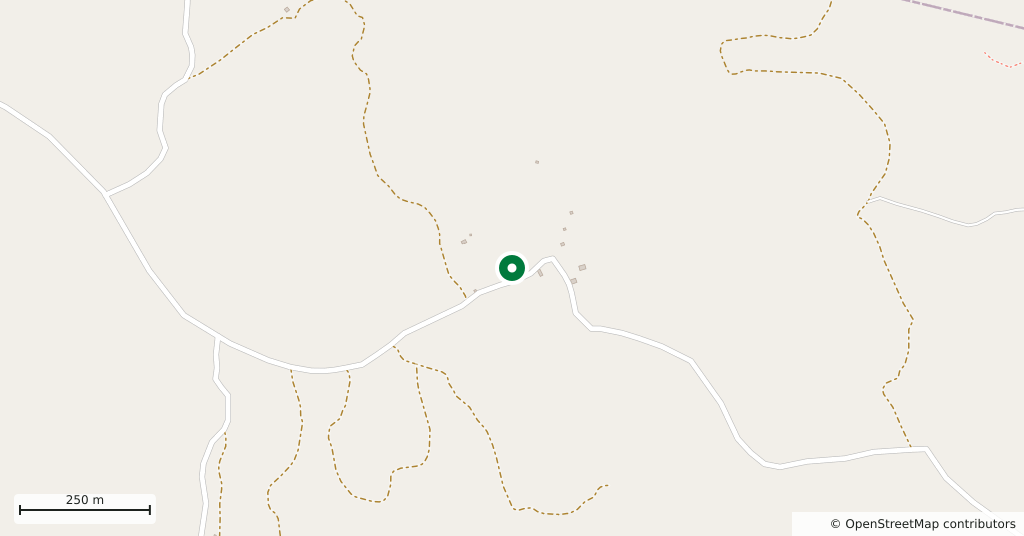
- Sinkhar (Simkhar), near Bazihr, Jebel Sem'an, rural Aleppo
Sinkhar is a small Dead City — one of the abandoned late-antique stone villages of northern Syria — in a closed valley on the Jebel Sem’an, near the village of Bazihr. Locals call it Simkhar. People lived here from the 2nd to the 7th century. The basilica dates from the 4th century and is counted among the oldest churches in Syria; the chapel right beside it was built in the 6th century. Sinkhar is named among the components of the Ancient Villages of Northern Syria, which UNESCO inscribed in 2011.
Getting there
About 24 kilometres north-west of Aleppo. Fafertin is some two and a half kilometres to the north, Batuta about two kilometres to the north-west, and Surqaniya lies in the same direction. There is no public transport. You hire a car and driver in Aleppo; a driver who knows Bazihr will find it more easily.
How long it takes
Forty-five minutes. The church and the chapel stand side by side. Batuta and Fafertin fit into the same half day.
What you see
The south wall of the basilica has three doorways; from inside you can also read the inner face of the west wall. In the middle of the nave stands the bema, the raised stone platform where the clergy sat.
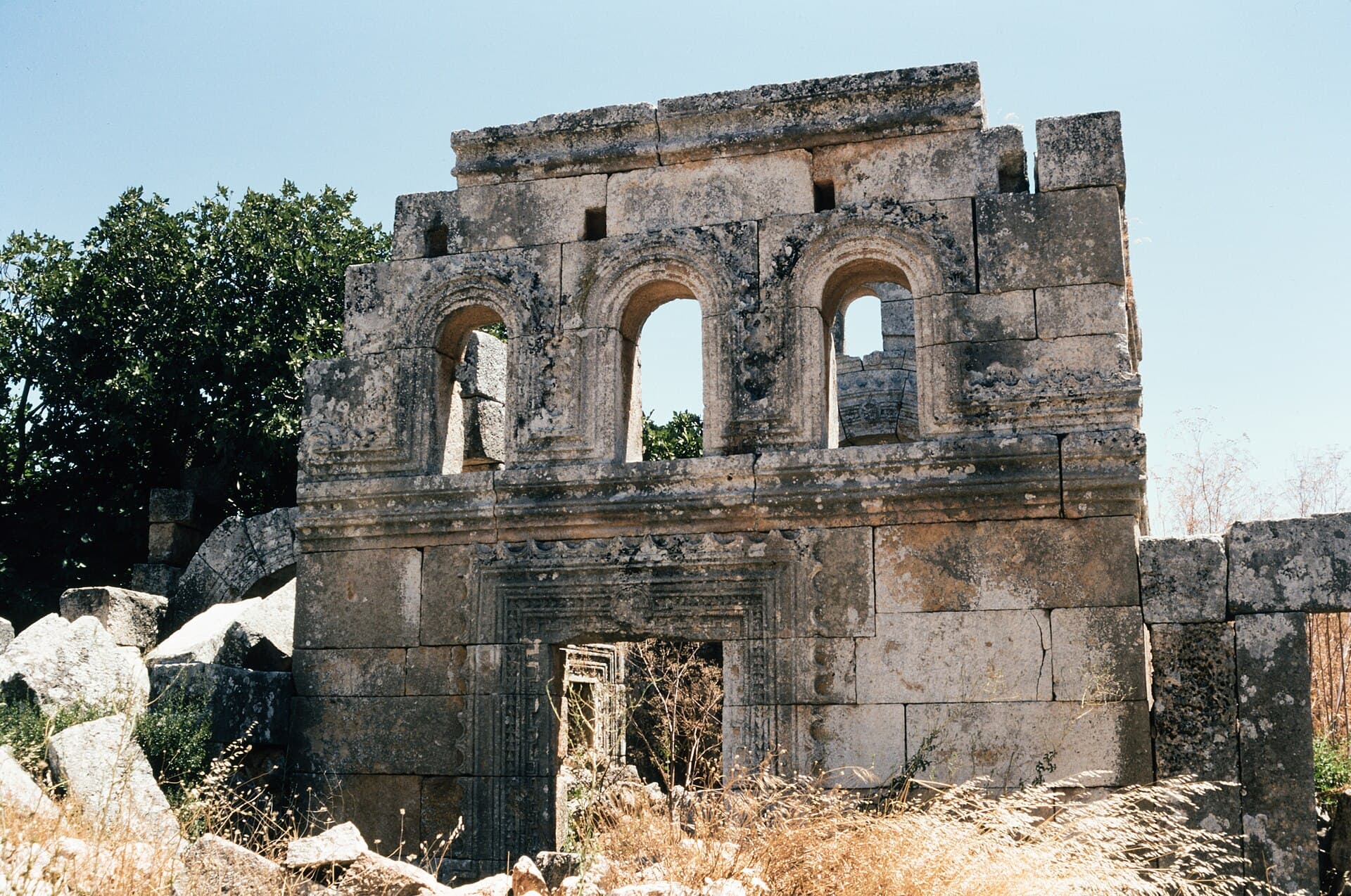
The chapel lies south of the basilica. At its east end the arch of the apse and the pilasters that carry it are standing, and the pilaster capitals are carved. Inside, a doorway facing north survives. On the west front, three round-arched windows sit in a row above a moulded door frame.
Beyond the churches the village has remains of houses. Arabic sources add an arched house, caves and a dovecote tower.
How it stands today
The descriptions here rest on photographs taken in 1996 for the Dumbarton Oaks archive and on published sources; we found no verified record of the site’s condition after the war years. People may still live in the village: call out before you walk into a yard, and do not photograph anyone without asking. Unexploded ordnance is a reported hazard in the countryside; stay on the path and do not touch metal lying on the ground.
Don’t miss
The apse arch of the chapel. The Dumbarton Oaks photographer gave it frames of its own: the moulded face of the arch and the pilaster capitals. Walk round to the east end of the chapel and look at the arch from inside.
Tips
- The chapel is south of the basilica; look at its apse arch from inside
- Go in through the three south doorways of the basilica and read the west wall from inside
- Batuta is about two kilometres north-west; link the two on one walk
- People may live in the village; call out before entering a yard
Transparency
- How this was chosen
- Written by hand; opening hours, entry fee and coordinates are kept as data. A field that is not known for certain is marked as variable rather than guessed.
- Facts checked
- September 2026
- Last updated
- September 15, 2026