Surqaniya: a 6th-Century Chapel with Its Stone Roof
A small Jebel Sem’an village next to Fafertin: a 6th-century chapel whose sanctuary still has its stone roof, the apse of a 4th-century church and an ancient inn.
- Opening hours
- Open site, daylight hours
- Entry
- Variable — confirm on arrival
- Duration
- 40 minutes
- Best time
- Spring and autumn; afternoon light falls on the chapel's south façade
- Period
- Byzantine
- Address
- Surqaniya, near Fafertin, Jebel Sem'an, Afrin district, Aleppo
The ruins of a small village in Jebel Sem’an, just south of an ancient road, 23 kilometres north-west of Aleppo. There used to be a spring here that fed a stream running south through the valley. What stands today is a cluster of houses and the apse walls of a 4th century church in the middle of the village. On the western edge is a building identified as an inn, and at the southern end a 6th century chapel in surprisingly good condition. Surqaniya entered the UNESCO list in 2011 together with the Dead Cities.
Getting there
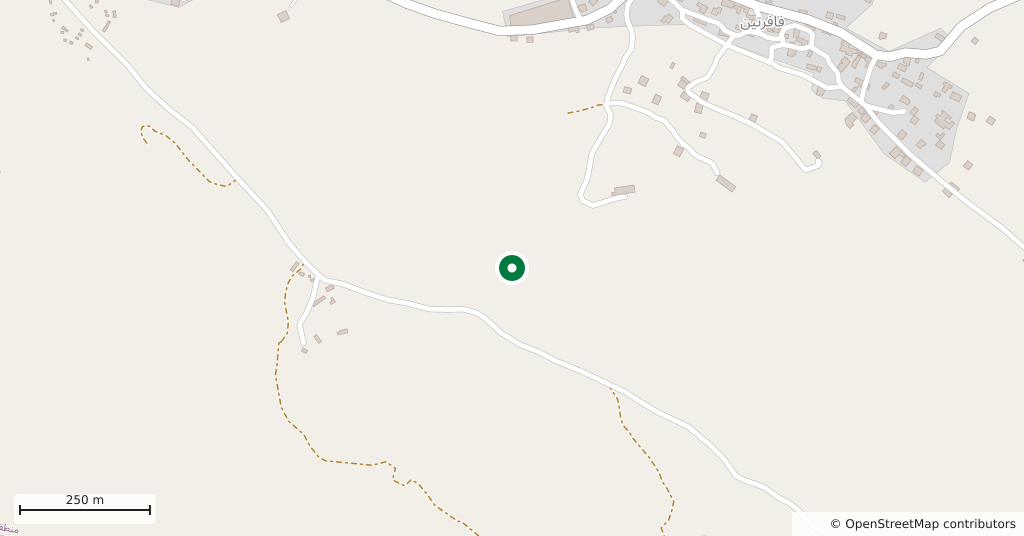
Surqaniya lies about 700 metres south-west of Fafertin, known for its church dated 372, and east of Batuta. The side road to Fafertin reaches it too; the chapel is about 100 metres south of the modern road. There is no public transport and no signpost; the driver needs to know the place.
How long it takes
Forty minutes. The chapel, the church ruin and the inn are within walking distance of each other.
What you see
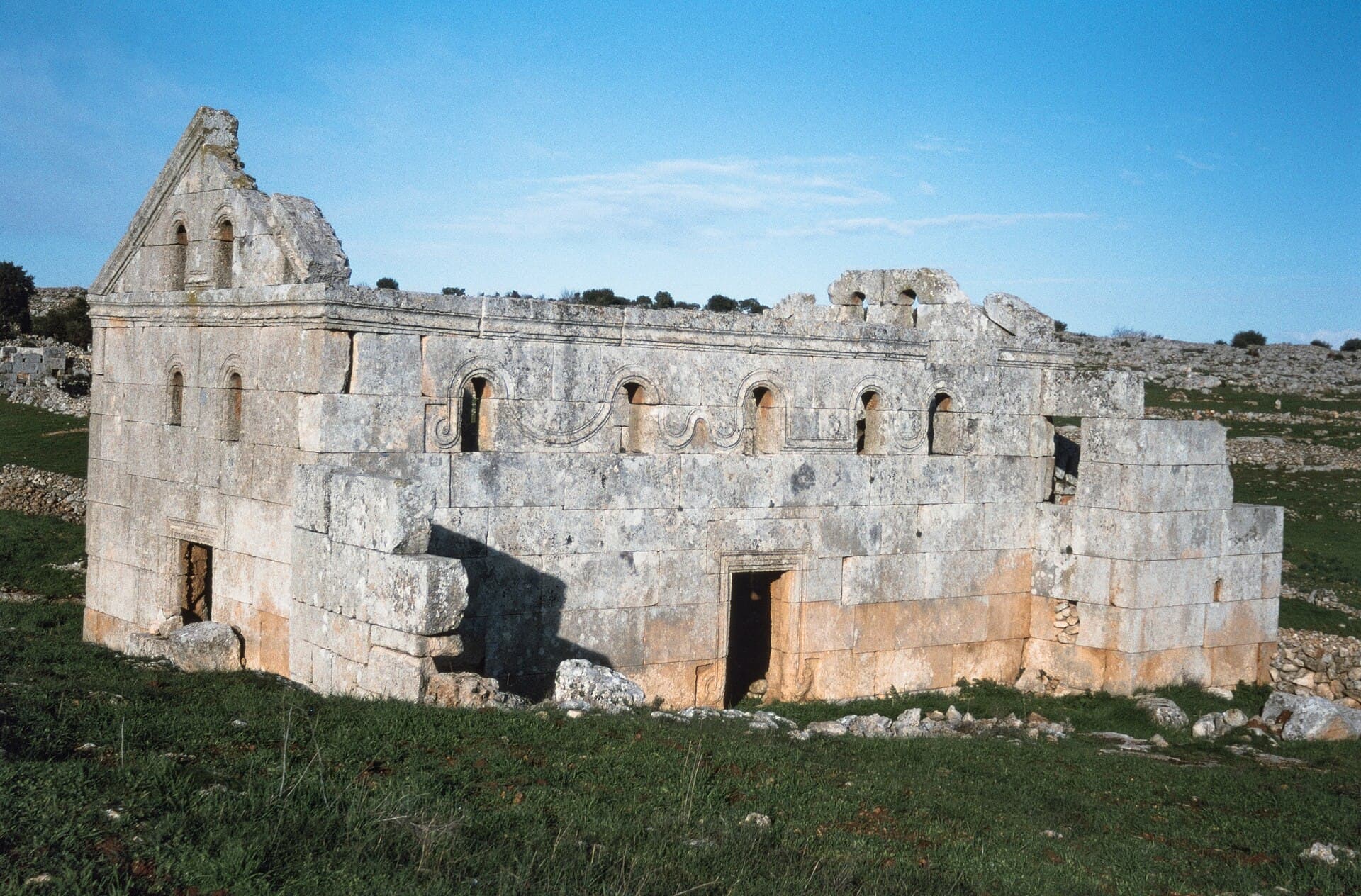
The chapel is the best-preserved building in the village. It has a single nave; the sanctuary at the east end extends south beyond the nave, and the stone roof over the sanctuary is still in place. The south chamber rises higher than the buildings around it and most likely carried a pyramid-shaped timber roof. On the south façade a moulding runs from window to window, looping around each one.
The 4th century church in the centre of the village had a single nave. All that is left is the doorway of the triumphal arch into the sanctuary and the walls of the apse. In the 5th century a second apse was added beside the main one, probably for baptisms.
Just west of the settlement stands a building of 12 by 7 metres with its upper walls intact. The doorways on its south façade carry Christian symbols, and on the east side a balcony floor survives. Inside, the ground floor is split into two equal parts, lit by five small windows, and its walls show votive columns and crosses. Scholars identify it as an inn.
How it stands today
The ruins lie in open country among olive trees and stony ground. No recent damage report is known. Unexploded ordnance is a reported hazard in the countryside: stay on the path and do not touch metal lying on the ground.
Don’t miss
The ceiling of the chapel’s sanctuary. In these villages nearly every roof has fallen; here the stone roof is still in place, and from inside you can see how 6th century masons built it.
Tips
- Fafertin is 700 metres north-east; see both within the hour
- Look at the moulding that links the windows on the chapel's south façade
- Find the crosses and votive columns on the ground floor of the inn
- The ground is stony; wear shoes with firm soles
Transparency
- How this was chosen
- Written by hand; opening hours, entry fee and coordinates are kept as data. A field that is not known for certain is marked as variable rather than guessed.
- Facts checked
- September 2026
- Last updated
- September 15, 2026