Tell Arbid
A mound 30 metres high in the Khabur triangle. A third-millennium city between Nagar and Urkesh, its Ninevite 5 temples and terracotta chariot models.
- Opening hours
- Open ground, through the day; the dig area may be fenced
- Entry
- Variable — confirm at the entrance
- Duration
- 60 minutes
- Best time
- Spring, when the plain is green and the mound stands out against it
- Period
- Early Dynastic — Mitanni
- Address
- Khabur triangle, south-west of Qamishli
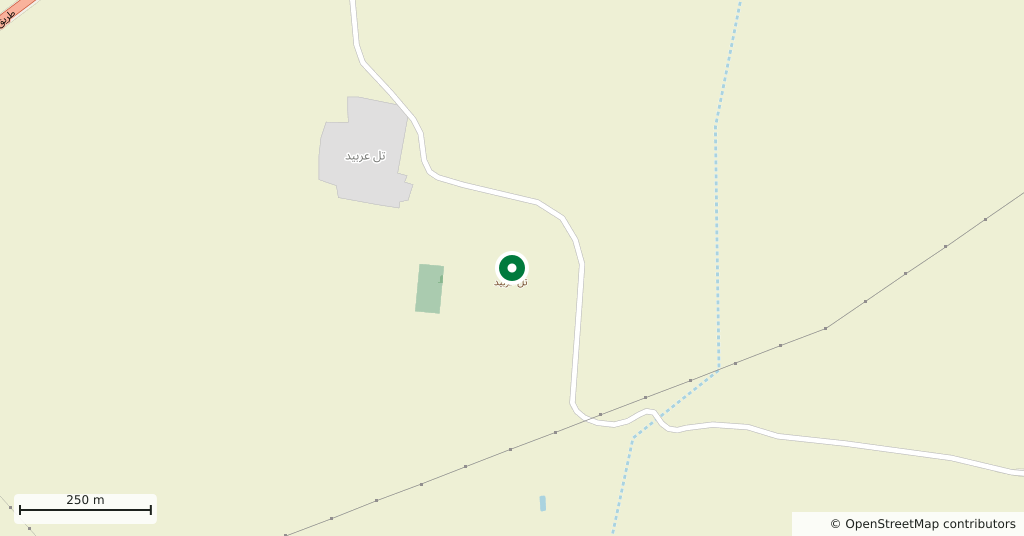
A mound in the middle of the Khabur basin, beside the road down from Qamishli. In the third millennium the city here sat between the two great centres of the region: Tell Brak, ancient Nagar, to the south-west, and Tell Mozan, ancient Urkesh, to the north. The settlement carried most of its weight between 2900 and 2600, in the period called Ninevite 5, and the city of that period spreads across almost the whole site.
Getting there
South-west of Qamishli and 50 kilometres north-north-east of Al-Hasakah. Tell Mozan is 45 kilometres north and Chagar Bazar 15 kilometres away; all three can be seen in a day. The mound stands among fields and is visible from the road.
How long it takes
An hour, including the climb from the foot to the top for the view over the Khabur plain.
What to see
One large main tell with four smaller mounds around it, 38 hectares together, the main tell rising 30 metres. Across 12 hectares of it, Mitanni, Akkadian, Early Dynastic and Ninevite 5 layers lie one on another, the last two with monumental buildings. The excavators found two temples: the Southern Temple, reached by a ramp, and the South-Western Temple on the west side. A cemetery was dug on the eastern slope, and among graves of the Khabur culture and the Mitanni period came two richly furnished women’s burials, one of them with pottery, bronze and gold, two cylinder seals and two faience scarabs.
What not to miss
The small finds. The mound produced 577 animal and 67 human terracotta figurines; those of the third millennium are small and roughly made, those of the Khabur culture more careful. To these add some 40 terracotta chariot models, whole or in fragments, along with beads of carnelian and lapis lazuli, cylinder seals and stone tools. The excavators also identified a caravanserai of the third millennium.
A short history of the dig
The first excavation was Max Mallowan’s for the British Museum between 1934 and 1936: eight trenches and a series of graves. Mallowan’s wife, Agatha Christie, wrote a book about those Khabur seasons. The finds went to the British Museum, the Ashmolean and the National Museum of Aleppo, and the 325 pieces sent to Aleppo were later moved to Deir ez-Zor. From 1996 a Polish-Syrian team under Piotr Bieliński of Warsaw and Ahmad Serriyeh of Damascus University worked fifteen seasons, stopping in 2010.
Where it stands now
The mound is in the Qamishli region and has seen no scientific excavation since 2011. Illegal digging is known to have spread across the Khabur mounds, and the present condition of Tell Arbid cannot be confirmed from independent sources.
Tips
- Climb to the top; the four smaller mounds around it can only be counted from up there
- Leave the sherds on the surface where they are — collecting is illegal
- Tell Mozan and Tell Brak can be seen the same day; the three make a route
- The finds are in museums, not on site; what you see on the mound is earth and section
Transparency
- How this was chosen
- Written by hand; opening hours, entry fee and coordinates are kept as data. A field that is not known for certain is marked as variable rather than guessed.
- Facts checked
- September 2026
- Last updated
- September 15, 2026