Tell Mozan
Urkesh, the holy city of the Hurrians, west of Qamishli. Its queen sealed more doors than its king, and beside the palace lies a shaft into the underworld.
- Opening hours
- Open ground, daylight hours; confirm on arrival
- Entry
- Variable — confirm at the entrance
- Duration
- 120 minutes
- Best time
- Morning; midday light on the sheeting is harsh and there is no shade
- Period
- Akkadian — Hurrian — Mitanni
- Address
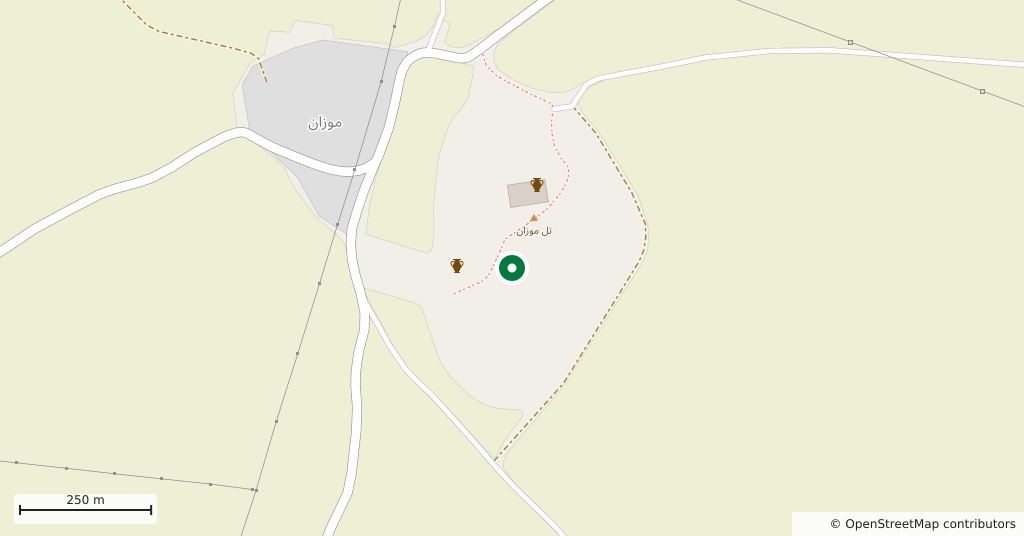
- Tell Mozan, north of Amuda; 24 km west of Qamishli
Urkesh is where the Hurrians begin. This mound stands between Qamishli and Amuda, in front of the foothills of the Taurus. It was founded in the third millennium BC and was held to be the holy city of the Hurrians. Its city god was Kumarbi, father of the storm god Teshub. The site covers 135 hectares, but most of that is outer town; the high mound itself is eighteen hectares and rises twenty-five metres above the plain. A mud-brick wall eight metres thick and seven metres high ran around it.
Getting there
24 kilometres west of Qamishli by road, north of Amuda. A little over half an hour by car. You can see the mound from the road: a long low ridge behind cut wheat fields, with the dig house on top of it.
How long it takes
Two hours. The palace area, the temple terrace and the summit; the walking distance is short but the ground is uneven.
What to see
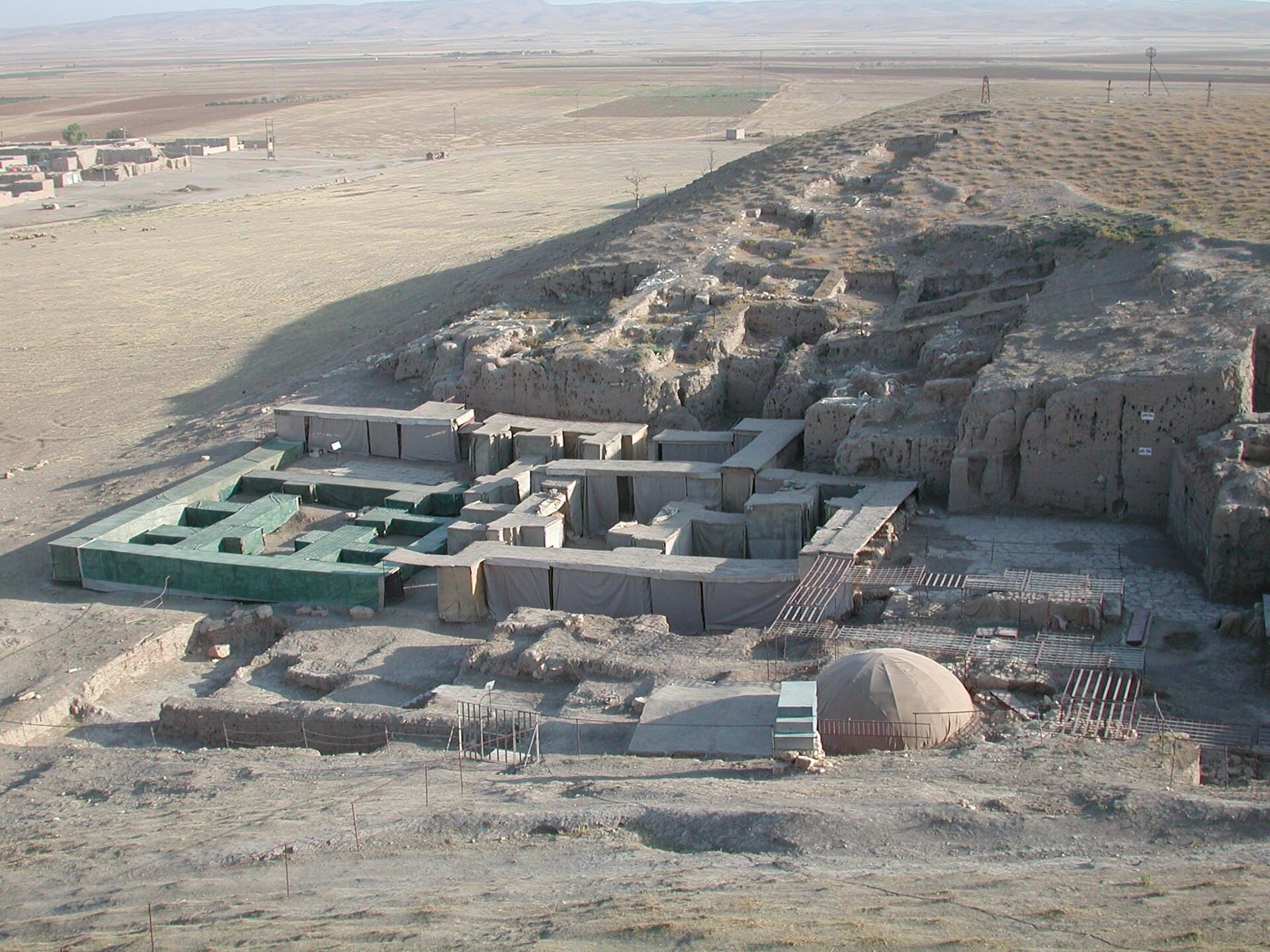
At the centre of the mound is a temple terrace: a platform raised on a stone revetment wall, with a plaza in front of it and a monumental staircase climbing to the top. On the edge of that plaza, in the Akkadian period, the palace of King Tupkish was built. It had two wings, one for service and one for living, each with its own courtyard. The excavated walls are covered today in grey and green protective sheeting — that is the image by which Urkesh is known in photographs, and the covers are what keep the rain off the mud brick.
What not to miss
Two details. First: most of the seal impressions found in the palace belong not to the king but to Queen Uqnitum. Her seals were used to close doors and containers, and two of her servants are named on them — her cook Tuli and her nurse Zamena. The household of a palace four thousand years ago is visible at that range. Second: the Abi beside the palace. A circular shaft cut down into the ground, thought to have been used for speaking with the dead; it is named in Hurrian texts and was found archaeologically for the first time here.
The site today
Max Mallowan made the first soundings and did not continue; according to his wife Agatha Christie they left because the site seemed to be Roman. Not one Roman level has been found in the excavations since. Regular digging began in 1984 and ran for more than seventeen seasons; it has been on hold since 2011, but a local team guards the site and conservation work goes on. The finds are in the Deir ez-Zor Museum. Ask in Qamishli about the road before you go.
Tips
- Go up the temple staircase — the relation between plaza and palace only makes sense from there
- Do not walk on the protective sheeting or lift its edges; the mud brick under it is bare
- Ask where the Abi is; it is unmarked and easy to walk past
- The seals and tablets are not here but in the Deir ez-Zor Museum
- If Tell Leilan is in the same day, the two lie in opposite directions and the return runs through Qamishli
Gallery
Transparency
- How this was chosen
- Written by hand; opening hours, entry fee and coordinates are kept as data. A field that is not known for certain is marked as variable rather than guessed.
- Facts checked
- September 2026
- Last updated
- September 15, 2026