Tell Sheikh Hamad (Dur-Katlimmu)
An Assyrian provincial capital on the lower Khabur: the conserved mudbrick Red House, and cuneiform tablets written after Nineveh itself had already fallen.
- Opening hours
- Variable — confirm before you go
- Entry
- Variable — check at the entrance
- Duration
- 75 minutes
- Best time
- Spring; in summer there is no shade in the Khabur valley
- Period
- Mitanni — Assyrian
- Address
- Village of al-Sur, lower Khabur valley, Deir ez-Zor Governorate
A wide excavation spread at the foot of a mound on the lower Khabur. The place was settled in the Late Chalcolithic and belonged to the land of Mitanni in the Bronze Age. The turn came with Shalmaneser I: the king, who reigned between 1263 and 1234 BC, made it the seat of a new Assyrian province after Mitanni collapsed and put his brother’s son on its throne. That ruler held the titles of grand vizier and king of the land of Hanigalbat.
Getting there
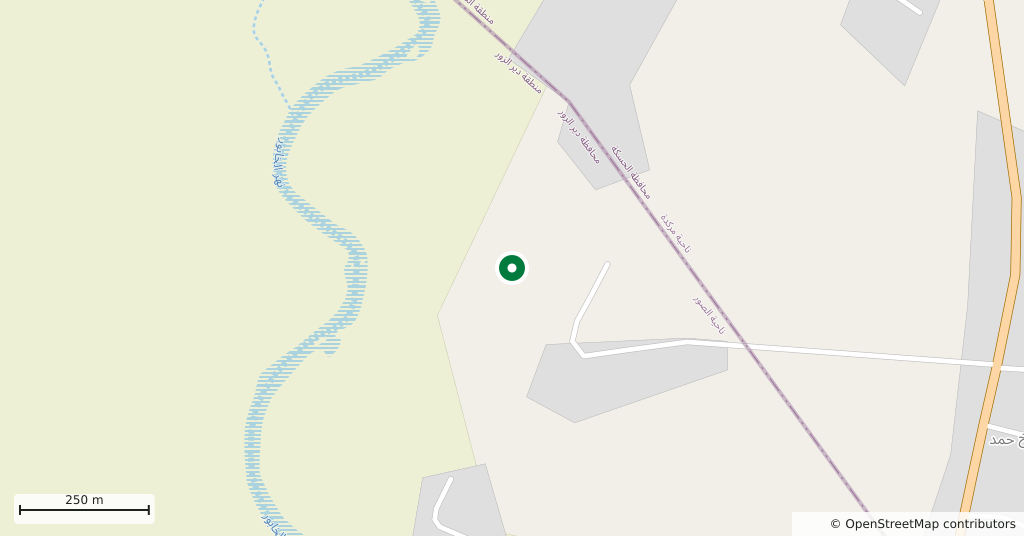
Sixty-five kilometres north-east of Deir ez-Zor, at the village of al-Sur. You need a car and driver and the road that follows the Khabur. The dig house stands at the edge of the site; ask before you go whether the site is open.
How long it takes
An hour and a quarter. The excavated part is flat and broad. Climbing the mound takes another twenty minutes, and the plan of the site only reads from up there.
What to see
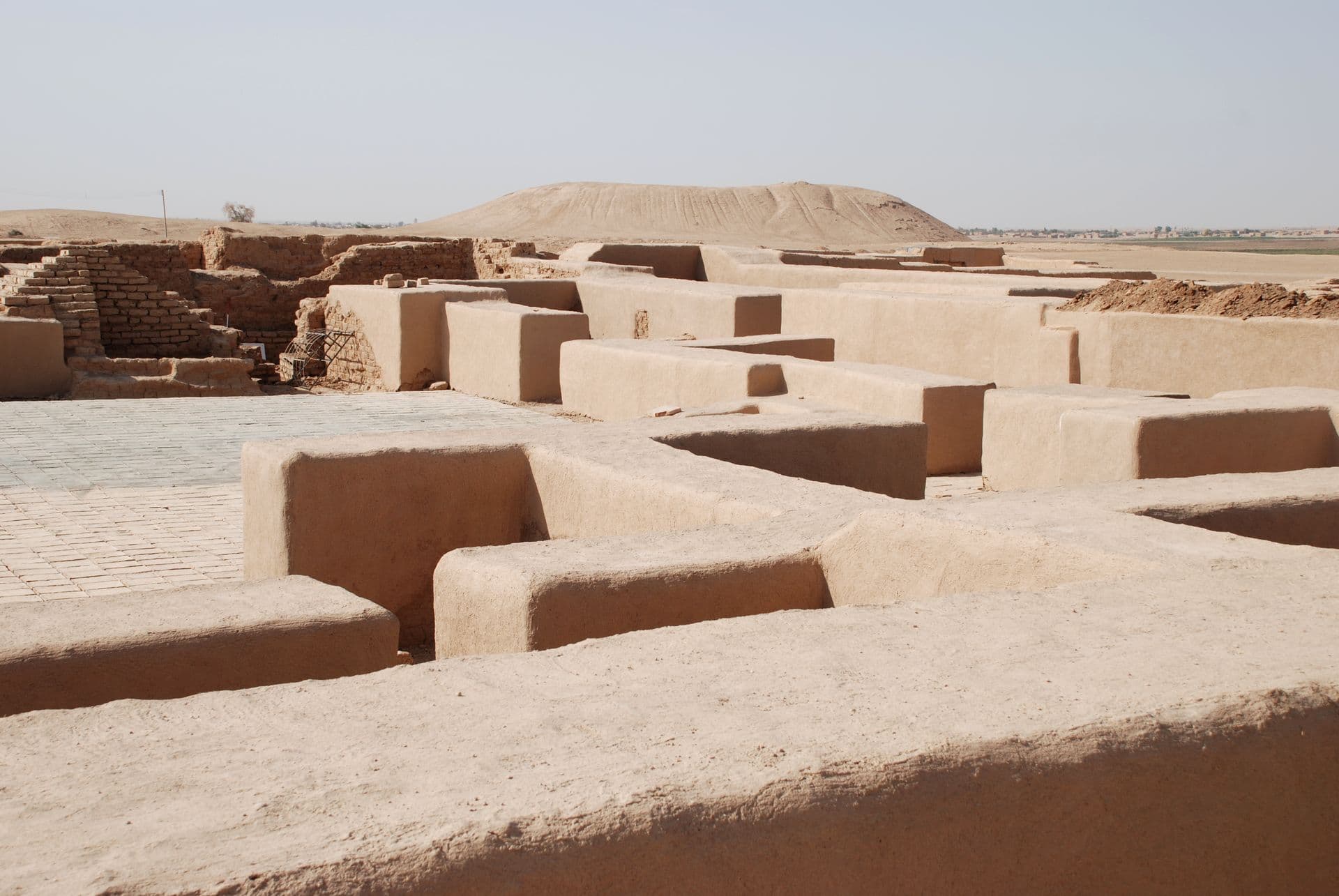
At the centre stands the large Neo-Assyrian residence known as the Red House, its mudbrick walls sealed under a protective render and its room plan legible on the ground. The mound rises behind it. The excavations ran for 32 seasons between 1978 and 2010 under Hartmut Kühne; long before that, in 1878, Hormuzd Rassam cut a few trenches and carried off a fragment of a stele. A French team dug here again in July 2020.
What most people miss
The date on the tablets. The site produced 550 cuneiform texts in Akkadian and 40 in Aramaic. Some of them are dated between 604 and 599 BC — that is, after Nineveh, Harran and Carchemish had fallen and the empire was over. The scribes were still writing by the Assyrian calendar. These tablets are the only record of how many more years a state that no longer existed went on administering its province.
Tips
- Climb the mound; the plan of the excavation only reads from above
- Do not touch the render on the Red House — mudbrick is underneath
- Ask in Deir ez-Zor beforehand whether the site is open
- Bring water; there are no facilities in the village
Transparency
- How this was chosen
- Written by hand; opening hours, entry fee and coordinates are kept as data. A field that is not known for certain is marked as variable rather than guessed.
- Facts checked
- September 2026
- Last updated
- September 15, 2026