Umm el-Marra
A mound on the Jabbul plain east of Aleppo. It was one of the oldest cities of the Near East, and an intact, unlooted royal tomb came out of its acropolis.
- Opening hours
- Open site, daylight hours
- Entry
- Free
- Duration
- 60 minutes
- Best time
- A spring morning; raking light picks out the wall ring and the ditch in shadow
- Period
- Early Bronze — Yamhad — Mitanni — Hittite (Yamhad: the Amorite kingdom ruled from Aleppo)
- Address
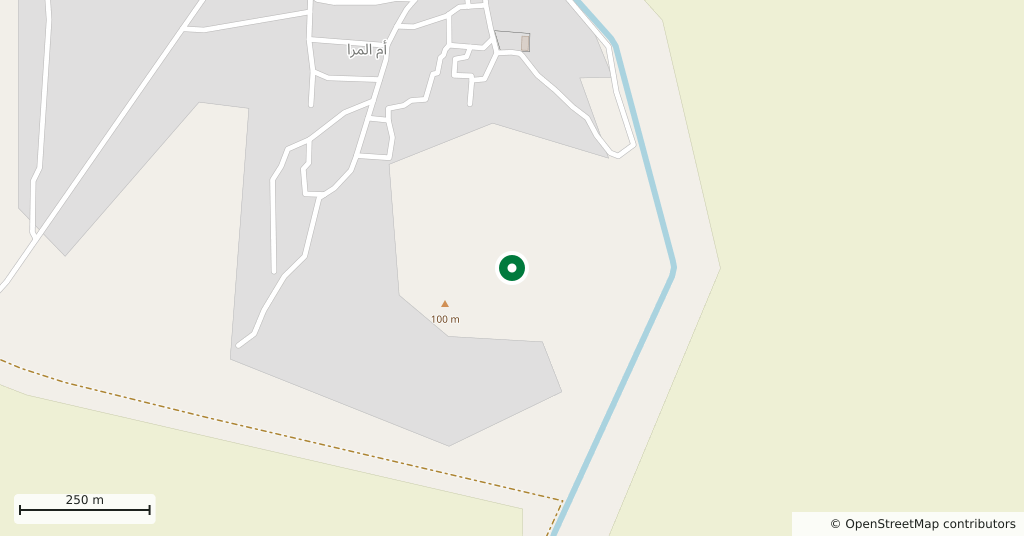
- Jabbul plain, 45 km east of Aleppo
45 kilometres east of Aleppo, in the middle of the Jabbul plain, a mound of 25 hectares rises some ten metres above the flat around it. The country here is dry steppe today; in the third millennium BC it was not. In that period Umm el-Marra was a town of three to five thousand people, standing where two trade routes crossed, north-west of Ebla. What the city was called then is not known.
Getting there
Three quarters of an hour from Aleppo on the road towards Raqqa; the mound lies north of the road, on the flat of Lake Jabbul. You need a vehicle, as no public transport comes out here. The last stretch is a field track and is impassable after rain.
How long it takes
An hour. The top of the mound is broad and level; walking the circuit of the wall and going up to the edge of the acropolis fills that time.
What to see
The plan of the city still reads in the topography, and that is what this mound really shows you. A wall circuit about 400 metres across, the gaps of three gates, and a defensive ditch outside it; within, at the highest point, a quadrilateral acropolis with rounded corners, about a hundred metres wide. No wall stands — the material was mud brick, and the mud brick has gone back into the plain. But the ring of the wall and the gate openings are things you feel through your legs as you walk: the ground lifts here and drops there.
What not to miss
The real story of this mound came out in 2000. The excavators found an intact, unlooted tomb dating to about 2300 BC: five adults and three babies lay inside, some of them ornamented from head to foot in gold and silver. Tombs of that age that have survived undisturbed in the Near East can be counted on one hand. The finds are not on the site; the tomb lies on the acropolis, and a guide will point out the spot.
What remains
The town grew a second time around 1820 BC and became a regional centre subject to the kingdom of Yamhad, which was ruled from Aleppo; the mudbrick wall belongs to that period. It was destroyed in the 14th century BC and stood empty two centuries later. Excavation began in 1978 with a Belgian team, passed after 1994 to an American and Dutch team, and stopped in 2010. The site today is unfenced and unguarded, surrounded by cropped fields. Ask in Aleppo about the state of the road before you go.
Tips
- Walk the line of the wall on top of the mound; that is the only way the city plan makes sense
- The last stretch is a field track — do not drive it after rain
- Come without expecting standing walls; what you get here is topography
- The fields around are cropped; skirt them and let someone in the village know
Transparency
- How this was chosen
- Written by hand; opening hours, entry fee and coordinates are kept as data. A field that is not known for certain is marked as variable rather than guessed.
- Facts checked
- September 2026
- Last updated
- September 15, 2026