Featured places
Mosques, caravanserais, souks, museums — and why they are worth the walk.
38 Places
Khan As’ad Pasha al-Azm, Hama
An Ottoman caravanserai on al-Murabit Street, Hama, built in 1738 by As’ad Pasha al-Azm: a black-and-white stone portal, a later upper floor. Restoration began 2026.
Hama · Ottoman; upper floor from the French Mandate
Khan al-Sabil Caravanserai
Khan al-Sabil, a Mamluk caravanserai on the old Aleppo-Damascus road beside today’s M5 highway, was founded in 1371; the village around it took its name.
Idlib · Mamluk
Khan Sa’sa’
A Mamluk and Ottoman halt on the Damascus–Jerusalem road: a 150 by 125 metre enclosure with its seraya, arched gateways and a rock-cut well. People live inside now.
Damascus · Mamluk — Ottoman
Khan al-Nuri in al-Qutayfah
A late 12th-century caravanserai credited to Nur al-Din Zengi at the east end of al-Qutayfah: 58 by 35 metres, a paved court, two long iwans and loophole walls.
Damascus · Zengid (attributed)
Khan Dannun, a Mamluk Caravanserai on the Hajj Road
A basalt Mamluk caravanserai finished in 1376 south of Damascus, the pilgrim caravan’s stop after al-Kiswah. Its current state is unconfirmed; ask locally.
Damascus · Mamluk
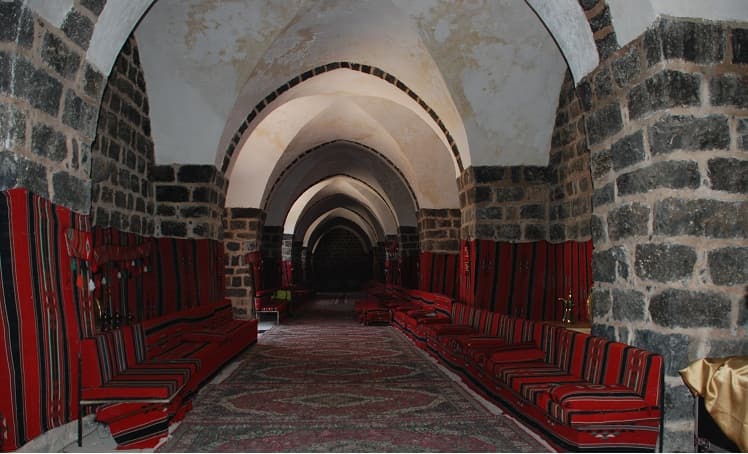
Khan Burhan and Souq Burhan, Hama
A late Ottoman khan and its adjoining souq in al-Hadir, on the east bank of the Orontes in Hama. The gate stone gives the Hijri year 1298; restored 2006-2007.
Hama · Late Ottoman
Khan Rustem Pasha, Hama
An Ottoman caravanserai on al-Murabit Street in Hama, built in 1556 by Rustem Pasha, grand vizier to Suleiman. A domed prayer room stands mid-courtyard.
Hama · Ottoman — reign of Suleiman the Magnificent
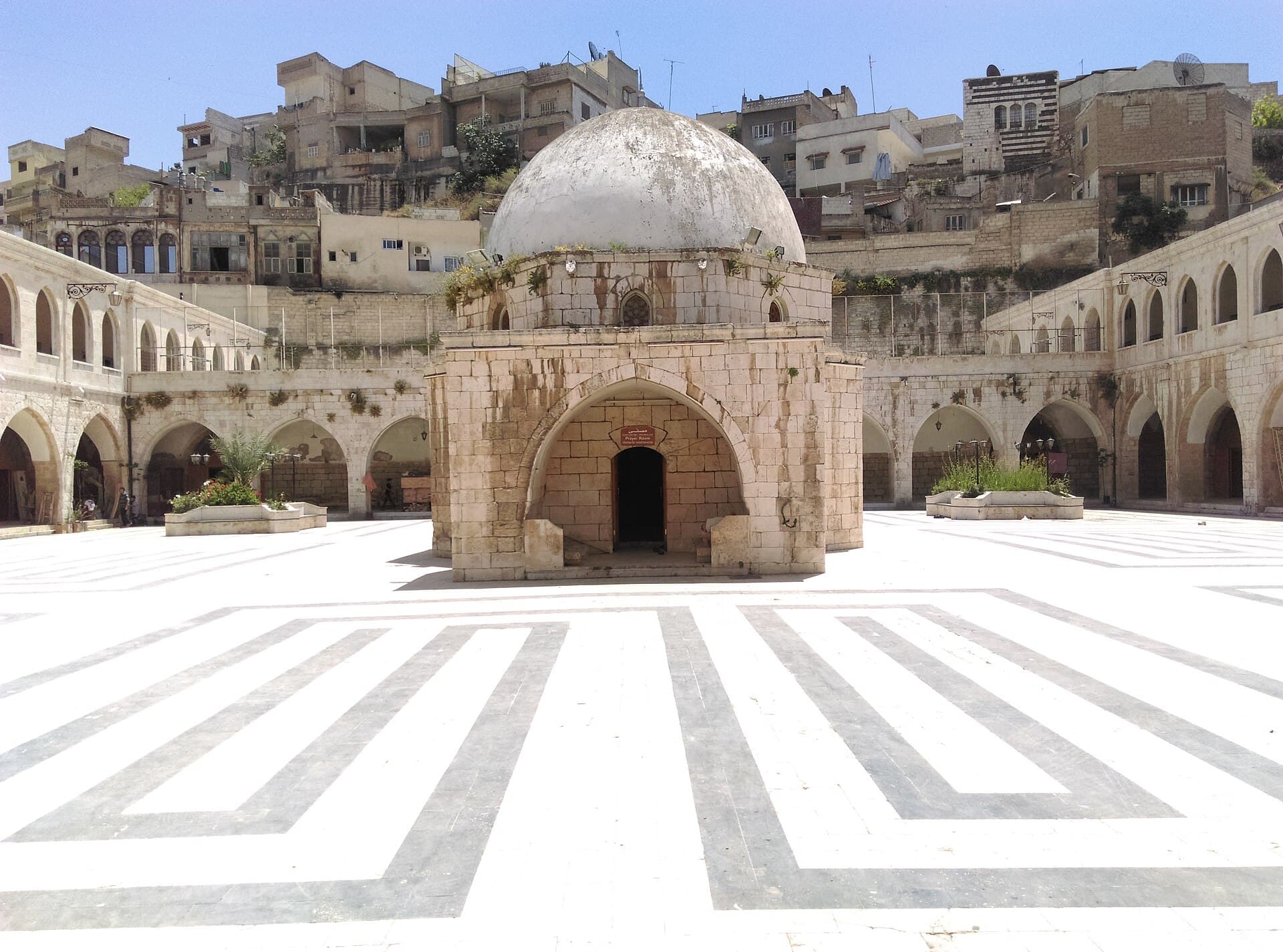
Khan al-Hinta, Latakia’s Old Wheat Inn
The Ottoman inn that stored Latakia’s wheat for export, first recorded in 1726, with Roman granite columns in its front wall. Now a metal depot seen from the street.
Latakia · Ottoman (on Roman columns)
Khan Beit Jabbour in Baniyas
A late Ottoman khan on the seafront road in Baniyas: a caravanserai that became a tobacco store and then Armenian homes, now partly in ruins. What you can see.
Tartus · Late Ottoman (exact year unknown)
Souq al-Hokedun (Khan al-Quds)
The Aleppo khan where Armenian pilgrims gathered on the way to Jerusalem. Hokedun is Armenian for house of the spirit; a quarter grew beside it in 1624.
Aleppo · Mamluk to Ottoman
Khan Khayr Bek
A Mamluk khan of 1514 in the Suwayqat Ali quarter of Aleppo. Its founder was the last Mamluk governor of the city, and two years later he changed sides.
Aleppo · Mamluk
Khan Qurt Bek
A merchants’ khan in Aleppo’s Suwayqat Ali quarter, built in the early 16th century by Qurt Bek, son of the Khusraw Pasha who endowed the Khusrawiyya mosque.
Aleppo · Ottoman