Featured places
Mosques, caravanserais, souks, museums — and why they are worth the walk.
100 Places
The Roman Theatre at Apamea
On a slope above the Orontes valley, Apamea’s theatre was 139 metres across, among the largest in the Roman world. Only an eighth is excavated; access unconfirmed.
Hama · Hellenistic origins — Roman
Tell Seker al-Aheimar
A Neolithic mound in the Khabur valley west of Tell Tamer, where Upper Mesopotamia’s oldest known water well and a unique painted clay figurine were excavated.
Hasakah · Pre-Pottery Neolithic B — Proto-Hassuna
Tell Mohammed Diyab
A large mound 7 kilometres south-east of Tell Leilan, dug by a French team from 1987: a town of the land of Apum, a stop for Assyrian merchants, four settlements.
Qamishli · Bronze Age — Middle Assyrian — Seleucid-Parthian
Tall Mahra (Tell Sheikh Hasan)
An Abbasid town in the Balikh valley between Raqqa and Hisn Maslama: a square wall 450 metres a side with a church and a mosque inside. Looted; access unconfirmed.
Raqqa · Hellenistic — Abbasid; largest in the Abbasid period
Tell es-Sinn (Tall as-Sin)
A walled Byzantine town south-east of Deir ez-Zor and its necropolis of rock-cut tombs, over 163 of them excavated and fully published in 2008. Access unconfirmed.
Deir ez-Zor · Late Roman — Byzantine
Tell al-Hasakah
A mound in central Hasakah on the Khabur, where a 2008-2011 dig exposed a Byzantine cathedral, a baptistery and a Neo-Assyrian building; access today is unclear.
Hasakah · Neo-Assyrian — Byzantine — Arab-Islamic
Tell al-Kasra
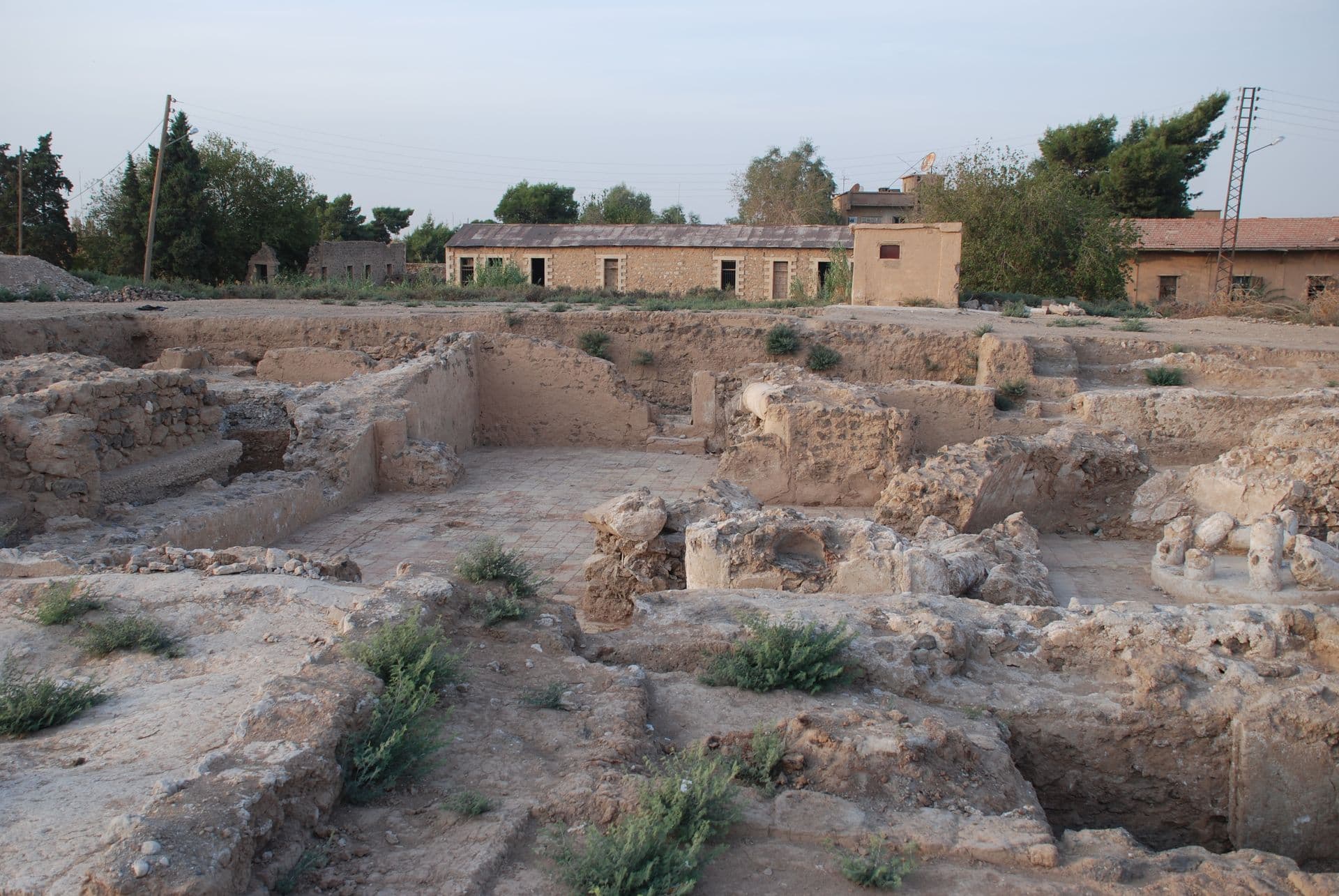
A Byzantine town with a pentagonal mudbrick wall on the Euphrates north-west of Deir ez-Zor; its bathhouse held the region’s first figural mosaic. Access unknown.
Deir ez-Zor · Late Roman — Byzantine; into the early Islamic period
Qal’at Sukkara
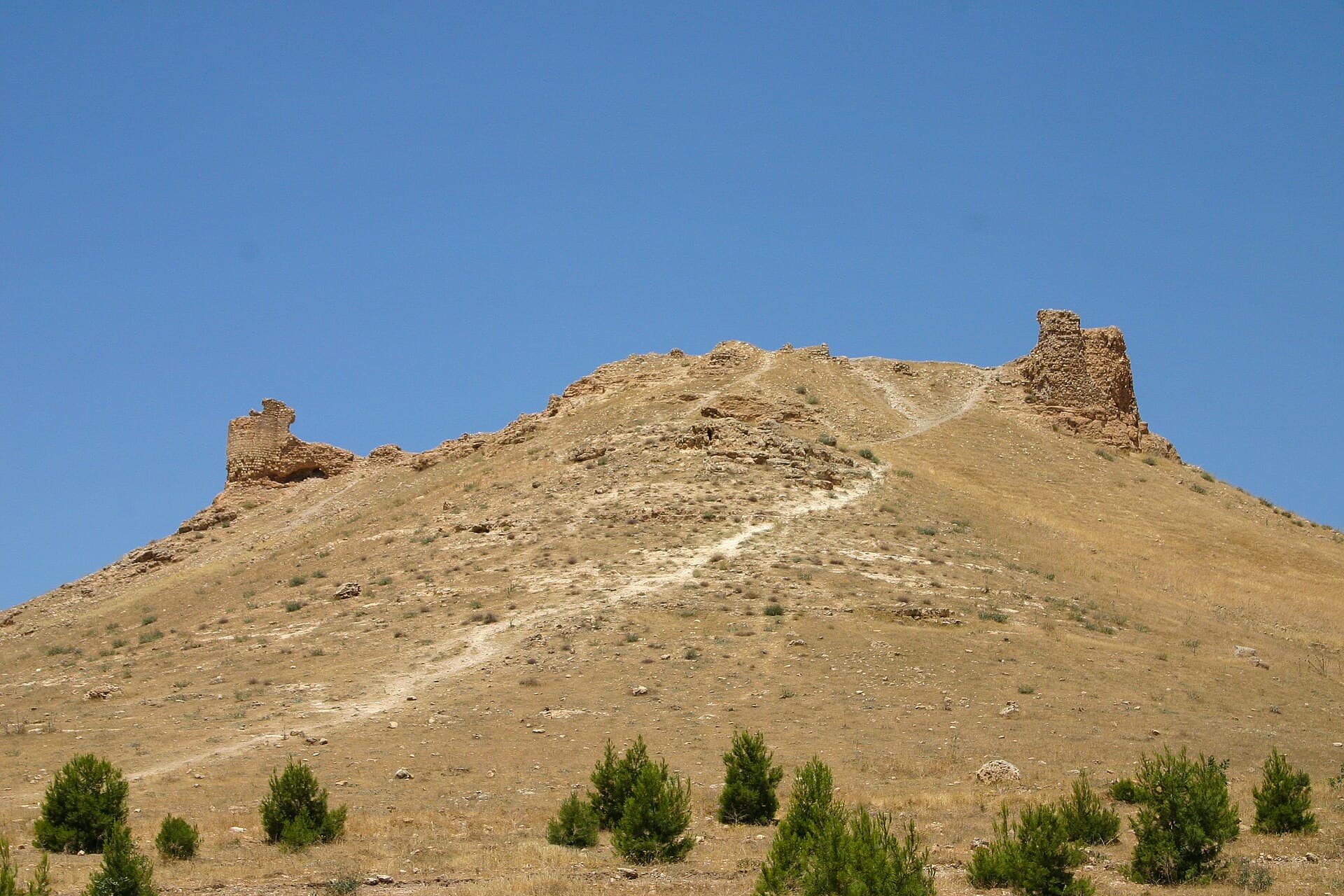
An Ayyubid-Mamluk hilltop garrison on Mount Abdulaziz, 35 km south-west of Al-Hasakah: four ruined towers, five rock-cut wells, a stucco dome, and access notes.
Hasakah · Ayyubid — Mamluk
Safan Reservoir and Hayaka Nature Reserve
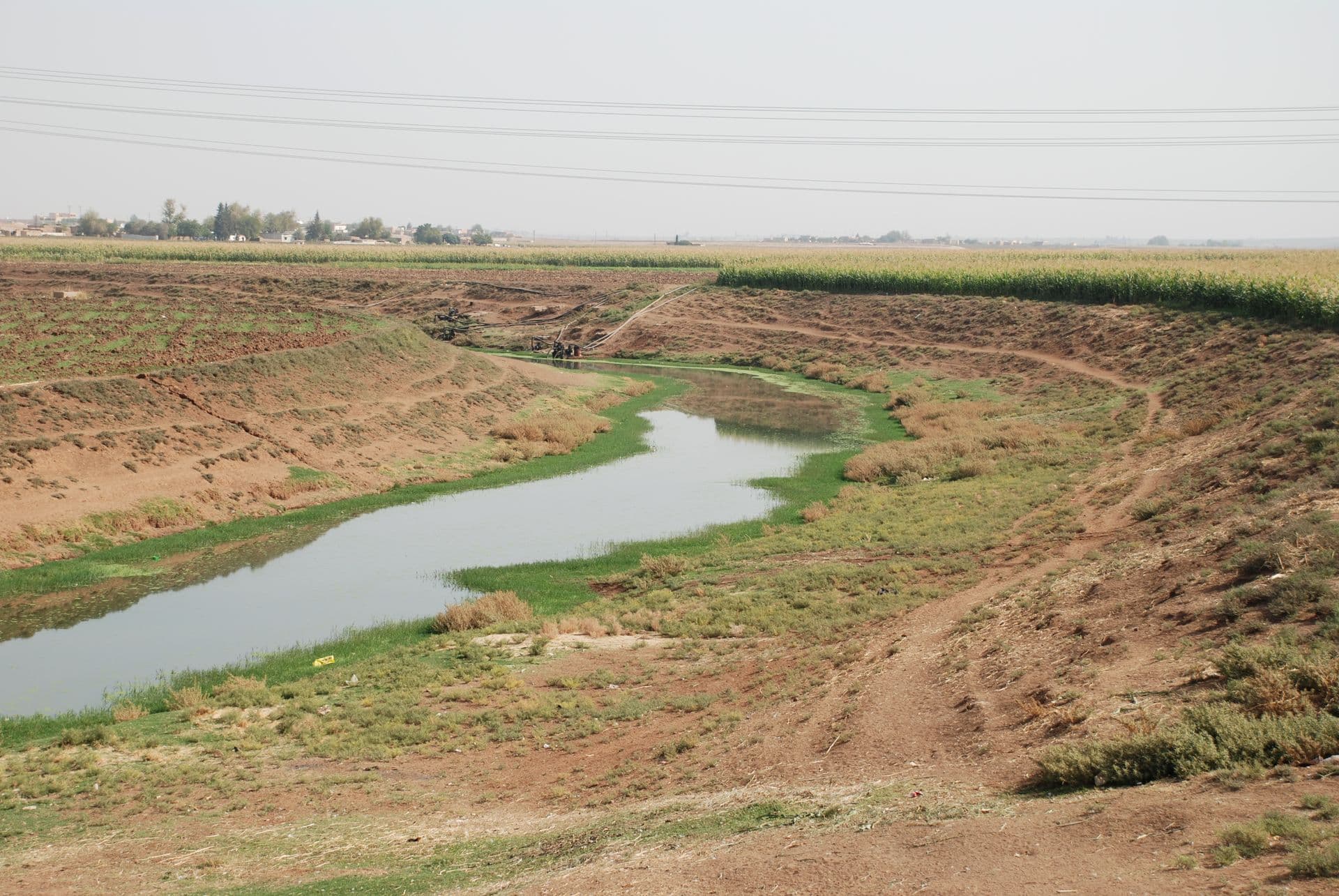
The reservoir on the Safan River west of Al-Malikiyah and its Hayaka reserve: 48-49 million cubic metres of water, poplar woods, the border 3 km away, and access.
Qamishli · Natural area · reservoir
Ras al-Ayn and the Khabur Springs
Ras al-Ayn, the border town at the springs that feed the Khabur: Roman Rhesaina, Byzantine Theodosiopolis. Its name, its history and why access today is unclear.
Hasakah · Assyrian — Roman — Byzantine — Islamic
Qreiye-Ayyash Roman Fort
A square legionary fort 220 metres a side, built under Septimius Severus above the Euphrates west of Deir ez-Zor and used for only a few decades. Access unconfirmed.
Deir ez-Zor · Roman (Severan dynasty)
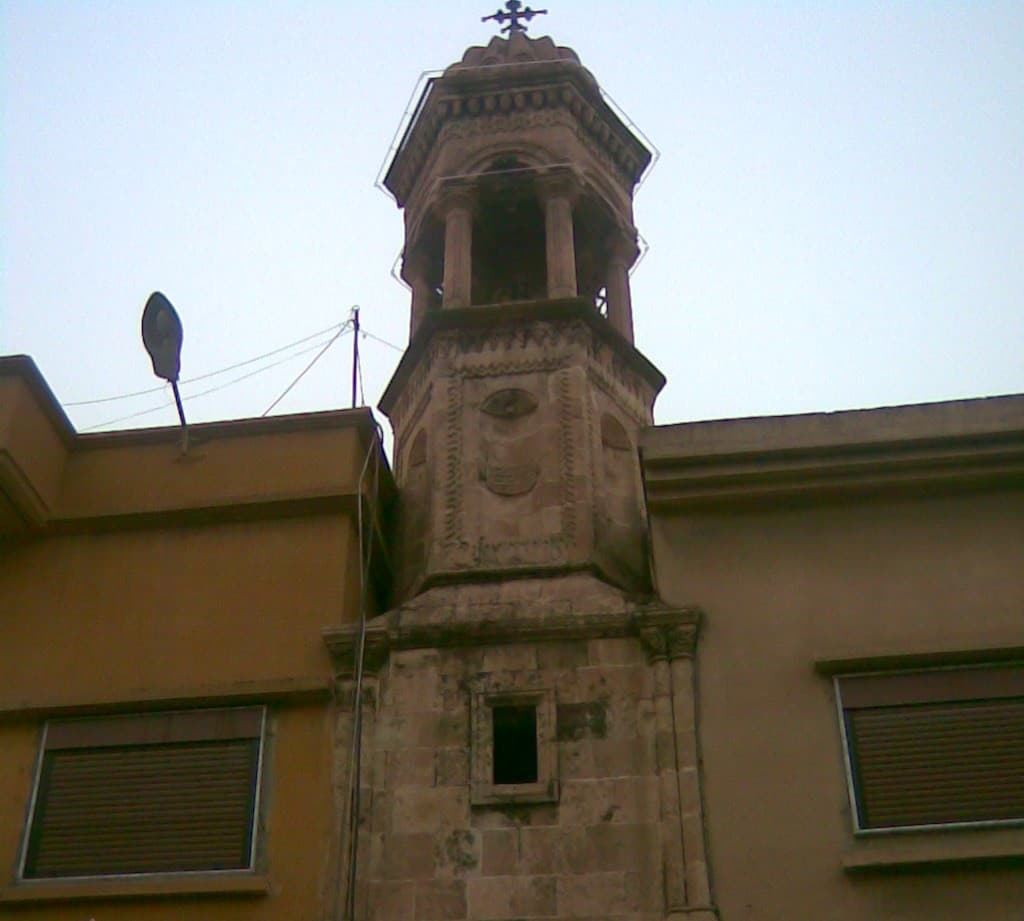
St Jacob of Nisibis Syriac Orthodox Cathedral, Qamishli
Qamishli’s Syriac Orthodox cathedral: a mud-brick church in 1925, the present building in 1947, a centenary in 2025 and a service led by the patriarch in 2026.
Qamishli · 20th century · Syriac Orthodox