Damascus small khans walk south of the Umayyad Mosque
600 metres and seven stops south of the Umayyad Mosque: five small khans beside the Khan As’ad Pasha, a madrasa of 1779 and a striped façade of 1254. Half a day.
- Duration
- 3 hours
- Distance
- 0.6 km
- Difficulty
- Easy
- Best season
- Year round, except Fridays
- stops
- 7
- City
- Damascus
Say khan in Damascus and most people think of the Khan As’ad Pasha. This walk looks at the small khans in its shadow; a khan is a merchants’ inn built around a courtyard. It starts in the silk souq southwest of the Umayyad Mosque, passes through the arms souq and the Al-Bzouriyah Souq, and ends in a warehouse khan behind the spice stalls. In all: 600 metres, seven stops, three hours. The distance is short, and the courtyards set the pace. Five of the stops are working khans and two are madrasas. None is a museum, and most of the doors carry no sign.
The route
Walk from Souq al-Hamidiyah to the Umayyad Mosque and turn into the silk souq southwest of the mosque. Khan al-Harir was built between 1571 and 1574 by Darwish Pasha, governor of Damascus. Its door has no sign, so look for the tall arch between the rows of shops. The building covers about 2500 square metres; 27 outer and 19 inner shops line its courtyard, with a pool in the middle. Most of the domed roof on the upper floor has gone, but the arches and vaults still stand.
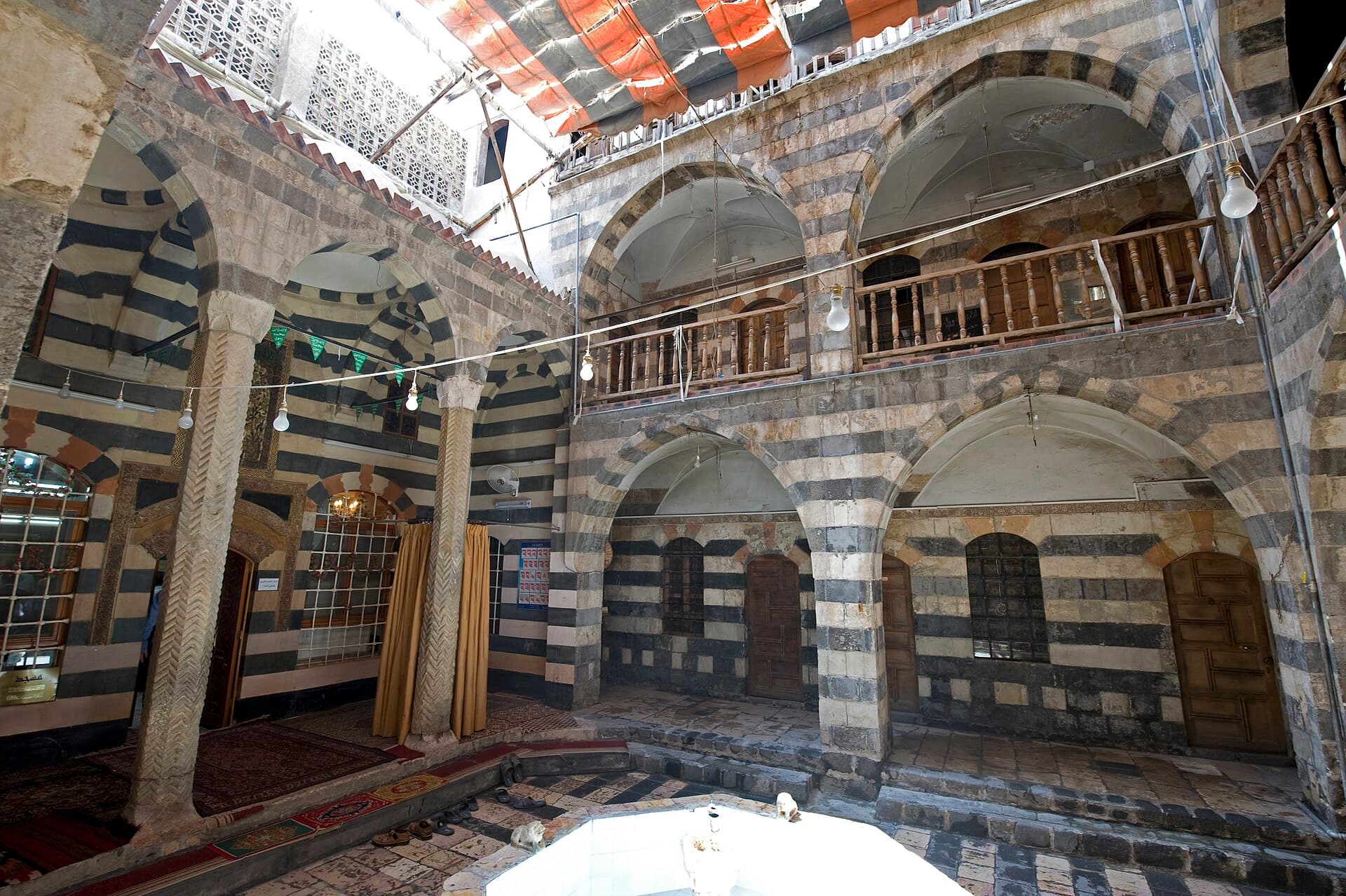
Ten paces from the khan is the door of the Abdullah al-Azm Madrasa. The marker is the inscription on a green ground above it. Abdullah Pasha of the Azm family built the madrasa in 1779. A fountain stands in the courtyard, surrounded by two storeys of arcades laid in courses of basalt and limestone. The third storey was added later, and the texture of the stone changes there. The small prayer hall on the south side is still used for prayers.
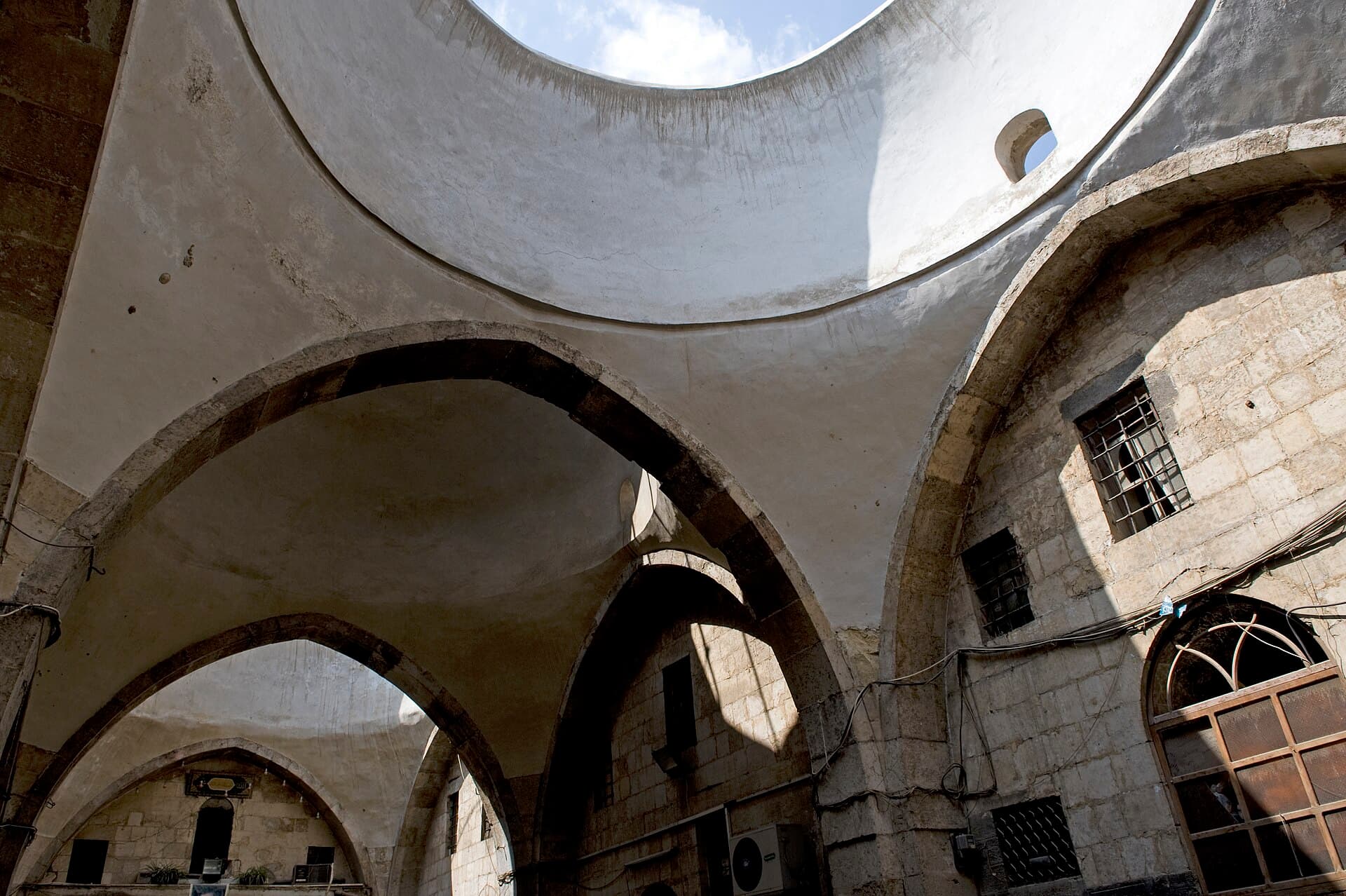
From the madrasa step into the arms souq. Khan al-Tutun is 30 metres on, on the west side of the souq. Its name comes from the tobacco trade. Sources count about 72 rooms, and most of them are craft workshops today. Stand in the middle of the courtyard and look up at the dome: at the edge of the large central opening is a second, small round window.
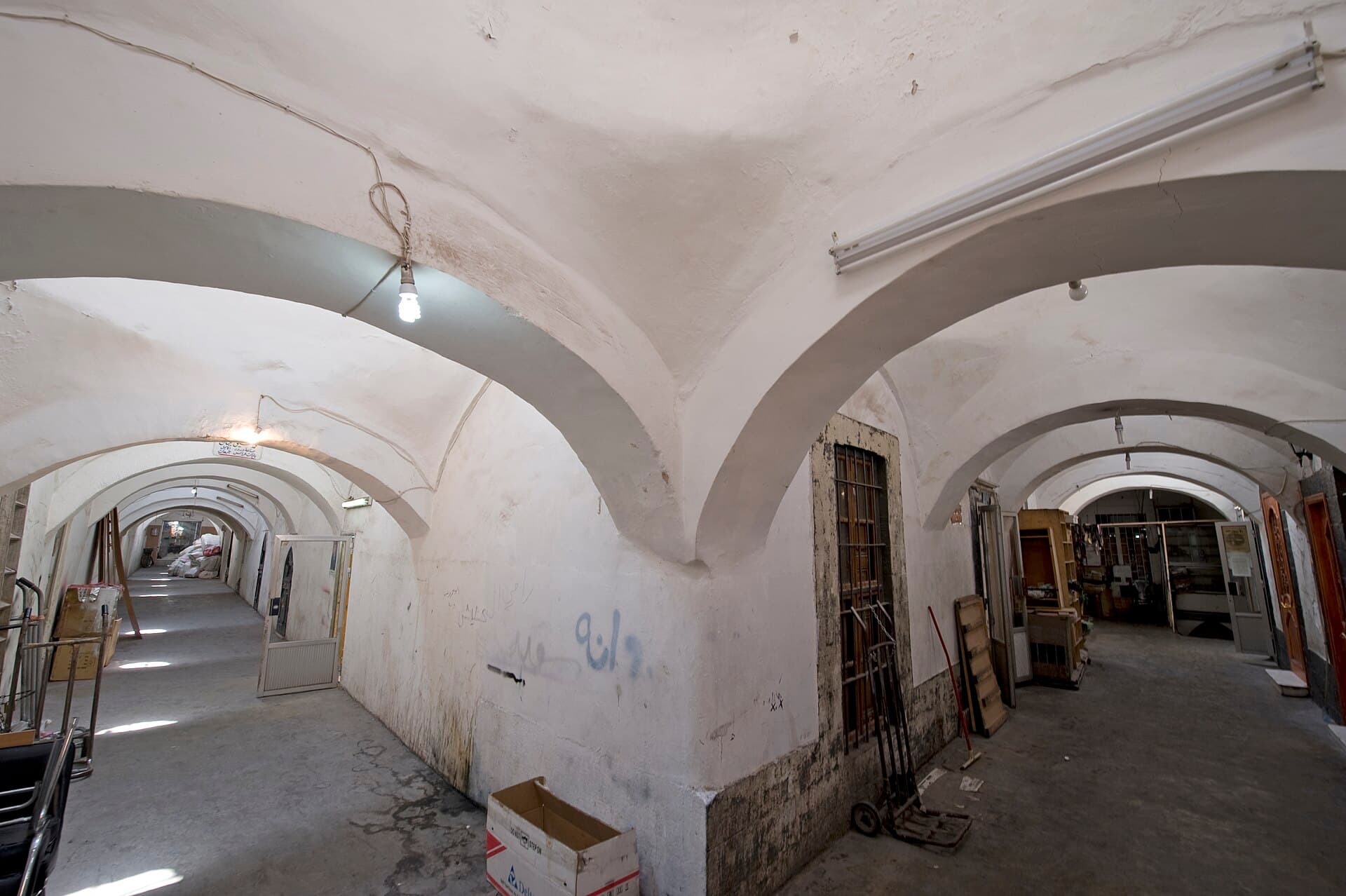
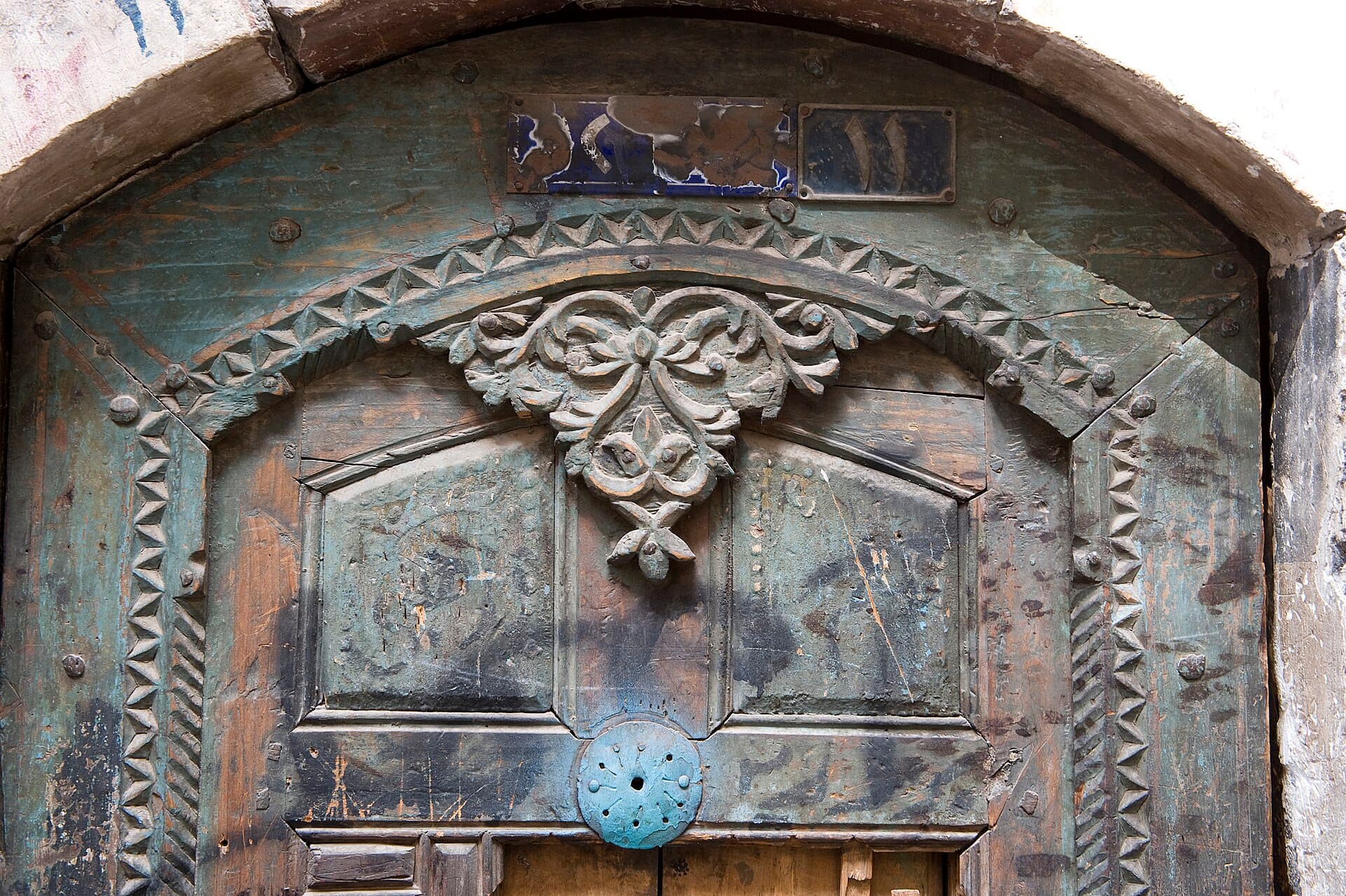
Khan al-Sadraniyya is directly across the street. It dates from 1757–1758. The plot is narrow, so the door leads into a domed passage 15 metres long, which opens onto a small courtyard roofed with twin half-domes. Around the courtyard 13 shops still trade; the rooms on the upper floor are in ruins. The most careful work is at the entrance: a carved wooden door leaf, and pieces of blue tile at the top of the arch.
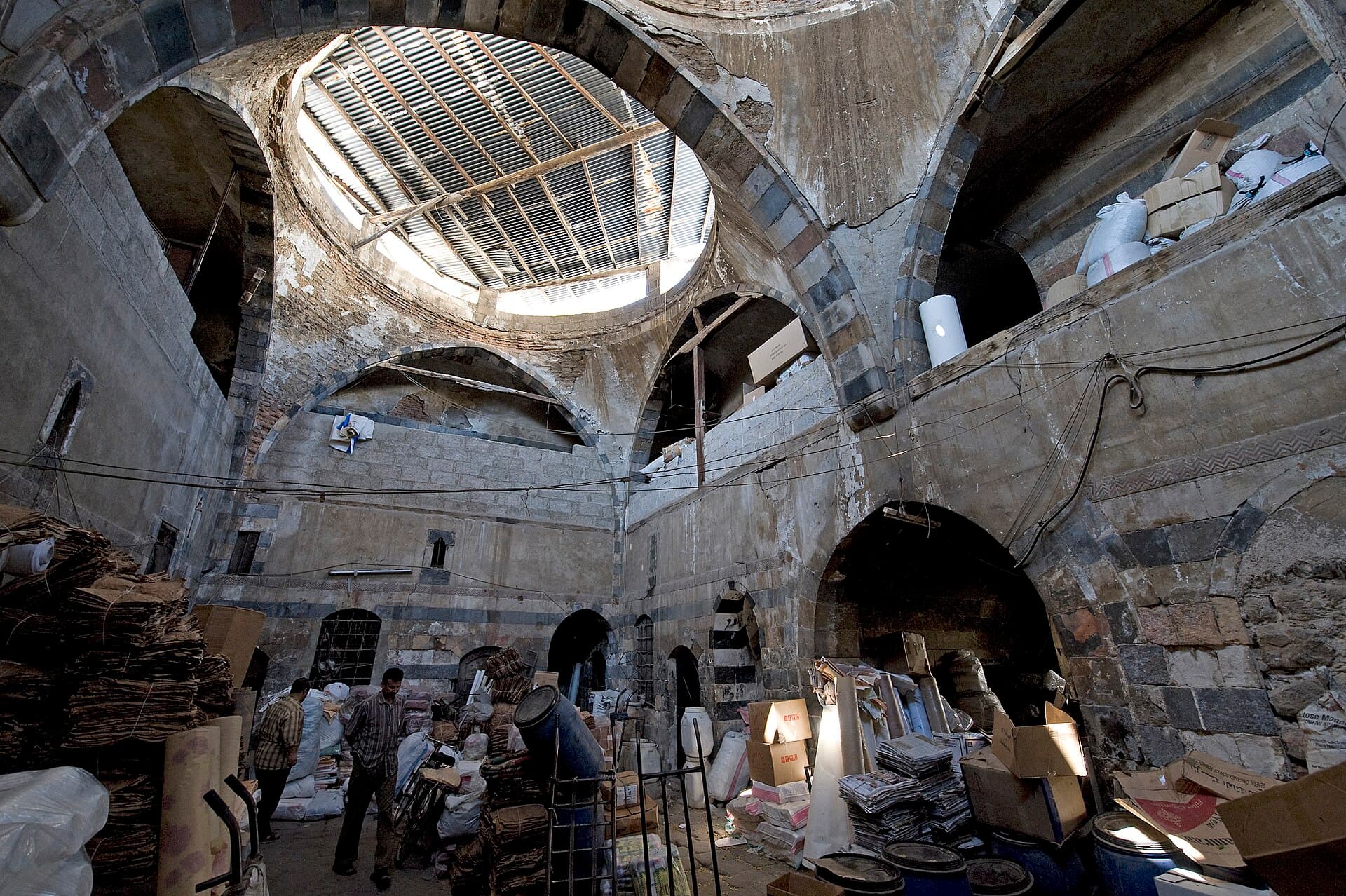
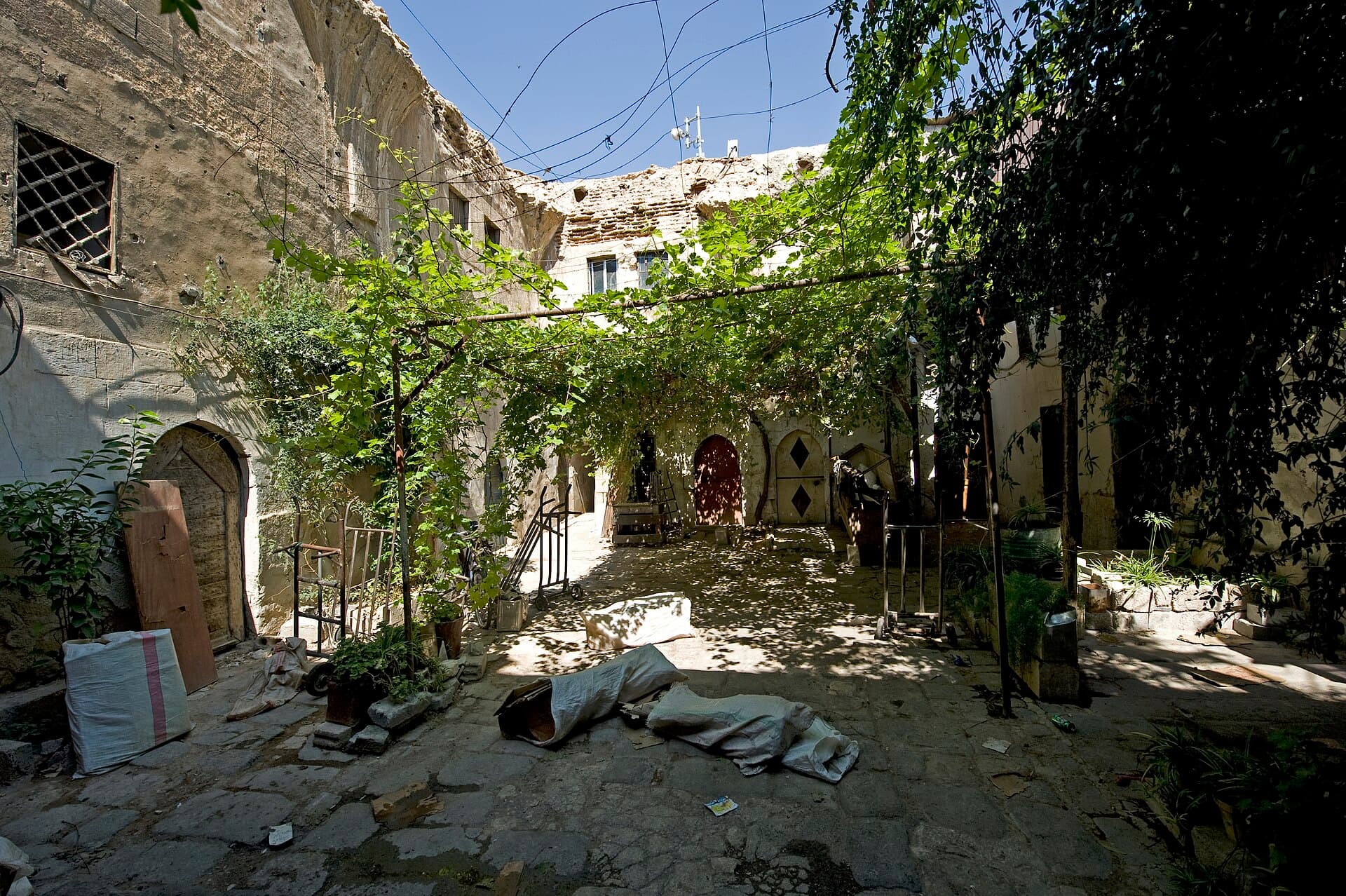
From the arms souq go out into the Al-Bzouriyah Souq and find the great gate of the Khan As’ad Pasha, about 100 metres away. Khan al-Amud faces it, on the east side of the souq. It dates from the middle of the 17th century and takes its name from the massive column that carries the dome of one of its courtyards. The two courtyards are not alike: one is open under a vine trellis, while the other was later roofed with metal sheeting and is used as a store.
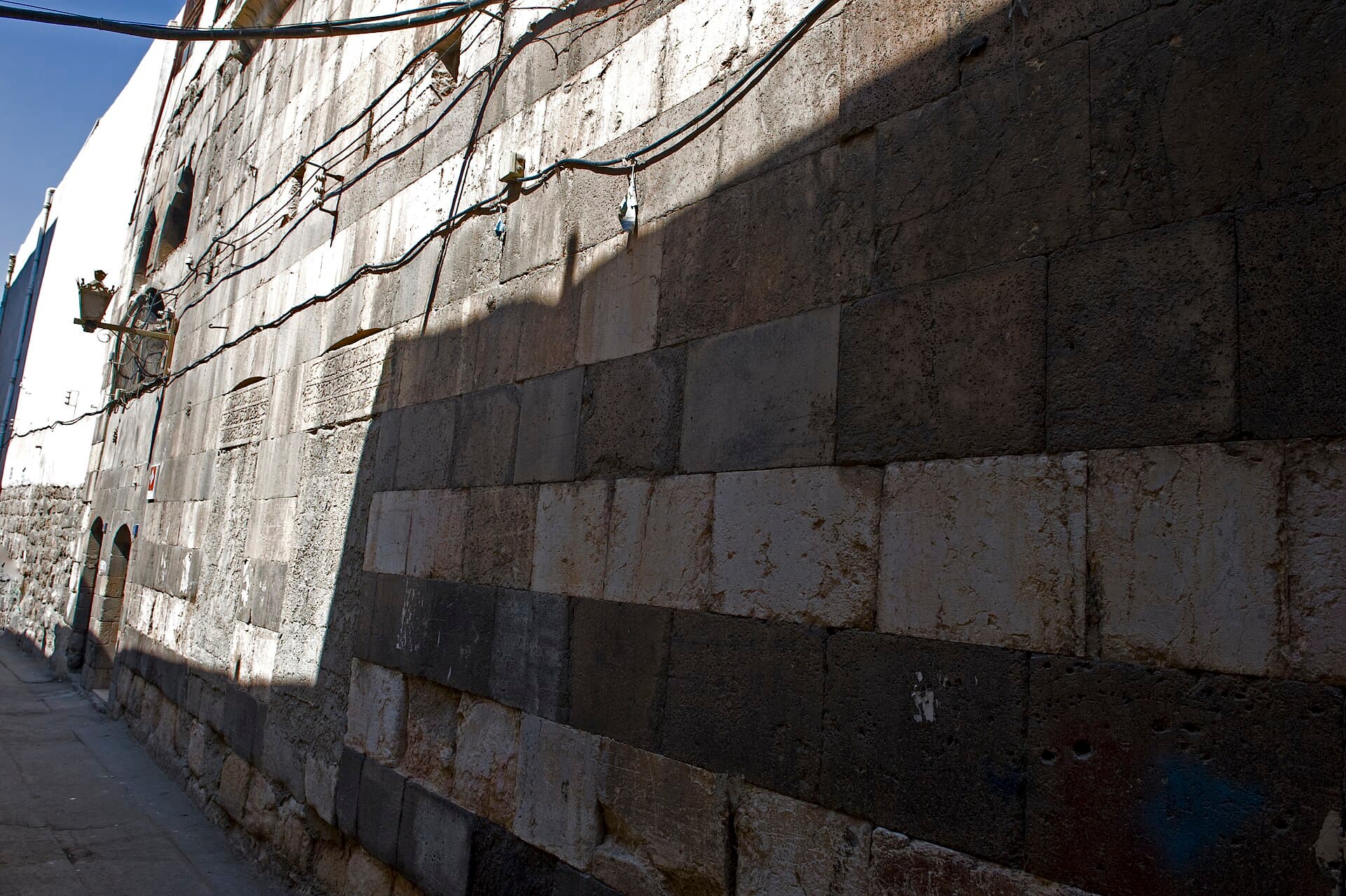
From the khan walk east towards the Azm Palace and round its southeast corner, 210 metres. The Al-Qilijiyah Madrasa adjoins that corner. It was founded in 1254, and its façade is counted as the first Ayyubid façade in Damascus to use alternating courses of black and white stone. The interior is not regularly open to visitors, and the door is hidden behind a later building; what you come to see is the wall. Pick a single course of stone and follow it along with your eye.
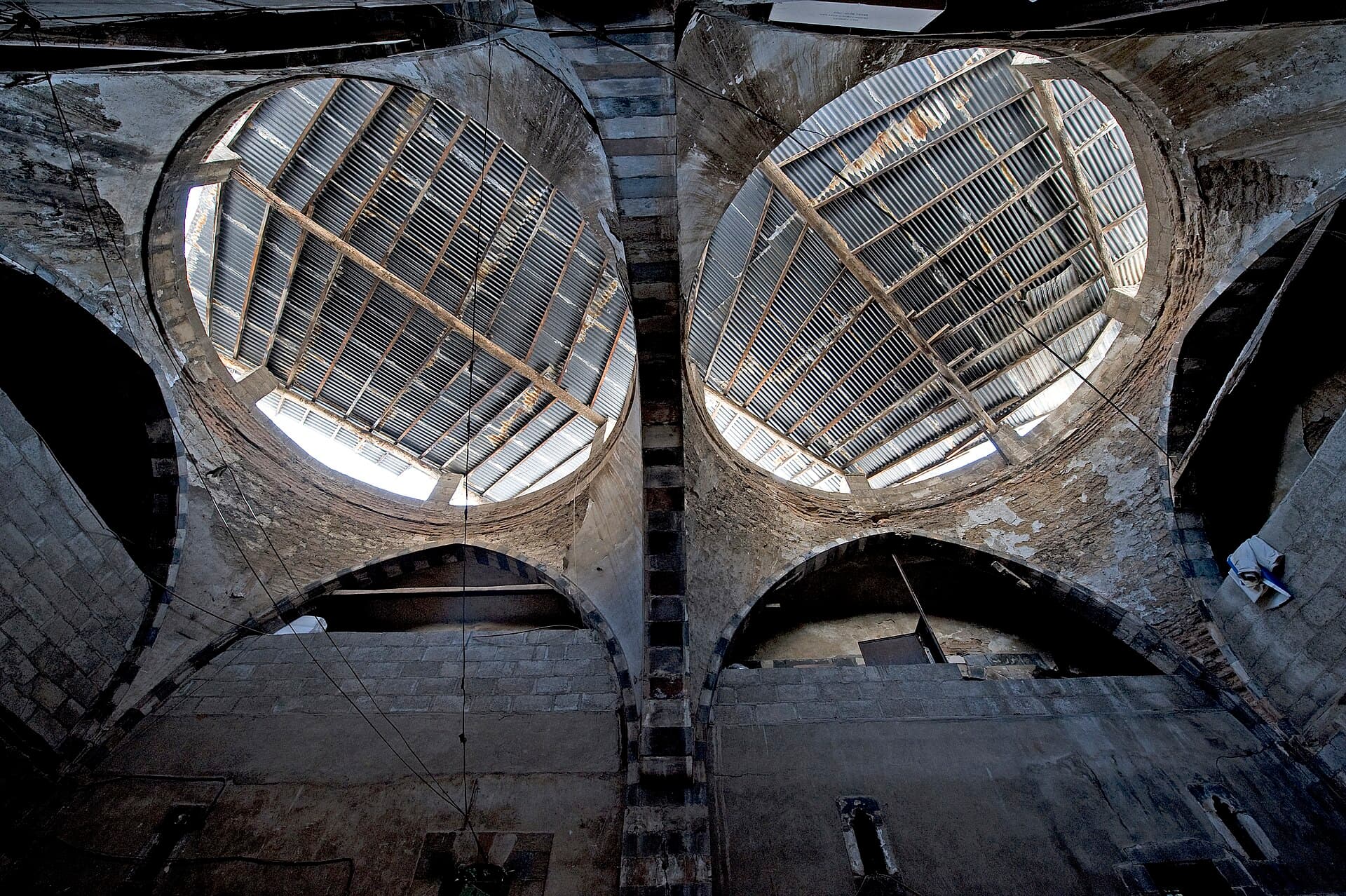
Go back to al-Bzouriyah and walk south towards the end of the souq. A narrow side lane opens on the east side, and Khan al-Ruzz is there. It was the warehouse of merchants who brought rice and wheat from the coast, and it is still a warehouse. Two large domes cover its square courtyard, and the round openings at their centres have been closed with corrugated metal. Sources date it to either the 17th or the 18th century.
Timing
Be at Khan al-Harir at 09:30. The shutters are going up, the souq is not yet full, and the unmarked entrances are easier to pick out at this hour. At the Abdullah al-Azm Madrasa the courtyard is empty in the morning and one side of the arcade is in shade. Reach Khan al-Tutun and al-Sadraniyya around 10:30; before noon, light from outside reaches into the Sadraniyya passage. 11:30 is a good hour for al-Qilijiyah, when light drops into the narrow lane. Leave Khan al-Ruzz for noon. That is when light seeps in round the edges of the metal sheets, and the two domes read best. The vine shade falls across the open courtyard of Khan al-Amud in the afternoon; to see it, stop there again on the way back. Starting in the morning keeps you ahead of the souq crowds.
Take care
Friday is not the day for this walk: most shops in the khans and the souq are closed, and the courtyards sit empty. The khans are working stores and workshops. Do not stop in the middle of a passage, make room for handcarts, and ask before photographing in a workshop. In al-Sadraniyya, do not go upstairs; the floor cannot be trusted. The courtyard stone in Khan al-Tutun turns slippery after rain. If you enter the prayer hall of the Abdullah al-Azm Madrasa, leave your shoes at the edge of the courtyard. None of the stops charges an entry fee.
The route on a map
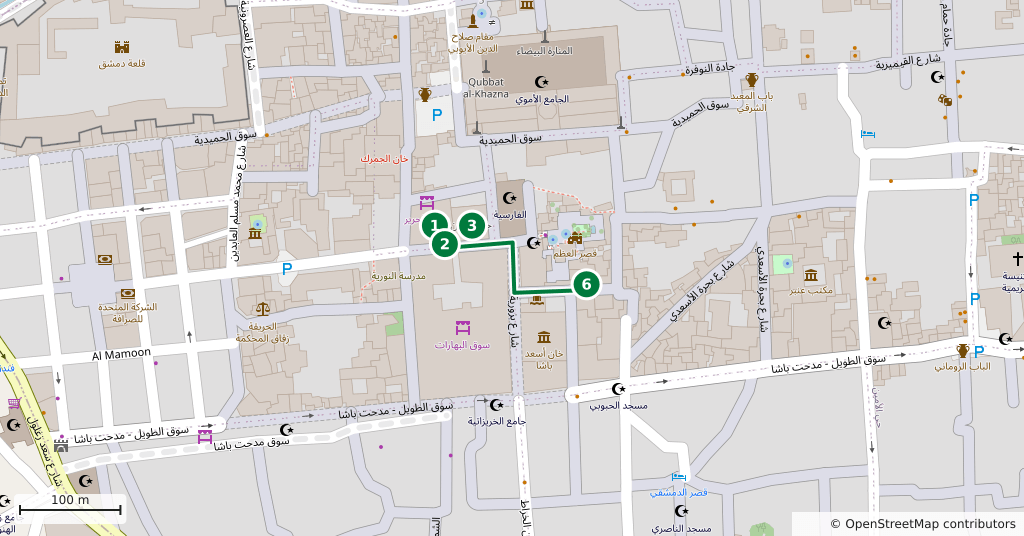
Stops along the route
- 01
- 02
- 03
- 04
- 05
- 06
- 07
Transparency
- How this was chosen
- The stops and their order were set by hand. The line on the map is real road geometry, not a straight hop between pins; distance and duration belong to that itinerary.
- Facts checked
- September 2026
- Last updated
- September 15, 2026