Souqs on both sides of the Citadel: Sarujiyya, Asruniyya and Khan al-Muradiyya
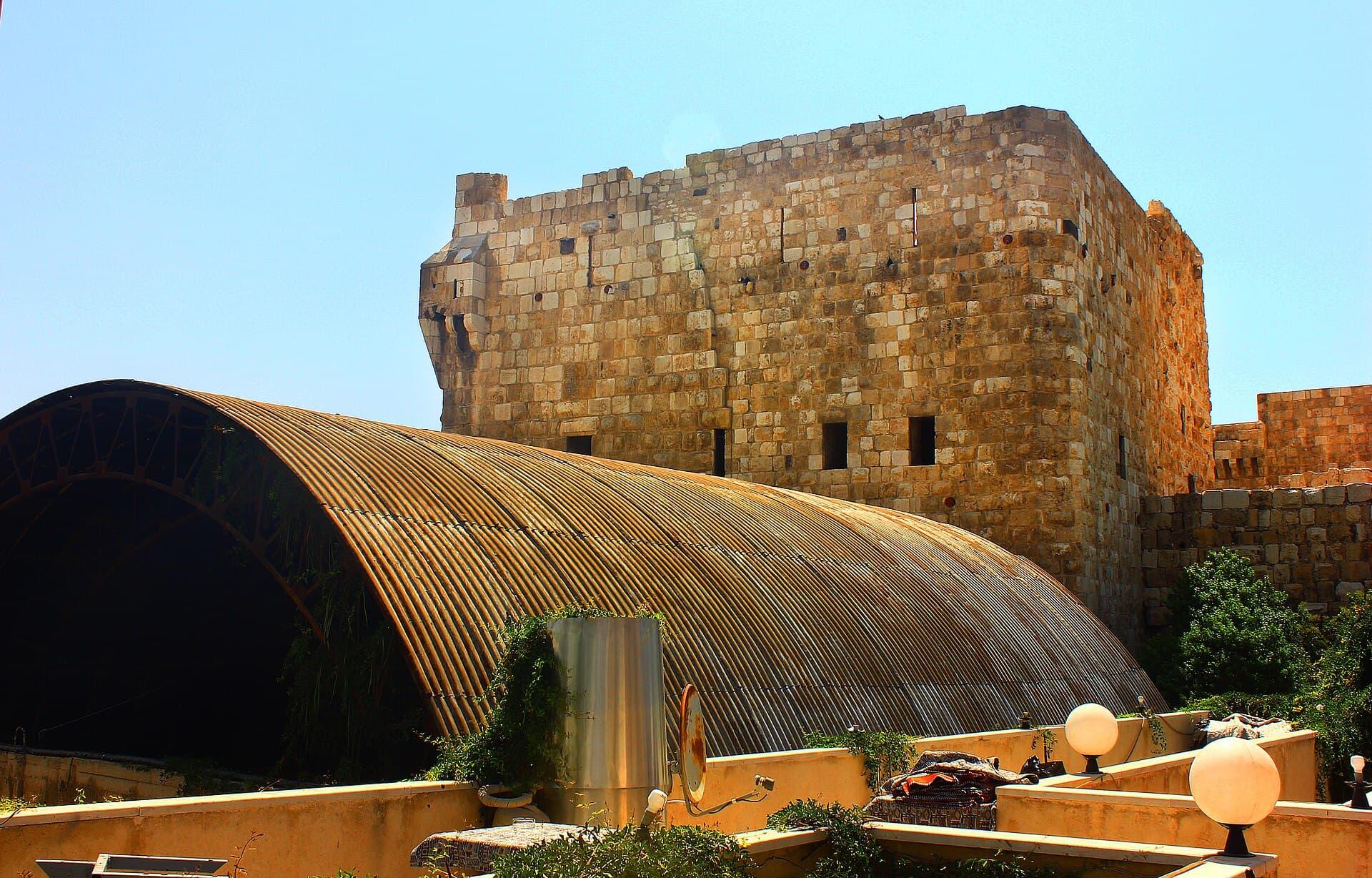
A half-day walk around the Citadel of Damascus: saddlers below its west wall, copper sellers facing its east wall, then Khan al-Muradiyya and the Umayyad Mosque.
- Duration
- 3 hours
- Distance
- 0.9 km
- Difficulty
- Easy
- Best season
- March–May, September–November; not on Fridays
- stops
- 5
- City
- Damascus
The Citadel of Damascus stands between two souqs, and each keeps to a single trade. Souq al-Sarujiyya, below the west wall, sells saddles, harness and tent canvas; Souq al-Asruniyya, facing the east wall, sells pots, copper and glass. This walk links the two by going round the north side of the Citadel, then passes Khan al-Muradiyya at the east end of the Al-Hamidiyah Souq and ends at the west gate of the Umayyad Mosque. The walking distance is under a kilometre; the stalls and the mosque set the pace, not the distance.
The route
Leave the Al-Hamidiyah Souq by its western mouth and walk one street west: the line running along the west wall of the Citadel is Souq al-Sarujiyya. The Aqrabani canal, a branch of the Barada, runs between the souq and the wall. If you take a taxi, do not ask for “Saruja”: Souq Saruja is a separate quarter outside the city walls, while this souq sits at the foot of the Citadel.
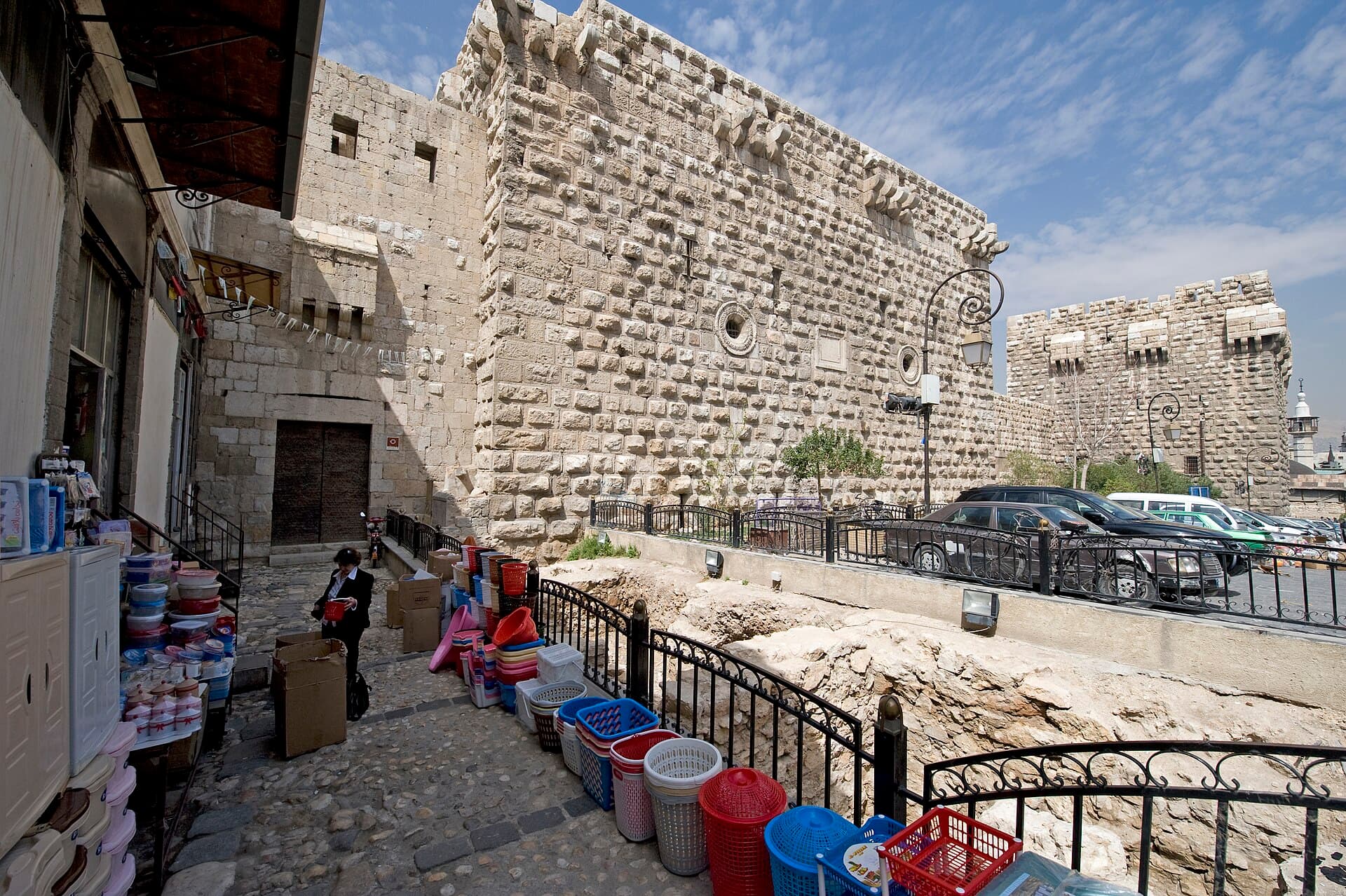
Walk the souq north to the north-western corner of the Citadel, then turn east and follow the north wall. Along this street, below the pavement, a strip of foundations has been excavated and fenced with iron railings; it shows how far below today’s street level the Citadel begins. The Citadel has a gate in each of its north, west and east sides.
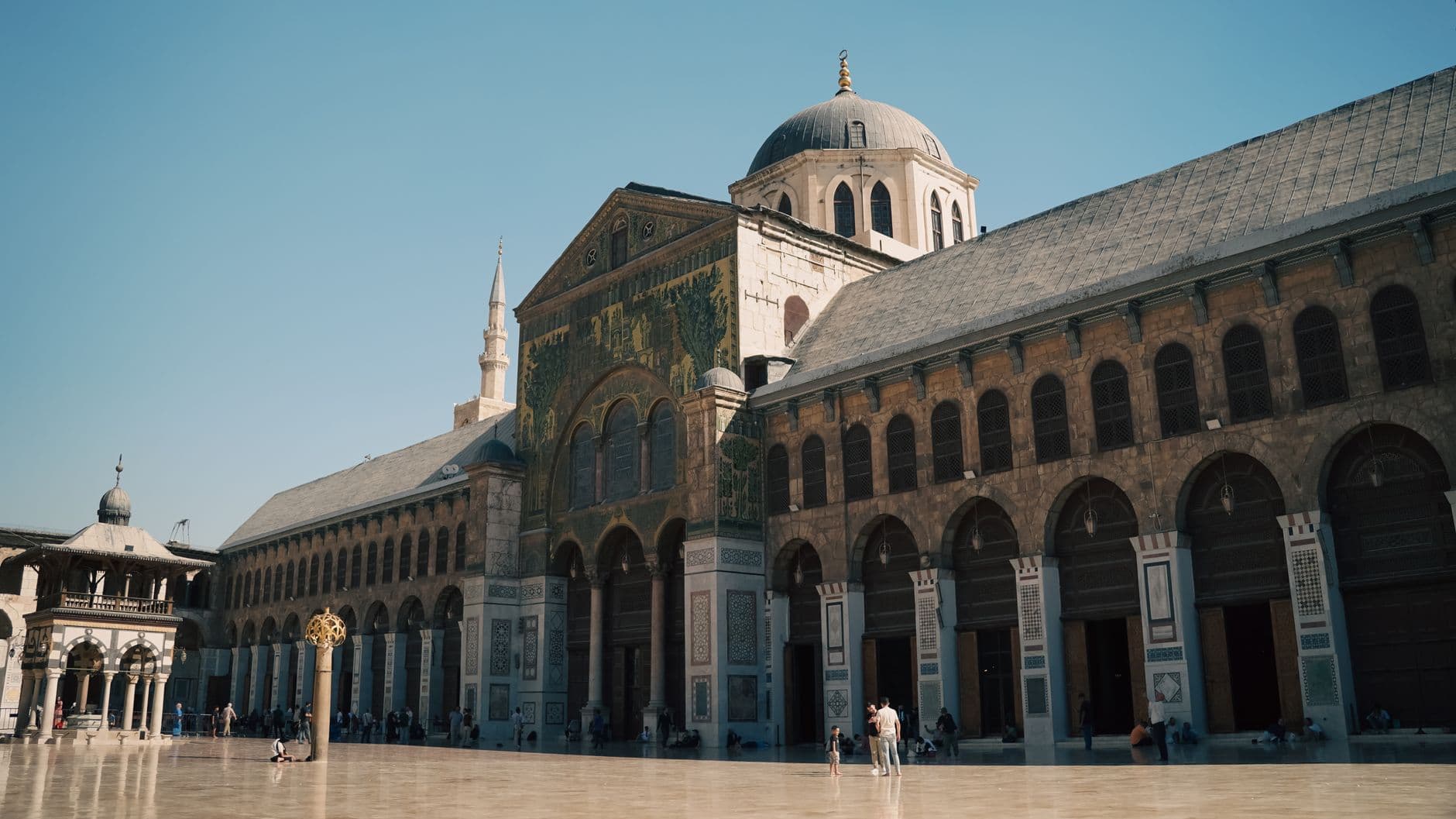
Where the north wall ends, go south to face the east wall: the open-air souq there is Souq al-Asruniyya. Kallasa Street and Souq al-Manakhiliyya lie to its north, al-Hamidiyah to its south. Walk south through al-Asruniyya to al-Hamidiyah and turn east. Khan al-Muradiyya stands at the east end of the souq, with fronts on al-Hamidiyah and on the silk souq. When the roof ends, the west wall of the Umayyad Mosque appears between Roman columns left from the Temple of Jupiter.
Timing
Be in Souq al-Sarujiyya at 09:00. The stalls are set up in the morning, and that is when you can watch the saddlers stitching. Reach the north wall of the Citadel around 09:45. Whether the inner courtyard is open depends on the restoration schedule and had not been verified as of September 2026: if it is open, allow an hour; if not, the outside circuit takes half an hour. Enter al-Asruniyya by 11:00 at the latest; the souq has no roof, and towards midday there is no shade left over the stalls. A quarter of an hour is enough for Khan al-Muradiyya. The crowd in al-Hamidiyah peaks in the late afternoon, so the morning is easier. Go into the Umayyad Mosque before midday or after the afternoon prayer: there are no visits during prayer times, and on Fridays around noon the courtyard is kept for worship.
What each souq sells
The name al-Sarujiyya comes from sarraj, a saddle maker; the souq was once also known as al-Sarayjiyya and al-Sarujiyyin. On the stalls are saddles, bridles, saddle felt, leather straps, cases and rough tent canvas. The buyers are farmers in from the villages and hauliers looking for truck covers. Al-Asruniyya has sold for the kitchen for about 150 years: pots, trays, coffee pots, copper and glass ware, narghiles. Its name is said to come either from the historian Ibn Abi Asrun or from Damascene women going shopping at asr, the afternoon prayer time. Khan al-Muradiyya was built by the Ottoman governor Murad Pasha in 1593-1596, and its rent was endowed to the poor of Mecca and Medina. The khan has a square plan: 24 inner shops ring the courtyard, 23 more open outwards, and there are five doors. Today it works as a souq. The Citadel was founded in 1076 and rebuilt from the ground up in the early 13th century by the Ayyubid ruler al-Adil. Its walls enclose 230 by 150 metres.
Take care
On Fridays the shops in al-Sarujiyya and al-Asruniyya open for half a day, and most shops in Khan al-Muradiyya stay closed. There is no shade in al-Asruniyya or around the Citadel; in July and August fit the walk into the morning. The streets between the Citadel and the souqs carry traffic, so keep to the pavement along the north wall. There are no price tags in the souqs; prices are settled by bargaining. In the Umayyad Mosque shoes come off in the prayer hall and women are given an abaya at the entrance; do not photograph people at prayer. The Citadel is under restoration; if the interior is open, the entry fee varies, so check at the gate. The mosque’s charge for visitors varies too; check at the door.
The route on a map
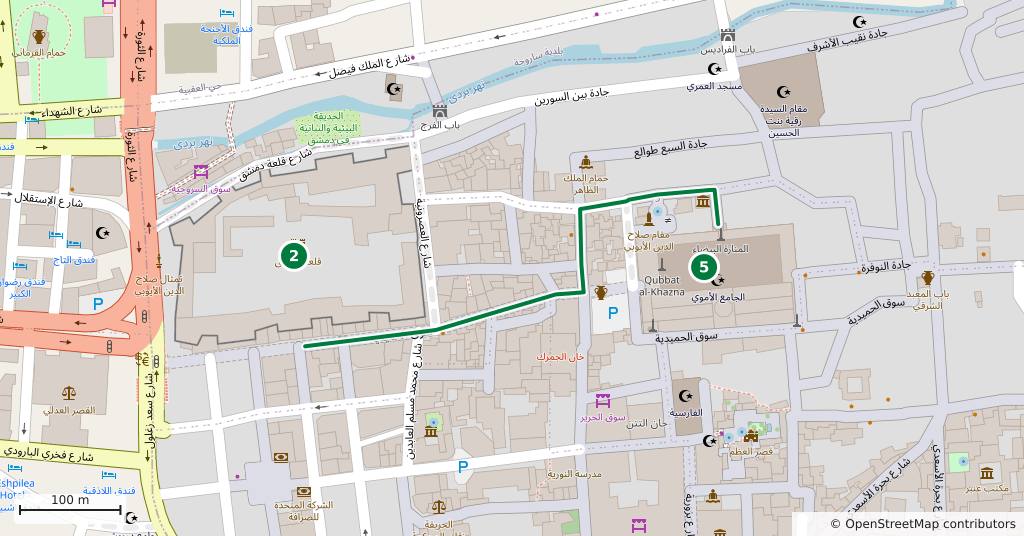
Stops along the route
- 01
- 02
- 03
- 04
- 05
Transparency
- How this was chosen
- The stops and their order were set by hand. The line on the map is real road geometry, not a straight hop between pins; distance and duration belong to that itinerary.
- Facts checked
- September 2026
- Last updated
- September 15, 2026