Amrit
A Phoenician city spread among olive groves south of Tartus. Its temple cella, standing in the middle of a rock-cut basin, has no equal in the region.
- Opening hours
- Open ground; if there is a keeper, confirm on site
- Entry
- Variable — confirm on site
- Duration
- 90 minutes
- Best time
- Spring and autumn; the site is unshaded
- Period
- Phoenician — Hellenistic
- Address
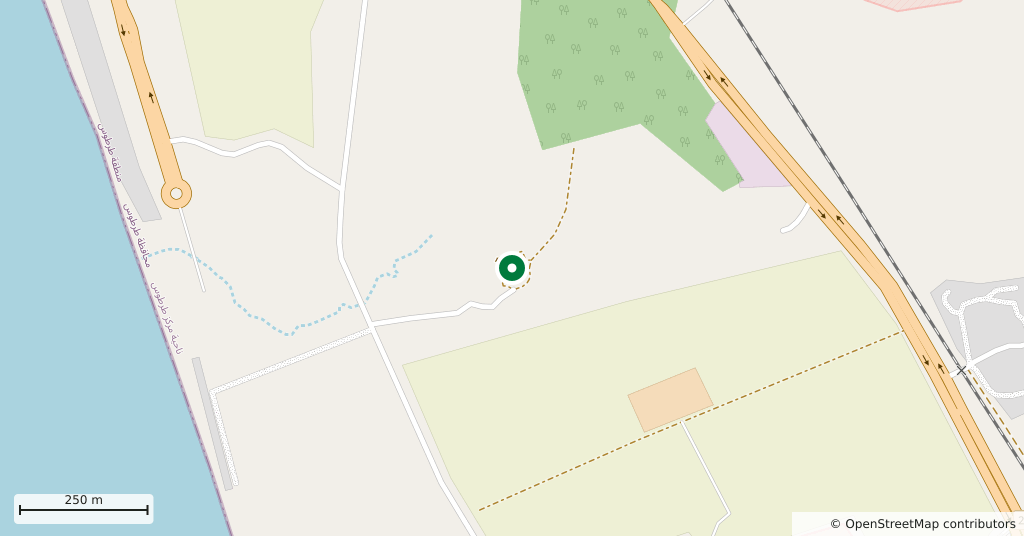
- Amrit, 7 km south of Tartus
Set back from the coast among olive groves, spread out rather than concentrated. The city was founded in the Phoenician period and appears in Greek sources as Marathus. The site runs along a strip more than a kilometre long: the temple to the north, the funerary towers and the rock-cut stadium to the south.
Getting there
About seven kilometres south of Tartus, turning inland off the coast road. Fifteen minutes by car. Public transport is not practical; take a taxi or a car with a driver from Tartus.
How long it takes
An hour and a half. Half an hour at the temple, and walking to reach the towers and the stadium.
What is there
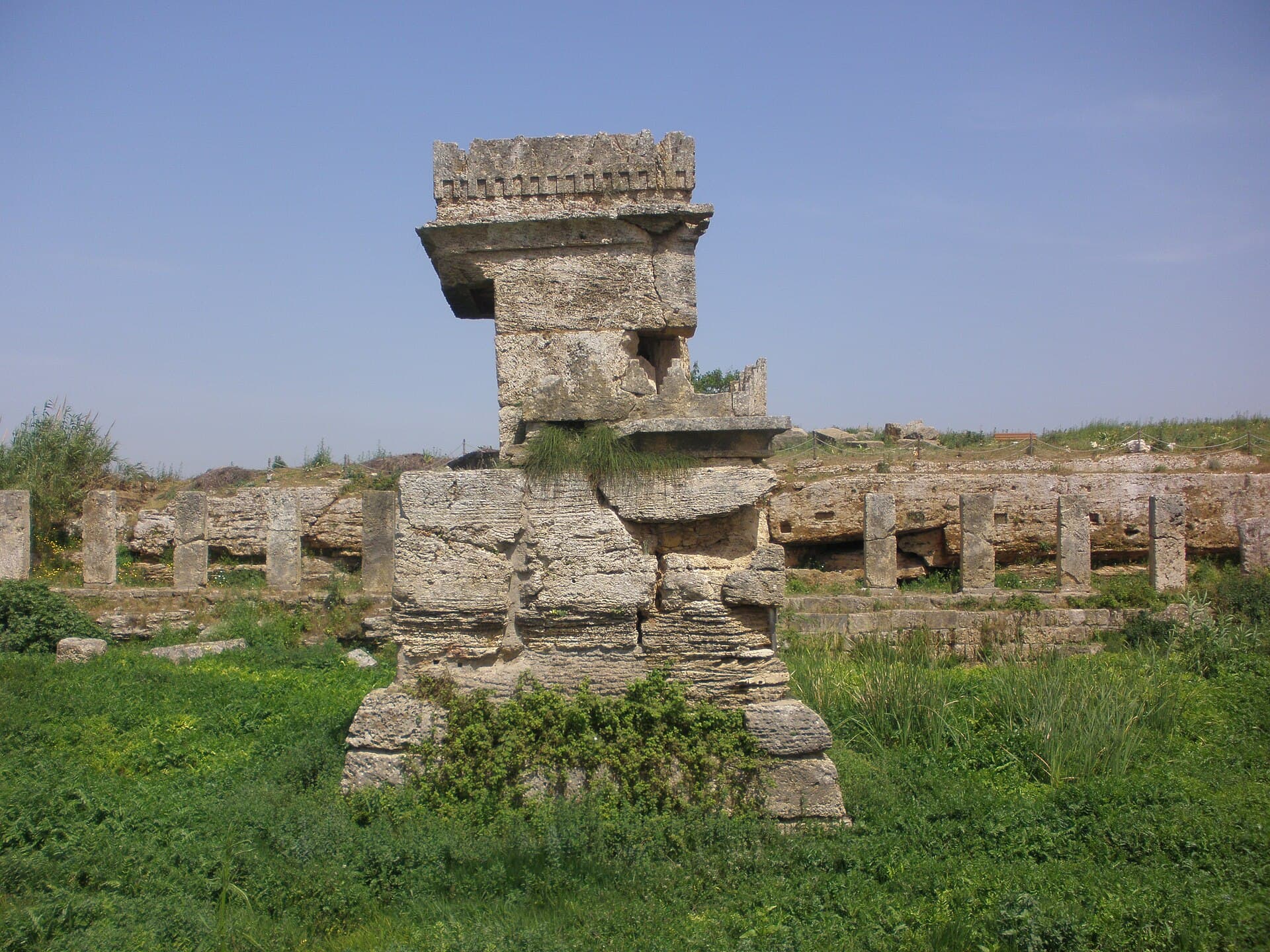
The main structure is the Maabed: a rectangular basin cut into the rock with a small cella standing at its centre on a monolithic plinth. Three sides of the basin were enclosed by a colonnaded portico, and the line of its stonework is still standing. The water came from a spring, and how the temple worked depended on the water itself. To the south are the cylindrical funerary towers known as al-Meghazil; under the largest of them are rock-cut burial chambers. Further south again runs the long trench of the stadium.
What most people miss
Go down to the edge of the basin and look up at the cella. The plinth was left standing out of the bedrock — the cella was not placed in the basin, the basin was cut away around it. Only from that angle does the logic of the building show.
Tips
- The site runs over a kilometre; you walk between temple, towers and stadium
- There is no shade; take water and a hat
- Go down to the basin edge and look up at the cella
- The Arwad jetty is on the way back into Tartus
Transparency
- How this was chosen
- Written by hand; opening hours, entry fee and coordinates are kept as data. A field that is not known for certain is marked as variable rather than guessed.
- Facts checked
- August 2026
- Last updated
- September 15, 2026