The Assyrian Cathedral of the Virgin Mary, Hasakah
The Syrian seat of the Assyrian Church of the East, built in the 1990s by Hasakah railway station. The Khabur Assyrians, what happened in 2015 and what to look at.
- Opening hours
- Open for services; ask at the church about visiting times
- Entry
- Free
- Duration
- 30 minutes
- Best time
- Sunday morning, at service time; check the time beforehand
- Period
- Late 20th century · Assyrian Church of the East
- Address
- North-east of the railway station, west of the bus station, Hasakah
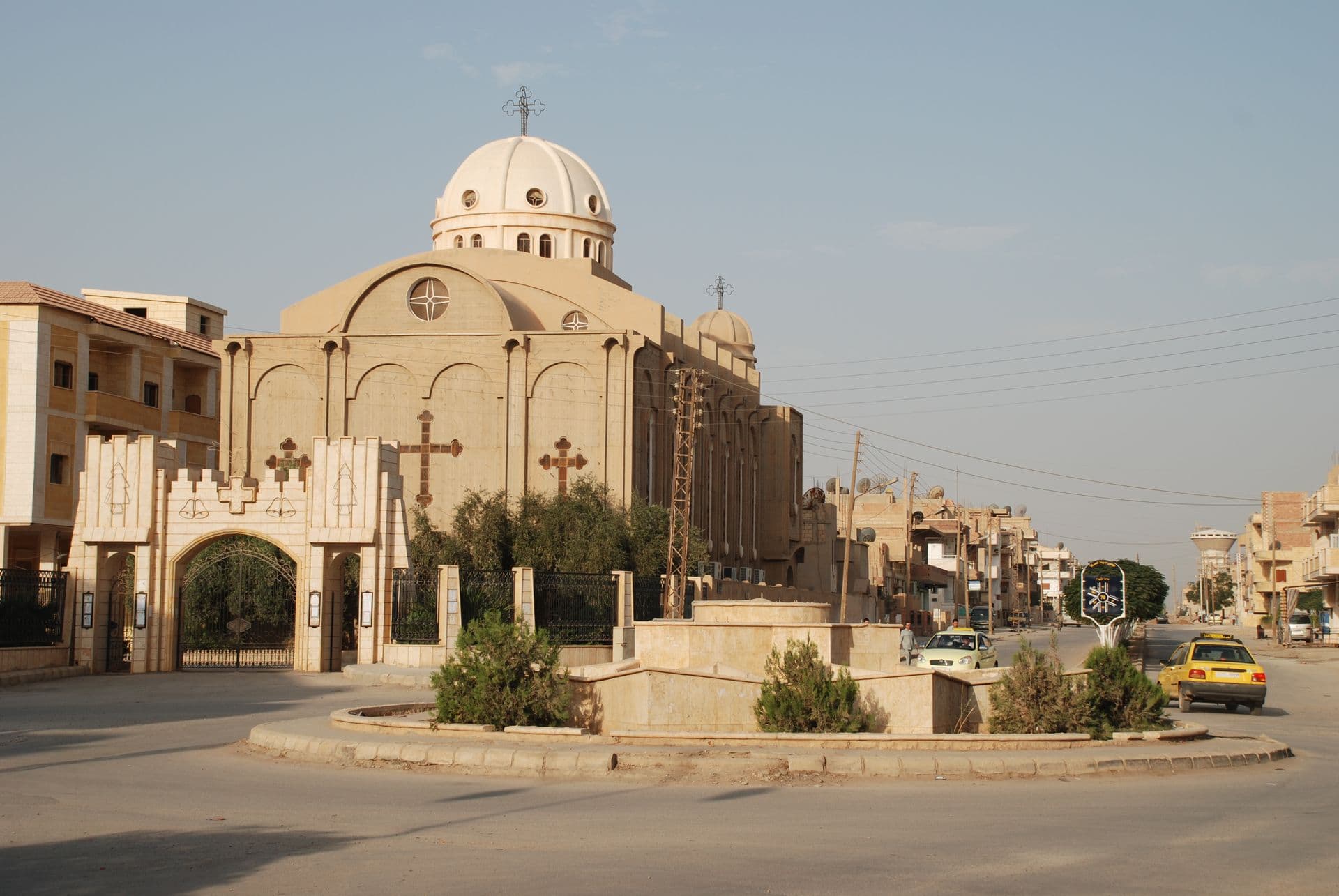
The Cathedral of the Virgin Mary is the cathedral of the Syrian diocese of the Assyrian Church of the East — in other words, that church’s headquarters in Syria. It was built in the 1990s near Hasakah railway station, away from the town’s older churches. Its congregation descends from Assyrians of Hakkari origin who founded villages along the Khabur in the 1930s. It is a working church, so visits depend on the service schedule.
Where the community came from
These Assyrians have their roots in the mountains of Hakkari, in what is now south-eastern Turkey. After the genocide they moved first to Iran, then to Iraq, and in the 1930s they came to Syria and founded 36 new villages on the banks of the Khabur. The story of those villages is in the Tell Tamer entry on this site.
After 1965 the church split over the calendar. A rival bishop who kept the old Julian calendar settled in the Khabur village of Tell Hormiz, while the majority, who accepted the Gregorian calendar, stayed in Hasakah.
Why it stands apart from the old churches
At the end of the 20th century people moving in from the Khabur villages and from Qamishli swelled the Assyrian community in Hasakah to about 500 families by the 1990s. The old churches were no longer enough, and the new cathedral went up outside the church quarter, near the station. On 3 October 1999 Aprim Athniel, born in Hasakah in 1963, was consecrated bishop here by Patriarch Mar Dinkha IV.
Getting there
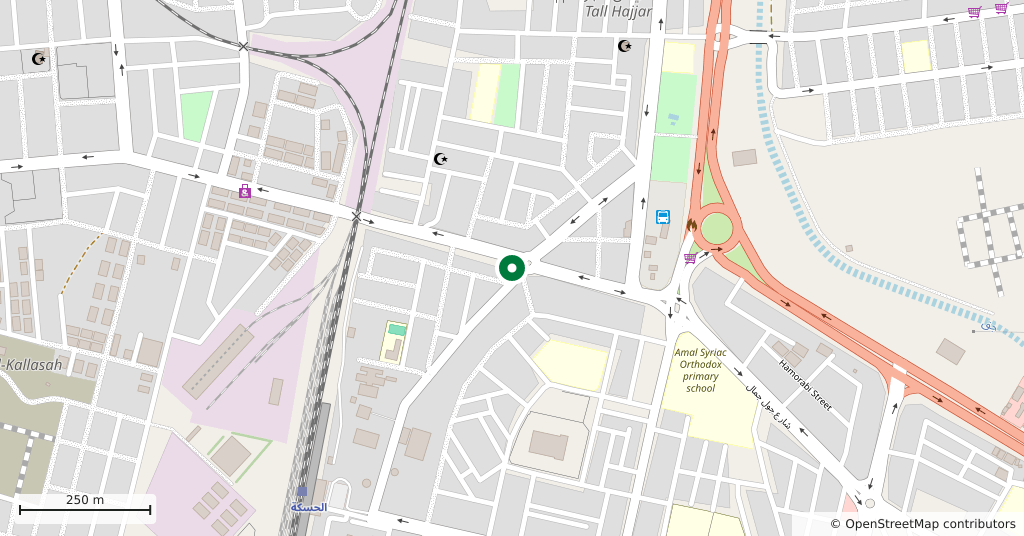
The cathedral is about 500 metres north-east of the railway station and 200 metres west of the bus station. The Jaghjagh stream runs 500 metres to the east, the Khabur 1500 metres to the south. The Syriac Orthodox St George’s Cathedral is 1300 metres to the south-east, so the two cathedrals fit into a single walk across town.
What to see
The cathedral is a modern concrete hall church aligned east to west. Its long sides are lined with tall, narrow windows rounded at both the top and the bottom. At the east end there is a large arched apse with a smaller apse on each side; at the west end, a gallery. The main entrance sits in the middle of the south front, up a broad flight of steps. A large dome crowns the middle of the roof, and two bell towers with small domes stand at the west end.
What happened in 2015
In February 2015 every Assyrian village on the Khabur was seized by ISIL. The cathedral became the place where fleeing families gathered; an Assyrian news network reported that 600 families reached it. Bishop Athniel raised ransom money for the hostages.
The numbers tell the rest. Before the war the province had about 19500 members of the Assyrian Church of the East, 5000 of them in Hasakah. By 2019 the figure had fallen below 1000.
Don’t miss
The windows. Rounded at both ends, they are the most distinctive detail of the building. Cross to the far side of the broad steps on the south front and you see the entrance and the row of windows along that side in one view.
Tips
- The church may be locked outside services; ask at the church before you go
- Ask before taking photographs during a service
- Stand opposite the south steps to take in the row of windows
- Read it together with the Tell Tamer entry; the villages and the cathedral are two ends of one community
Transparency
- How this was chosen
- Written by hand; opening hours, entry fee and coordinates are kept as data. A field that is not known for certain is marked as variable rather than guessed.
- Facts checked
- September 2026
- Last updated
- September 15, 2026