Baniyas on the Syrian Coast
A coastal town 35 kilometres north of Tartus, below Margat Castle. A Phoenician port, a Crusader bishopric and Syria’s largest refinery share one shore.
- Opening hours
- The town is open; the remains sit within the streets, with nothing gated
- Entry
- Free
- Duration
- 120 minutes
- Best time
- Morning, before the coast road fills up
- Period
- Phoenician — Roman — Crusader — Ottoman
- Address
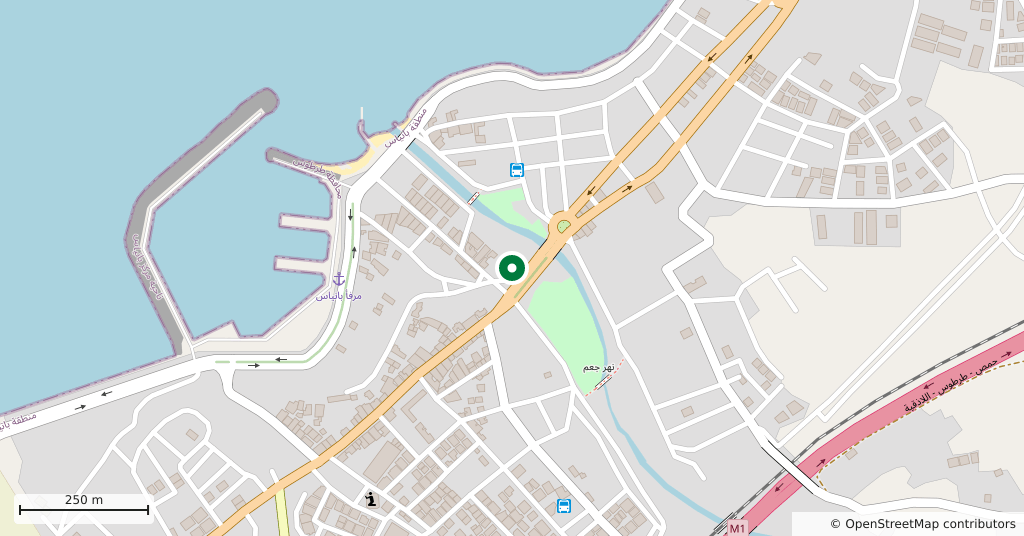
- On the coast road, 35 kilometres north of Tartus
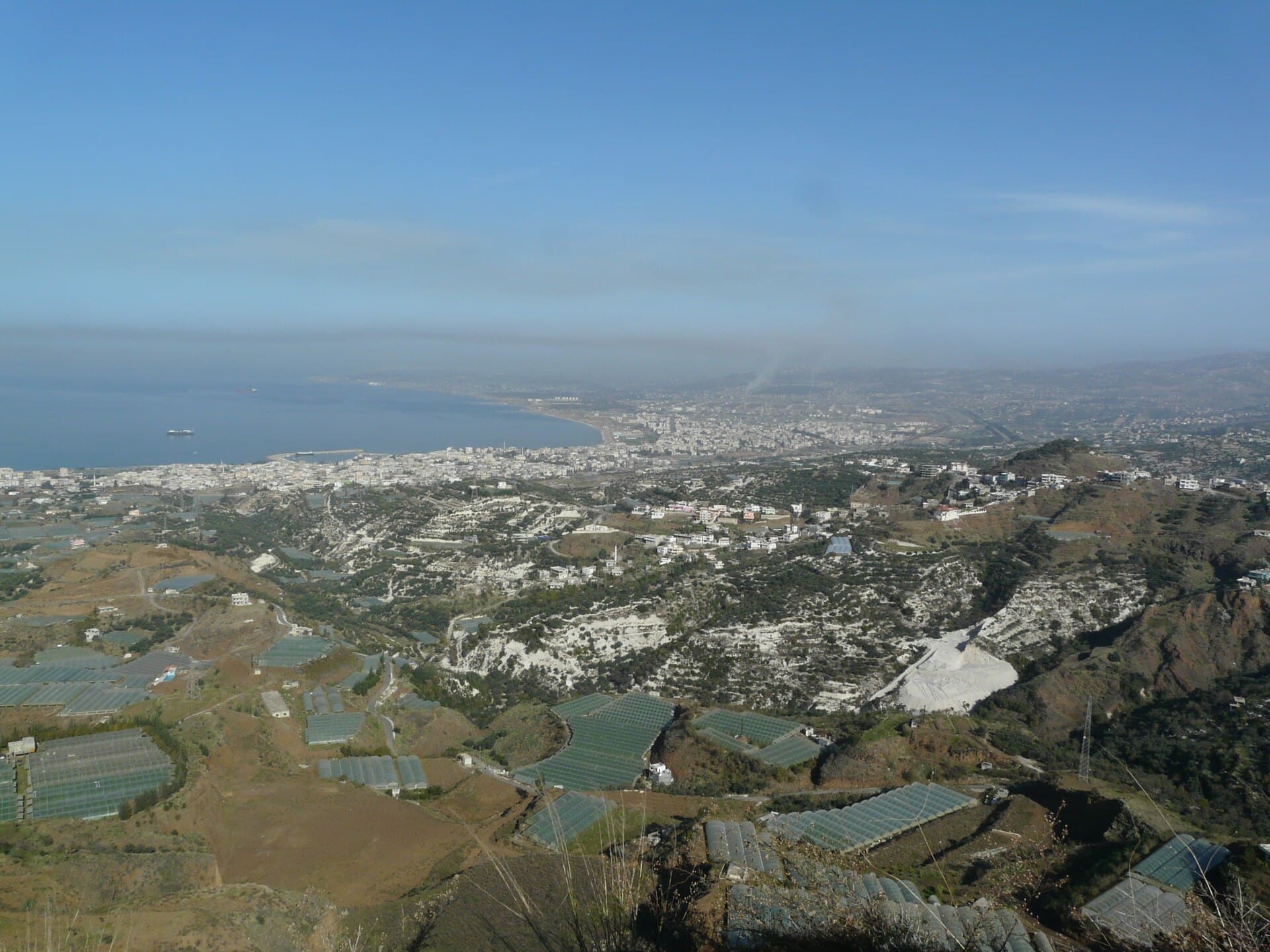
A coastal town 35 kilometres north of Tartus and 55 kilometres south of Latakia. It is often confused with Banias in the Golan; this is the Baniyas on the Mediterranean, in Tartus Governorate. The Baniyas river runs through it, Margat Castle stands on the hill above it, and Syria’s largest oil refinery works just to the north. Seeing all three on one shore is the town in a sentence.
Getting there
The coastal motorway runs along the edge of town; under half an hour from Tartus, about an hour from Latakia. Shared minibuses on the coast line come into the centre. The road up to Margat Castle leaves from the southern side of the town.
What to see
The town is not an itinerary in itself; it is context. What survives of the old fabric is scattered: the watchtower of Burj al-Sabi beside Margat, the Khan Bayt Jabbour, and Qalaat al-Qawz, which is now a residential quarter. Excavation has turned up a Roman theatre of the first century, mosaic floors and a water channel running down to the sea, but these sit inside the street pattern and there is no laid-out archaeological park. The real view is the other way round: from the tower of Margat the town, the bay, the greenhouses and the refinery to the north all fall into one frame.
How it reached today
In the Phoenician period it was a harbour town belonging to Arwad; its Greek name was Balanea. Under Rome and Byzantium it became the seat of a bishop. The Crusaders called it Valenia, and for safety the bishop lived not in the town but in Margat Castle. Town and castle passed to the Mamluk sultan Qalawun in 1285. Under the Ottomans it was the seat of a district and became the silk centre of the region, drawing cocoons from as far as Antioch and Safita. When the refinery and the power station were built in the second half of the twentieth century, both the economy and the shape of the town turned industrial.
Where things stand
The town took its share of the worst of the civil war. In 2013 civilians were killed in the centre and in the Ras al-Nabaa quarter, and in March 2025 the wave of violence along the coast reached Baniyas as well. This is not settled history; it is part of the present atmosphere of the town. Check current conditions before planning a visit, because travel conditions in this region change quickly.
What most people miss
Walk the seafront before you drive up to Margat. The black basalt of the castle was meant to be seen by someone approaching from the water: from below, the reason it was built on that particular headland is clearer than it is from the top.
Tips
- Plan it for the same day as Margat Castle; the castle is just south of the town
- The refinery and the power station are to the north — move south if you want to stop on the shore
- Do not photograph around the industrial plants or the port; these are restricted
- Ask about current security conditions along the coast before you set out
Transparency
- How this was chosen
- Written by hand; opening hours, entry fee and coordinates are kept as data. A field that is not known for certain is marked as variable rather than guessed.
- Facts checked
- September 2026
- Last updated
- September 15, 2026